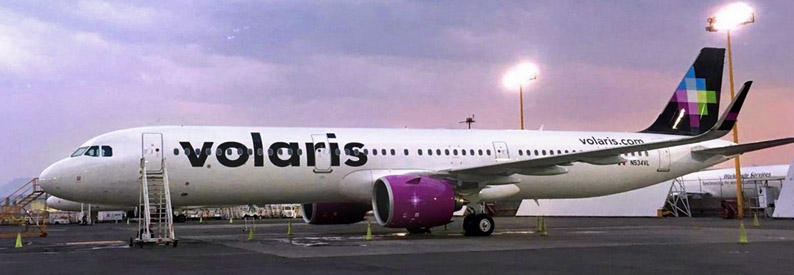
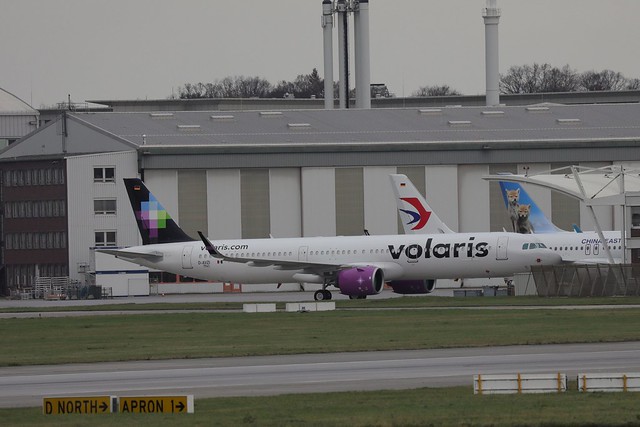
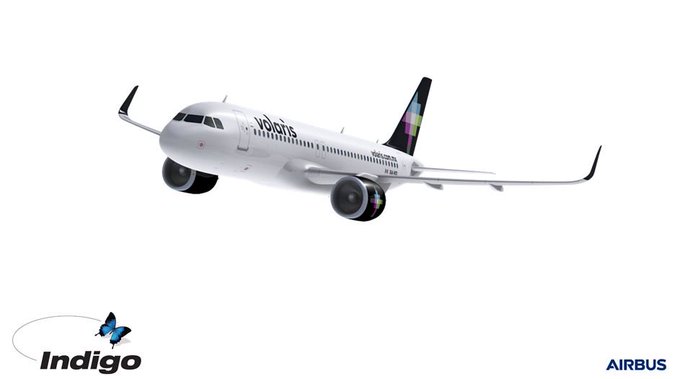
The low-cost carrier’s chief executive, Enrique Beltranena, had said in an earnings call in October that talks were underway with the manufacturer on a “negotiated compensation and support package” to ease the impact of the groundings of its A320neo Family jets caused by PW1000G engine issues.
Now, in a filing to the Mexican Stock Exchange dated December 5, Beltranena said that “we have reached an agreement with P&W that contemplates compensation for each GTF engine removed from our fleet. The agreement will help address fixed costs associated with the engines during inspections, supplementing the mitigation initiatives outlined in our recent earnings call.”
He elaborated that in response to the inspections, the Indigo Partners-backed LCC had reduced its capacity in the Mexican market in November. However, it had “redeployed” some capacity abroad in order to take advantage of the Category 1 air safety status that the United States reinstated for Mexico this autumn. He added: “This strategic approach has successfully aligned with positive demand, consistent with our full-year expectations.”
The comments were included in a filing outlining Volaris’ preliminary traffic results for November, which reported a 2.2% capacity decline year-on-year but also a 1.8% rise in load factor to 89.8%. The United States is one of five countries the carrier serves besides Mexico, the ch-aviation capacities module shows.
According to ch-aviation fleets advanced data, of the 119 aircraft that Volaris operates, forty-five A320-200Ns, six A321-200Ns, and eighteen A321-200NX are equipped with PW1000G engines. Sixteen of the A320neo and three of the A321neoNX jets are currently inactive.
Volaris has said that the inspections could continue into 2024 and 2025 and that it does not expect to have clarity on the long-term impact the groundings will have until the first quarter of the year. One month ago, it said it had laid off 200 staff due to operational adjustments the inspections had forced on it.
Paris – Mexican ultra-low-cost airline and all-Airbus operator Volaris has disclosed 25 A321neo from a purchase agreement signed in October 2022. These aircraft bring Volaris total backlog to 143 A320neo Family aircraft, which will support the airline’s continuous fleet renewal and expansion, powered by Pratt & Whitney engines.
“These A321neos will support our long-term business viability and sustainability strategy, while moving us closer to operating an all-NEO fleet by 2028. Our 143 aircraft backlog demonstrates Volaris financial strength and will guarantee our growth in the Mexican market as well as in routes to the United States and Central America," said Enrique Beltranena, Volaris President and Chief Executive Officer.
“The A321neo’s superior performance and efficiency will continue to drive Volaris’ network growth. As the fleet grows the airline will be well positioned to meet future demand, especially in the Mexican leisure market. We look forward to working closely with Volaris as it continues to spread its wings," said Christian Scherer, Chief Commercial Officer and Head of Airbus International.
The A321neo is the largest-fuselage member of Airbus’ best-selling single-aisle A320 Family. The A321neo allows operators to cover the entire market, while offering the lowest seat-mile cost of any single-aisle available.
Volaris became an Airbus customer in 2006, and since then the airline has ordered 206 A320 Family aircraft, including more than 170 A320neo Family aircraft. Volaris is the largest A320neo Family operator in Latin America.
Airbus has sold over 1,150 aircraft in Latin America and the Caribbean. More than 750 are in operation throughout the region, with another 500 in the order backlog, representing a market share of nearly 60% of in-service passenger aircraft. Since 1994, Airbus has secured 75% of net orders in the region.
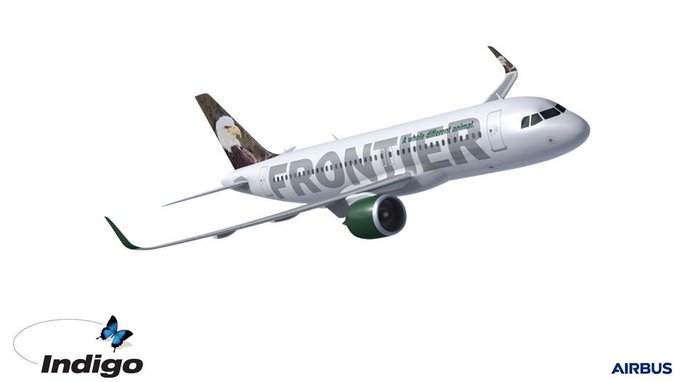
US-based Frontier operates nineteen A320ceo, seventy-three A320neo (with 58 on order), and twenty-one A321ceo. It also has sixty-seven A321neo and eighteen A321neo(XLR)s on order.
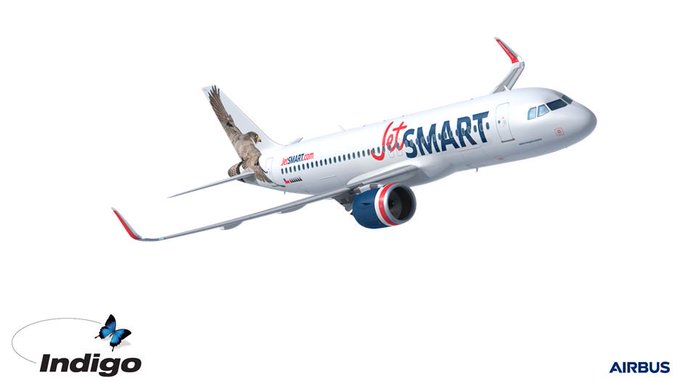
Chile-based JetSMART operates six A320ceo and eight A320neo (with 56 due) with orders for seven A321neo and twelve A321neo(XLR)s. JetSMART Argentina (WJ, Buenos Aires Ezeiza) operates five A320ceo.
Indigo Partners portfolio airlines order 2.55 A321neo Family aircraft
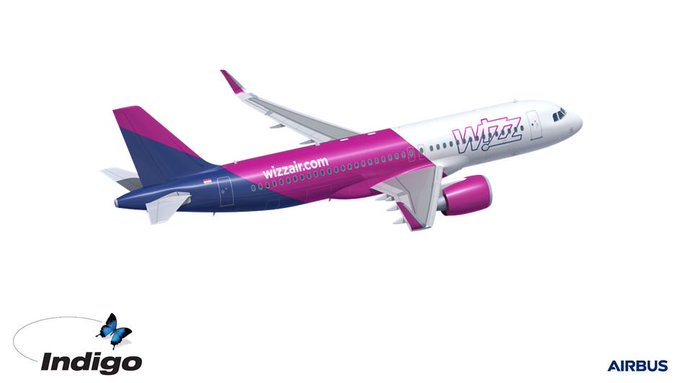
Dubai, 14 November 2021– Wizz Air (Hungary), Frontier (United States), Volaris (Mexico) and JetSMART (Chile, Argentina), Indigo Partners portfolio airlines, have announced an order for 255 additional A321neo Family aircraft under a joint Indigo Partners agreement. The firm order was signed at the Dubai Airshow.
This order brings the total number of aircraft ordered by the Indigo Partners’ airlines to 1,145 A320 Family aircraft. The aircraft ordered today are a mix of A321neos and A321XLRs, which will be delivered to the individual airlines as follows:
Wizz Air: 102 aircraft (75 A321neo + 27 A321XLR)
Frontier: 91 aircraft (A321neo)
Volaris: 39 aircraft (A321neo)
JetSMART: 23 aircraft (21 A321neo + 2 A321XLR)
In addition to this order, Volaris and JetSMART will upconvert 38 A320neo to A321neo from their existing aircraft backlogs.
“This order reaffirms our portfolio airlines’ commitment to consistent growth through the next decade. The Airbus A321neo and A321XLR have industry-leading efficiency, low unit costs and a substantially reduced carbon footprint relative to prior models. With these aircraft, Wizz, Frontier, Volaris and JetSMART will continue to offer low fares, stimulate the markets they serve and improve their industry-leading sustainability profile,” said Bill Franke, Managing Partner of Indigo Partners.
“We are happy to further expand our relationship with our great Indigo Partners’ airlines Wizz, Frontier, Volaris and JetSMART who have acted fast and decisively over the last few months to position themselves for this landmark order as the effect of the pandemic recedes and the world wants more sustainable flying,” said Christian Scherer, Airbus Chief Commercial Officer and Head of Airbus International.
The A321neo incorporates new generation engines and Sharklets, which together deliver more than 25 percent fuel and CO2 savings, as well as a 50 percent noise reduction. The A321XLR version provides a further range extension to 4,700nm. This gives the A321XLR a flight time of up to 11 hours, with passengers benefitting throughout the trip from Airbus’ award-winning Airspace interior, which brings the latest cabin technology to the A320 Family.
By the end of October 2021, the A320neo Family had totalled more than 7,550 orders from 122 customers since its launch in 2010. Since its Entry into Service five years ago, Airbus has delivered over 1,950 A320neo Family aircraft contributing to 10 million tons of CO2 saving.
Indigo Partners LLC, based in Phoenix, Arizona, is a private equity fund focused on worldwide investments in air transportation
Air Lease Corporation Announces Lease Placement of Four New Airbus A320neo Aircraft with Volaris
LOS ANGELES, California, April 26, 2021 – Today Air Lease Corporation (NYSE: AL) announced long-term lease placements for four new Airbus A320neo aircraft with Volaris (Mexico). Two of the aircraft are from ALC’s order book with Airbus and two are from sale-leasebacks acquired from a third party by one of our management vehicles. The four new A320neos are set to deliver during the remainder of Q2.
“ALC is pleased to further expand its relationship with Volaris, Mexico’s largest airline,” said John L. Plueger, Chief Executive Officer and President of Air Lease Corporation. “These aircraft will play a key role satisfying the strong summer traffic demand that Volaris is forecasting. Further, these transactions illustrate another successful pairing of a sale-leaseback under our management business combined with direct placements from ALC’s order book.”
Forward-Looking Statements
This press release contains forward-looking statements within the meaning of the Private Securities Litigation Reform Act of 1995, including expected delivery dates. Such statements are based on current expectations and projections about our future results, prospects and opportunities and are not guarantees of future performance. Such statements will not be updated unless required by law. Actual results and performance may differ materially from those expressed or forecasted in forward-looking statements due to a number of factors, including those discussed in our filings with the Securities and Exchange Commission.
About Air Lease Corporation (NYSE: AL)
ALC is a leading aircraft leasing company based in Los Angeles, California that has airline customers throughout the world. ALC and its team of dedicated and experienced professionals are principally engaged in purchasing commercial aircraft and leasing them to its airline customers worldwide through customized aircraft leasing and financing solutions. ALC routinely posts information that may be important to investors in the “Investors” section of ALC’s website at www.airleasecorp.com. Investors and potential investors are encouraged to consult the ALC website regularly for important information about ALC. The information contained on, or that may be accessed through, ALC’s website is not incorporated by reference into, and is not a part of, this press release.
About Volaris
Volaris or the "Company" (NYSE: VLRS and BMV: VOLAR), is an ultra-low-cost carrier (ULCC), with point-to-point operations, serving Mexico, the United States and Central America. Volaris offers low base fares to build its market, providing quality service and extensive customer choice. Since beginning operations in March 2006, Volaris has increased its routes from five to 170 and its fleet from four to 87 aircraft. Volaris offers more than 410 daily flight segments on routes that connect 43 cities in Mexico and 25 cities in the United States with one of the youngest fleets in The Americas. Volaris targets passengers who are visiting friends and relatives, cost-conscious business and leisure travelers in Mexico and in selected destinations in the United States and Central America. Volaris has received the ESR Award for Social Corporate Responsibility for eleven consecutive years. For more information, please visit: www.volaris.com.
During the fourth quarter of 2020, Volaris returned one Airbus A319 and took delivery of three new A320neos, the airline stated in its financial results. The Mexican low-cost carrier is currently upgauging its fleet by retiring the older planes. How will it look in the next few years?
Volaris has a fleet of 86 aircraft. Photo: Volaris
Let’s look at Volaris’ fleet
Since its inception in 2006, Volaris has been an all Airbus-based operator. It has used the A320 family to bring the low-cost concept into Mexico, and with great results.
As of February 2021, Volaris has the second-largest fleet in Mexico, behind Aeromexico’s. Previously, Volaris was on a close race with Interjet, an airline that used to have a fleet of 88 aircraft.
Volaris finished 2020 with a fleet of 86 aircraft. It has six A319, 64 A320s, and 16 A321s. The average age of its fleet is 5.3 years.
During the fourth quarter, Volaris returned one A319 aircraft and incorporated three new A320neo.
The airline started 2020 with 82 aircraft (eight A319, 58 A320s, and 16 A321s); Volaris didn’t incorporate additional aircraft into its fleet during the first quarter. Between April and June, it returned one A319 and brought one A320neo. Finally, during the third quarter, it returned one A320 and got three new A320neo.
At the end of 2020, Volaris’ fleet had an average of 188 seats per aircraft; 79% were sharklet-equipped, and 35% were NEOs. By the end of 2021, Volaris will have a fleet of 87 aircraft; by 2022, it will be 93, and by 2023 it will be 85. After that, the airline still doesn’t know.
Amid the pandemic, Volaris is playing aggressively, looking to capitalize on the crisis of its competition. Photo: Getty Images
What will the future bring for Volaris?
Volaris is playing aggressively in the current pandemic. The airline knows that there’s a unique opportunity in the current environment for growth in Mexico. Of the four leading carriers in the country, one has all but disappeared (Interjet), and the other (Aeromexico) is under a Chapter 11 financial reorganization.
Therefore, as Enrique Beltranena, CEO of Volaris, stated, the airline is poised to be a long-time winner from the pandemic. Last week, we reported that Volaris expects to receive up to 98 planes by 2028. According to the airline, 58 will be A320neo and 40 A321neo.
While the airline still doesn’t know what size it will have by 2028, it most likely will be the largest Mexican carrier by that time.
Grupo Aeromexico could reduce its size to 80 aircraft by the end of this year; it will take time before Aeromexico grows in size again due to its Chapter 11 reorganization. Meanwhile, Viva Aerobus expects to receive up to 42 Airbus A321neo between 2021 and 2026. That year, Viva Aerobus could have a fleet of up to 80 aircraft, the airline said to Simple Flying.
Good results for the low-cost operator
Volaris finished 2020 on a strong note. The airline reported a net income of US$45 million in the final three months of the year, despite the COVID-19 crisis. Nevertheless, the financial hit of the two previous quarters was too much, and Volaris posted an annual net loss of US$215 million.
Volaris is one of the feel-good stories of 2020. The Mexican airline had a V-Shaped recovery from the COVID-19 pandemic, thanks to the leisure and VFR traffic in Mexico and the US.
According to stats from the Mexican government, Volaris consolidated itself as the country’s largest domestic operator. In 2020, it transported over 14 million passengers, a decrease from the 21 million it had the previous year.
During the final quarter of 2020, Volaris began operations in two new domestic routes and seven new international routes. From Mexico City, it launched flights to Campeche, Dallas, Houston, Fresno, Ontario, San José (California), and Sacramento; from Cancun, it started operating to Oaxaca, and from Morelia to Chicago O’Hare.
DUBAI — After complete dominance from Boeing at the Dubai Air Show, and an order from Bombardier for its CSeries program, Airbus finally broke through with a record-breaking order for its A320neo Family Program.
Airbus and Indigo Partners, owner of low-cost carriers Wizz Air, Volaris, Frontier, and JetSMART have signed a deal for 430 additional A320neo aircraft, valued at $49.5 billion.
The commitment breakdown features 273 A320neos and 157 A321neo aircraft.
#DAS17: proud to share our largest single commercial announcement ever with Indigo Partners' four portfolio airlines following the signature of a Memorandum of Understanding for 430 #A320neo Family aircraft - a deal worth nearly $50 billion at list prices. An Airbus record!
Airlines within the Indigo Partners conglomerate, have previously ordered 427 of the A320 family, which shows a doubled increase in their commitment to the program.
“This significant commitment for 430 additional aircraft underscores our optimistic view of the growth potential of our family of low-cost airlines, as well as our confidence in the A320neo Family as a platform for that growth,” said Bill Franke, co-founder, Managing Partner of Indigo Partners, and Chairman of Frontier Airlines
“Our airlines know that a great aircraft coupled with a great business plan will create value for our customers. We look forward to bringing comfort and low fares to more passengers around the world as Wizz Air, Volaris, JetSMART and Frontier continue to expand,” he added.
John Leahy, Airbus CCO, said added that “Indigo Partners has been a tremendous customer and supporter of the Airbus single-aisle fleet for many years. An order for 430 aircraft is remarkable, but it’s particularly gratifying to all of us at Airbus when it comes from a group of airline professionals who know our products, as well as the folks at Indigo Partners, do. “
"An order for 430 aircraft is remarkable, but it’s particularly gratifying to all of us at Airbus when it comes from a group of airline professionals who know our products as well as the folks at Indigo Partners do." John Leahy #DAS17
Leahy admitted that Airbus is “proud to augment [Indigo Partners’] fleets in Latin America, North America, and Europe with the single-aisle aircraft that offers the lowest operating costs, longest range and most spacious cabin: the A320neo Family.”
THE ORDER BREAKDOWN
In terms of the aircraft split in the order; it goes as follows:
Wizz: 72 A320neos, 74 A321neos
Frontier: 100 A320neos, 34 A321neos
JetSMART: 56 A320neos, 14 A321neos
Volaris: 46 A320neos, 34 A321neos
Bill Franke of Indigo Partners noted that in terms of engine manufacturers, they will be announced at a later date following consultation with such companies. Indigo Partners will benefit from this order as the aircraft types aim to save fuel costs by 20% by 2020.
COMPETITION FOR THE 737MAX? WHAT ABOUT THE A380 PROGRAM?
This could ultimately be seen as a massive attack on the Boeing 737 MAX Program on a marketing perspective, as a conglomerate of four airlines has doubled their commitment to an Airbus, which shows extra confidence in the neo product.
The 737 MAX has not had a deal to this size yet, although they are getting closer, especially with the likes of FlyDubai responding today with a 225 737MAX order for Boeing.
It also shows that the intensity in the single-aisle market is heating up, with carriers acknowledging that the best way forward to their operations on an efficient, cost-effective and easier basis is by either buying the A320neo family or the 737MAX.
This added confidence in the single-aisle aircraft market does not do any favors for the A380 program either. All the commitments seen to date at the Dubai Air Show highlights that there is starting to be no interest in the superjumbo program anymore, which could hint to Airbus that it may be time to either start slowing the program down even further or bringing it to a conclusion.
All-in-all, this order is a massive gamechanger for Airbus as it maintains their footing in the single-aisle market and implements additional pressure onto Boeing with their 737MAX variants not selling as many units on a bulk basis like Airbus is showing off.