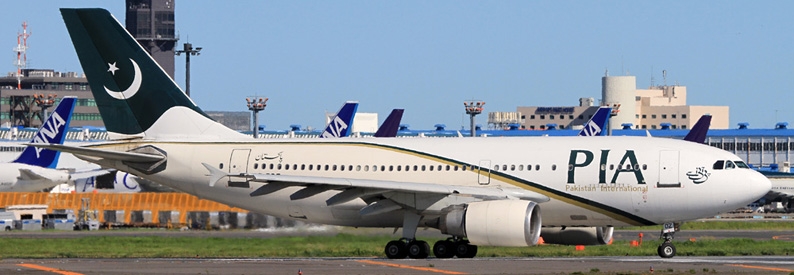
Tender documentation shows the aircraft involved are:
A310-300 AP-BGN (msn 676);
A310-300 AP-BEG (msn 653);
A300B4(F) TC-ACY (msn 107).
All three planes are non-runners, are stored at Karachi Int'l, and are being sold on a voetstoots (as-is/where-is) basis.
Ahead of the March 29 auction at 1400L (0900Z), bidders must put down a PKR500,000 rupee (USD2,800) refundable deposit. On-site inspection will be carried out on March 28. Successful bidders will have 30 days to remove the aircraft.
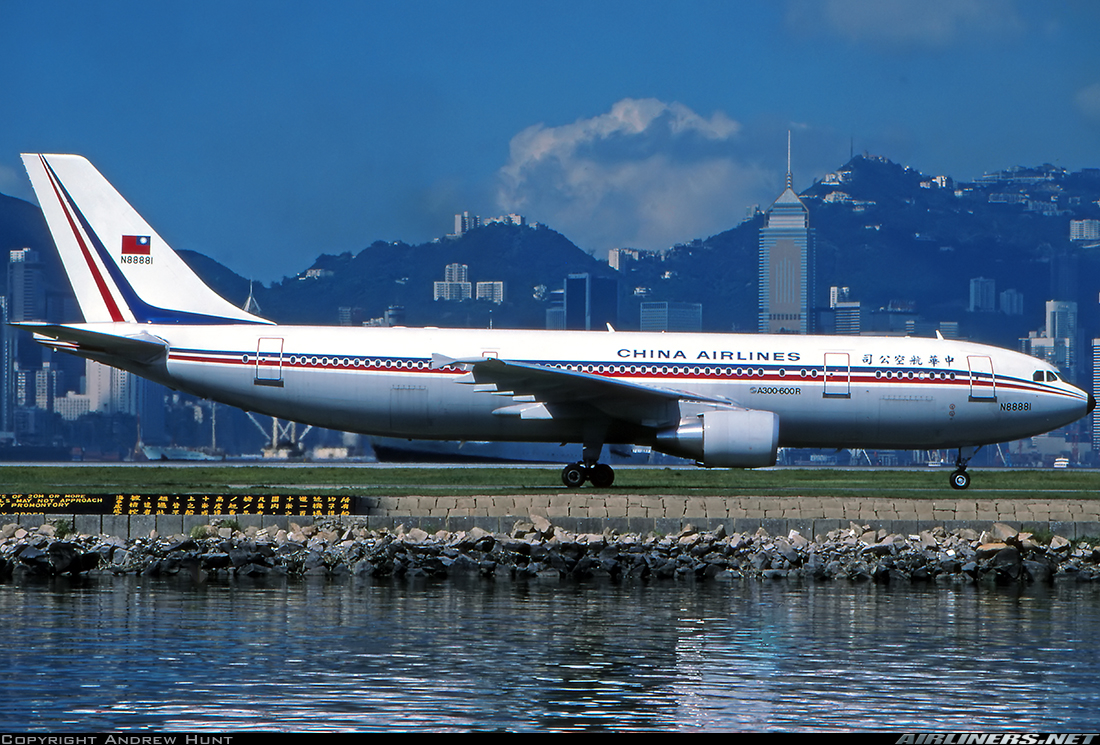
Sudan Airways (SD, Khartoum) has put its only A300-600R, ST-ATB (msn 666), up for sale with bids due by 1000L (0800Z) on April 10.
Tender documentation for the nearly 30-year-old jet indicates that the sale includes two Pratt & Whitney PW4158 engines (esn P728520 and P724015).
Bidding documents are available in Khartoum for a non-refundable fee of USD1,000. Interested bidder/s can submit offers for the whole aircraft or for major parts installed. In case of bidding for major part/s, the part-out cost shall be borne by the bidder.
As a boy, I used to watch the Airbus A300s cruise in over the suburbs to land in Sydney. When I was older, I got to fly in them occasionally. Although lacking the technological specs and creature comforts of contemporary planes, flying on an A300 was always a big deal.
The Airbus A300 on its maiden flight at Toulouse in 1972. Photo: Airbus
But the aircraft type fell by the wayside. Production was discontinued in 2007. However, the A300 remains a plane of interesting and significant historical merit. The A300 was integral to the creation of Airbus. It also formed the template for contemporary mid-size Airbus aircraft like the A330 and A340. In the long list of aircraft types ever built, the A300 is an important but often overlooked plane.
A new aircraft type for a very different world
Airbus built 561 A300s between 1972 and 2007. When first launched, the A300 was the world’s first medium-sized twin-engine airliner. The market was less crowded then and the plane slotted nicely between Boeing’s 737 and bigger 747. But as that market became more crowded (Boeing introduced its similarly sized 767 in 1981), the older Airbus A300 founded itself comprehensively outmatched and outpaced.
Airbus acknowledges the A300 had a slow start. But the plane went on to be a market leader in short to medium-haul passenger operations. At the time, the A300 was relatively unusual because its wide body and raised cabin floor meant it could carry passengers and significant amounts of cargo at the same time. The aircraft had two engines rather than the typical three engines of that era. That saved airlines money.
The way the A300 was built was also innovative for the era. Airbus used composite structures. The manufacturer developed and tinkered with wingtips to reduce drag. Airbus also advanced electrical signaling for secondary controls. The A300 was the first aircraft made to seriously challenge North America’s then aircraft building supremacy.
Why hasn’t the A300 become a household name?
Why didn’t the A300 became a long-running smash hit for Airbus the way the 737, 767, and 747s programs have for Boeing? Why isn’t the A300 a household name? Except for the Airbus A380, Boeing does a far better job of marketing its planes in the public domain.
There’s a stronger culture of promotion in North American, which makes a difference in how an aircraft type is remembered. Boeing even makes sure everyone can recall the world’s most boring plane by nicknaming it the Dreamliner. For better or worse, Airbus has never ventured down that path.
However, there’s a lot more to the fall of the A300 than inferior marketing. Airbus was creating a new market for its A300; the mid-size short to medium-haul plane market. To an extent, that helps explain why sales were slow. Then, after a decade spent carving out that market and arguably doing all the hard work, Boeing swooped in with its own mid-sized plane, the 767.
The A300 was comprehensively outpaced and outsold by Boeing’s 767. Photo: Boeing
Outclassed and outmatched by Boeing’s 767
Was the 767 a better plane? Over time there have been different models of both planes, and improvements were made. However, at the start, the Airbus A300 and Boeing 767 specs were relatively similar. But Boeing has sold more than twice the number of 767s than Airbus sold A300s. Boeing’s plane, first built in 1981, remains in production today.
Ultimately, the market decided the fate of the A300. But there was an upside for Airbus. The competition made Airbus focus on new planes. The competition gave rise to the A330 and A340. The A340 has had its hurdles, but the A330 is a terrific plane and still going strong. If you like, the A330 is an improvement on the A300 – it flies more people further. While it’s always a shame to lose one plane, in the case of the A300, a better plane was born out of the loss.
Takeoff Rejected After Uncontained A300 Engine Failure In Colombia
Shortly after midnight, a Transcarga International Airways Airbus A300-B4 freighter rejected takeoff from Bogotá following an uncontained engine failure. Initial reports say that the engine’s rotor disk ejected, sending pieces of metal onto a neighboring road. The pilots brought the plane to a standstill, and no one was injured as a result.
A Transcarga Airbus A300 rejected takeoff after suffering an uncontained engine failure at Bogotá International Airport on Thursday. Photo: Felipe Escalona / Aviacion PTY
Loud explosion prompted rejection
The 37-year old aircraft, with registration YV560T, was operating Flight T9-1527 from Bogotá, Colombia, to Caracas, Venezuela, when its left-hand General Electric CF6 engine suffered an uncontained failure. It was accelerating along El Dorado International Airport’s runway 31L at 00:30 local time, when there was a loud explosion.
As reported by the Aviation Herald, the cockpit crew rejected takeoff and brought the aircraft safely to a standstill. However, a large metallic piece flew onto a neighboring road, right at the crossing of Calle 63 and Carrera 103. By a stroke of luck, it missed a motorcyclist by ten meters.
This places it in good company with the high-profile United Boeing 777 engine failure over suburbs in Denver and the Longtail Aviation 747 freighter that dropped parts of an engine onto the Dutch town of Meerssen just two days apart from each other.
Initial investigations by Colombia’s Grupo de Investigación de Accidentes Aéreos (GRIAA) on the scene stated that the rotor disc had been ejected from the engine. It then crashed through a runway safety mesh and hurtled into the door of a building in an area adjacent to the airport, again without causing any injuries. An investigation to determine the cause of the incident is ongoing. The aircraft remains on the ground in Bogotá.
Transcarga International Airways is a cargo carrier based at Simon Bolivar International Airport in Caracas, Venezuela. The airline was founded in 1998 by Julio Marquez Biaggi, a former pilot from Viasa and KLM, but did not commence operations until 2001.
It operates a fleet of two Airbus A300B4s, with an average age of 37.5 years. The carrier provides its services to larger operators, such as Servicio Panamericano de Proteccion, DHL, FedEx, and UPS, among others. It has also operated Embraer 120s and general aviation Piper Navajos.
In the weeks leading up to the incident, according to flight data, YV560T had been journeying mostly between Caracas, Bogotá, and Panama City.
Rimini, Italy - SM Executive Aviation has launched cargo operations with its first A300-600F. The airline became the first San Marino-registered carrier to operate freighter aircraft. "We are living in times where we have realized how fundamental air cargo is for our daily lives. We have demonstrated to the San Marino CAA that our special cargo operations meet international standards during such a vulnerable and critical period,"
Accountable Manager Waked Jayyousi said in a press release.
SM Executive Aviation added the A300-600F in late 2019 and deployed it on revenue flights from March 2020. Since mid-April, the aircraft has been used predominantly on cargo charter flights from Italy (Bologna and Pisa) to China, carrying medical equipment to Europe that will be used in the fight against the COVID-19 pandemic.
The carrier will continue to deploy the freighter on medical missions through at least end-June 2020. Besides the Airbus freighter, the San Marinese carrier also operates a single B737-700(BBJ) under a private contract.
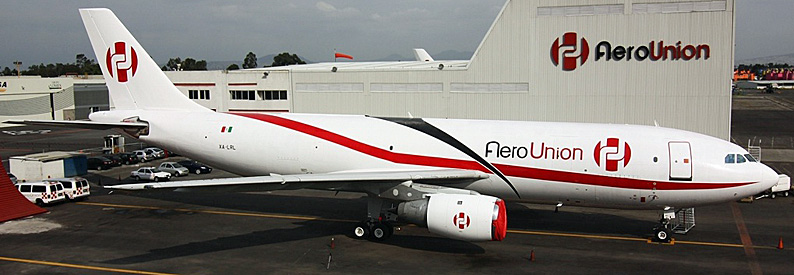
AeroUnion (6R, México City Int'l) phased-out its last A300B4(F) in early February before selling it to an unnamed airline in Georgia, Skyliner Magazine has reported.
XA-LRL (msn 210) operated its last flight from Guadalajara to México City Int'l on February 3, 2020. It was subsequently ferried via Bangor, Reykjavik Keflavik, and Burgas to Tbilisi over the course of February 11-13 and has remained in storage at the Georgian gateway since then, Flightradar24 ADS-B data shows.
At the peak of its A300B4(F) operations, AeroUnion had five such aircraft in its fleet. The penultimate, XA-FPP (msn 227), was retired on September 1, 2019.
In Georgia, AMS Airlines (GEO, Tbilisi) has four (inactive) A300s of which two are A300B4-203(F)s. Kyrgyz Airlines Plus (Bishkek), a Kyrgyz start-up, also owns one A300B4-203(F) which is on the Georgian register.