Showing posts with label JETSTAR JAPAN. Show all posts

Monday, 28 November 2022

Airbus Updates No.3868


JAL Group outlines A321 freighter network from 2Q24

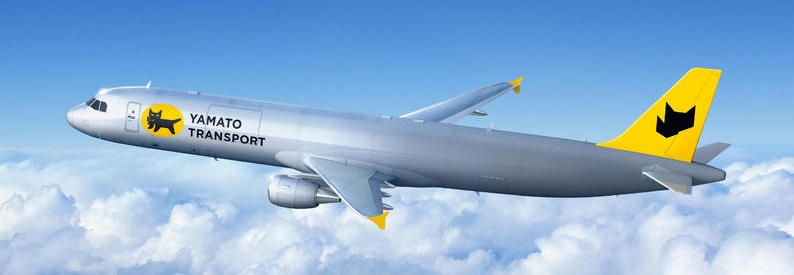
JAL Group has outlined its A321-200(P2F) network to be operated by subsidiary Spring (IJ, Tokyo Narita) for door-to-door delivery company Yamato Holdings Co., Ltd from April 2024 using four of the converted freighters.

In a statement dated November 22, 2022, the JAL Group said three of the aircraft had been delivered with the fourth due in February 2023. The conversion process is scheduled to begin in March 2023 at the Elbe Flugzeugwerke GmbH (EFW) facility in Singapore.

Yamato handles around 1.8 billion parcels annually and services the entirety of Japan. The four freighters will wear Yamato livery. The JAL Group says the decision to use Spring as the operating airline, rather than Jetstar Japan (GK, Tokyo Narita), will optimize management resources and strengthen the low-cost carrier's business model. The four routes, which will run 21x daily, are:

Yamato advises the maximum payload on each aircraft will be 28 tonnes. The main deck of each plane will accommodate 14 AAY containers and the lower deck will accommodate ten AKH containers. The joint venture remains subject to application and approval from the relevant authorities.

Monday, 24 January 2022

Airbus Updates No.3745


Jetstar Japan to start A321 freighter ops in 2Q24

Jetstar Japan (GK, Tokyo Narita) will start dedicated freighter operations in early 2024 following the signing of a partnership agreement between JAL Group and Japanese logistics specialist Yamato Group last week.

Under the agreement, the LCC will operate three A321-200(P2F)s out of Tokyo Haneda and Tokyo Narita to Sapporo ChitoseKitakyushu, and Okinawa Naha starting in April 2024.

According to a joint statement, Yamato's push into the air cargo niche comes amid growing difficulties in ensuring a reliable overland distribution network given the heavy rains, snow, and earthquakes that have occurred throughout Japan as well as bellyhold capacity constraints in light of reduced passenger flights. As such, the introduction of air cargo services will help circumvent these issues, while at the same time allowing JAL Group to offset the impact of Covid-19 on its domestic network revenue inflows.

"We see this freighter operation as an opportunity to realise further growth in the cargo business by utilising the assets and knowhow of both companies and contributing to the solution of social issues such as the problems of truck transportation," the statement said.

Yamato Transport, which also uses road, rail, and shipping services, will be responsible for sourcing the aircraft while Jetstar, the only A320 Family operator in the JAL - Japan Airlines (JL, Tokyo Haneda) stable of carriers, will oversee their operation. According to the ch-aviation fleets advanced module, the budget airline currently employs nineteen A320-200s with two A321-200NXs awaiting service entry.

With this development, JAL Group is returning to the freighter market having exited it in 2010 when it phased out its then remaining fleet of three B767 and ten B747 freighters, the ch-aviation fleets history module shows. At present, no Japanese airlines operate any narrowbody freighters; ANA - All Nippon Airways (NH, Tokyo Haneda) deploys nine B767-300Fs and two B777-Fs, while NCA - Nippon Cargo Airlines (KZ, Tokyo Narita) uses eight B747-8(F)s (alongside two B747-400(F)s wet-leased from Atlas Air (5Y, New York JFK)).

Friday, 19 March 2021

Airbus Updates No.3104


Jetstar moves A320s to Australia from Japan, Singapore

Qantas Group is planning to temporarily transfer up to ten A320-200s from its foreign joint ventures to its Australian fleet as the country's domestic market is able to support more capacity than other countries at this time, Chief Executive of low-cost unit Jetstar Airways (JQ, Melbourne Tullamarine) Gareth Evans said during a CAPA Live event.

"We’re looking to bring six of the Jetstar Japan (GK, Tokyo Narita) aircraft down to Australia for a temporary period, not permanently but for two to three years perhaps to provide some capacity for growth to Jetstar domestically and potentially to leverage into Western Australia as well," Evans said.

According to the ch-aviation fleets advanced module, Jetstar Japan currently operates twenty-five Airbus narrowbodies, including twenty-four A320-200s and a single A321-200NX. The single A321neo was contractually delivered to the airline in December 2020 but remains in storage at Erfurt airport and was never ferried to Japan.

The A320s are 7.4 years old on average and are all dry-leased from a variety of lessors. Six aircraft are owned by Tokyo Century, which has a 16.7% stake in Jetstar Japan. The other shareholders of Jetstar Japan are JAL Group with a 50% stake and Qantas Group with a 33.3% stake.

Evans underlined that Jetstar remained committed to its Japanese joint venture but stressed that the Japanese domestic market was rebounding much more slowly than the Australian one. As such, the group could use the aircraft more efficiently in its home market for the time being.

The carrier told ch-aviation that the aircraft would first be ferried to Alice Springs before joining Jestar Airways' fleet. Flightradar24 ADS-B data shows that JA06JJ (msn 5281), JA12JJ (msn 5618), and JA18JJ (msn 5796) are currently parked at the Australian airport.

The six A320s due to be transferred from Jetstar Japan will join four aircraft moved from Jetstar Asia Airways (3K, Singapore Changi) to Australia. In mid-2020, the Singaporean LCC, which does not have a domestic market and relies exclusively on heavily curtailed international routes, announced that it would retire five out of its then eighteen A320-200s. Since then, three aircraft have been transferred to Qantas Group's regional carrier Network Aviation (NWK, Perth Int'l) and operate routes out of Perth Int'l under the QantasLink brand.

Both Jetstar and Jetstar Asia confirmed that the three A320s transferred to Network Aviation were a part of the transaction described by Evans. The identity of the fourth aircraft to be moved to Australia remains unclear.

The group sees significant potential in the Australian domestic market, which is poised to return to its pre-pandemic size, and may even exceed it, relatively quickly. The carrier is already back to 90% of its pre-COVID domestic capacity in Australia and 80% in New Zealand. Evans said the closure of rival LCC Tigerair Australia opened new market opportunities. The airline has not been deterred by the entry of Rex - Regional Express into the mainline market.

"We’re not going to overheat the market, but we’ve got a right to grow and we’re going to do that flexibly using aircraft from elsewhere within our group," Evans said.

Jetstar Airways plans to add its first A321-200NX(LR)s in 2022 or 2023. The aircraft will be used on medium-haul routes served before the pandemic by the carrier's B787-8s, including routes to Denpasar. The carrier has a total of twenty-seven A321-200NX(LR)s on order from Airbus, as well as thirty-six A321-200NX(XLR)s and forty-five A320-200Ns. Its current fleet comprises fifty A320-200s, eight A321-200s, and eleven B787-8s.

Evans said the group remained committed to adding some A321-200NX(LR)s to its Japanese unit, although the timing was still unclear at this point.
Tuesday, 19 February 2013

Airbus Updates No.928


Jetstar Japan takes delivery of its first A320 with Sharklet

Carrier becomes the first operator of the new fuel saving devices in Japan

19 February 2013Press Release

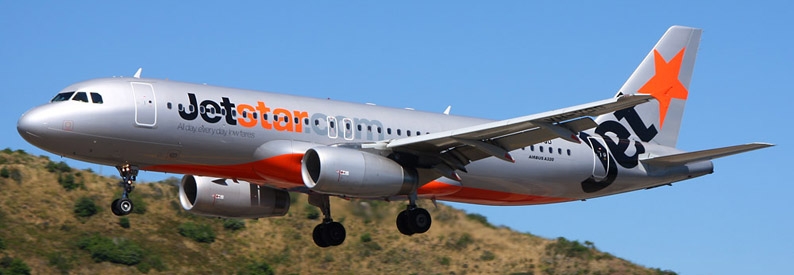
Jetstar Japan, one of Japan’s low-cost carriers (LCC), has taken delivery of its first Airbus A320 aircraft equipped with Sharklet fuel saving wing tip devices, becoming the first Japanese carrier for the type.

Sharklets are an option on new-build A320 Family aircraft, and standard on all members of the A320neo Family. The new wingtip devices measure 2.4 metres tall, replacing A320’s current wingtip fence. They offer the flexibility to A320 Family operators of either adding around 100 nautical miles more range or increased payload capability of up to 450 kilogrammes.

“We are very happy to be the first operator of the latest version of the cost efficient A320 in Japan” Jetstar Japan President Miyuki Suzuki said. “The new Sharklet-equipped A320 will help us to save on fuel costs and allow us to continue to offer low fares to our customer.”

“We are delighted that Jetstar Japan has joined a growing list of operators of our A320 equipped with new fuel-saving Sharklet wing-tip devices”, said John Leahy, Airbus Chief Operating Officer, Customers. “With a four percent fuel burn reduction, the A320 with Sharklets makes Jetstar Japan one of the most fuel efficient airlines and gives it huge competitive advantages in one of the world’s most challenging markets.”

Jetstar Japan started operations in July 2012. The company is a joint venture between the Qantas Group, Japan Airlines (JAL), Mitsubishi Corporation and Century Tokyo Leasing Corporation. Jetstar Japan operates an all-Airbus fleet of seven leased A320s, and this will grow to 24 aircraft by the end of 2014.

As of today, over 9,000 Airbus A320 Family aircraft have been sold worldwide and over 5,400 aircraft delivered to more than 380 customers and operators, making it the world’s best selling commercial jetliner ever. With proven reliability and extended servicing periods, the A320 Family has the lowest operating costs of any single-aisle aircraft. 

Total Pageviews

Airbus Updates No.4701

  Brazil’s Azul to add four more Airbus A321 freighters Azul Linhas Aéreas Brasileiras (AD, São Paulo Viracopos ) will add four more A321-2...

Airbus Blogs

Blog Archive

Top 10 Award

Airbus Blogs

Labels