Air Arabia (G9, Sharjah) is about to take delivery of two A321-200s, its first aircraft of the type.
N229WG (msn 7903) and N228WG (msn 7879), 4.9- and a 4.8-year-old jets, both formerly operated by Interjet and owned by Wings Capital Partners, were ferried from Kaunas via Oslo Gardermoen to Erfurt on August 11 and 12, respectively. They remain registered in the US but have already been repainted into Air Arabia's livery. The Emirati low-cost carrier did not respond to ch-aviation's request for comment about the two jets' service entry dates nor has it filed schedules for the type.
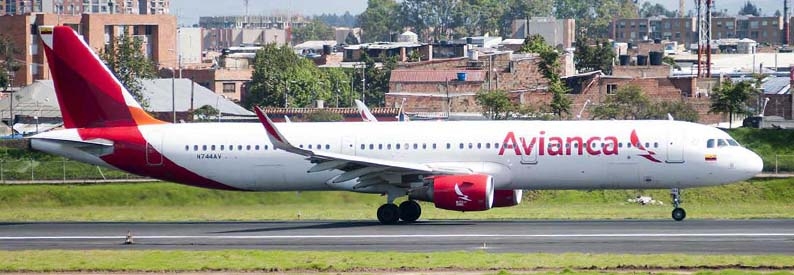
ch-aviation research shows N759AV (msn 7770) and N761AV (msn 7847) were ferried from Bogotá and Medellín José Maria Córdova to Orlando Sanford on August 21, 2021. The former had been in storage at the Colombian capital uninterruptedly since the initial COVID-19 lockdown in March 2020. The latter had initially been stored in Medellin but was ferried to Fortaleza for maintenance on August 2 and returned to Colombia for one day on August 20, Flightradar24 ADS-B data shows.
Avianca Holdings, the Colombian carrier's Panama-based parent, is a major A320neo Family customer. During two separate deals in 2012 and 2015, the holding ordered a total of 133 aircraft. However, facing financial hardship even before the pandemic, it gradually trimmed its outstanding commitment to 88 in January 2020. At that time, the group had already taken delivery of three A320-200Ns from its direct order with Airbus and a further seven via SMBC, as well as the pair of A321neo ordered directly by Avianca but subsequently sold and leased back from SMBC, according to the ch-aviation fleets history module. Since then, it has not added any more A320neo and said that no deliveries would happen before the end of 2024. The ten A320neo already delivered are split between the AOC of Avianca Airlines in Colombia (seven units) and Avianca Airlines El Salvador (three).
According to the ch-aviation fleets advanced module, besides the eighty-eight A320neo on direct order from Airbus, Avianca Airlines plans to add two second-hand ex-Interjet units of the type on lease from Aviation Capital Group, two ordered by Avianca Holdings but due to come on lease from Aviation Capital Group, and ten on lease from BOC Aviation. It does not have any A321neo on order either directly or from lessors.
PLAY Set To Take Delivery Of Its 3rd Airbus A321neo
PLAY is gearing up to receive its third A321neo later this week. The aircraft, another former Interjet plane, has emerged from the paint shop in Texas, ready to be ferried to Iceland on Thursday. That brings the startup airline’s fleet to three A321neos, giving it the opportunity to bolster capacity for the rest of the summer season.
PLAY’s third A321neo is ready for delivery. Photo: PLAY
Three for PLAY
Iceland’s newest airline is gearing up to add more capacity to its fleet this week, as its third A320neo is ready for delivery. The plane was pictured leaving the paint shop in Texas, ahead of its delivery to Iceland on Thursday.
The A321neo will be registered TF-PLB once PLAY takes delivery. It is a 3.3-year-old aircraft, originally delivered to Interjet in 2018 as XA-NEO. Both PLAY’s existing A321neos were former Interjet aircraft too, and all have the same rather generous 192 seat all-economy configuration.
According to data from RadarBox.com, the aircraft was stored in Arizona for much of the previous 12 months. 10 days ago, it was ferried to Amarillo, Texas, for painting. International Aerospace Coatings (IAC) took care of the neo’s new gleaming coat of paint.
The neo had a shiny new coat of paint ahead of its long flight to Iceland. Photo: PLAY
The addition of another neo for PLAY will help the airline to ramp up its capacity for the remainder of the summer season. From just 130 flights in July, PLAY will operate 198 in August, keeping things at that level through to October. From November to March, capacity will hover around 160 – 170 flights per month.
Where has PLAY been flying so far?
PLAY launched as a new startup to much fanfare at the end of June. Its inaugural destination was London Stansted, but more connections quickly followed. By the end of July, it had added Tenerife, Copenhagen, Paris, Berlin, Barcelona and Alicante to its route map.
For August, the airline is scheduled to fly to all those destinations but with increased capacity. The airports getting the most PLAY love are Stansted, Copenhagen, Paris and Berlin, all with 18 flights for the month. Barcelona, Tenerife and Alicante stick at around eight or nine flights.
Copenhagen is getting lots of PLAY love. Photo: PLAY
No new destinations are loaded into the schedule until December when we see it operating a one-off flight to Warsaw, as well as two rotations to Gran Canaria. January sees the addition of Saltsburg, with a couple of rotations a month to start, while Gran Canaria sees increasing numbers of flights as we move into 2022.
Barcelona will see its last flight at the end of October. This seasonal service will return in summer 2022. As yet, no transatlantic flights are loaded in, but we can hope to get more news on that later in the year as PLAY increases its fleet size and lays out its plans for next summer.
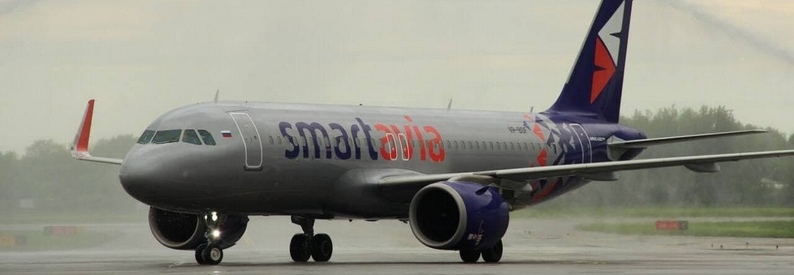
smartavia did not disclose the identity of the other two A320neo it plans to add in 2021.
Spokesman Viktor Anoshkin told ch-aviation that the airline is looking for more A320-200Ns for 2022, although he would not go into details regarding numbers.
To date, smartavia - formerly known as Nordavia - has been an all-Boeing operator with three B737-700s and nine B737-800s. Anoshkin confirmed that it has now abandoned earlier plans to add more B737NGs or B737 MAX for growth and has now opted for Airbus.
A couple of days ago, Interjet’s new management had a meeting with its pilots. During the gathering, Carlos del Valle, new executive director of the Mexican low-cost airline, promised several things, like a new Airbus fleet before the year ends. But he also pointed out to the financial arrears the company has. Let’s investigate the latest developments in Interjet.
Interjet’s new management plans to have 17 new Airbus planes before 2021. Photo: Daniel Martínez Garbuno/Simple Flying.
A new Airbus fleet – how?
Mexican aviation website A21 broke the news first. Carlos del Valle said that Interjet would resume its Airbus operations in the next three months. As you may recall, the airline had a fleet of 66 Airbus airplanes and 22 Sukhoi Superjet when the year started. It only used the Airbuses, though, as it was phasing out the Russian-built planes.
Since then, the leasing companies have repossessed every Airbus plane Interjet had. As of October, 75% of those planes have new registrations, meaning they won’t return to Interjet. So, if the Mexican carrier wants to operate with Airbus, it has to ink some new leasing deals.
Del Valle promised that, in October, Interjet would receive four new Airbus A320 family planes. In November, ten planes would arrive, and it would end the year with a new fleet of 17 Airbus aircraft.
At the same time, he pointed out that the Sukhoi Superjet fleet will not grow. This means that the negotiating deals with Irkut may have stopped. We contacted Irkut about this subject, but we have not received any response so far. We’ll keep you updated if that changes.
The US$150 million investment is off the books, for now
In July, Interjet announced it had secured US150 million in new investments. The money came from the Del Valle family, as well as other investors. The airline said it would use the money for financial reorganization, as the COVID-19 crisis deepened in Mexico.
Nevertheless, almost three months since the announcement and Interjet hasn’t received the investment. Carlos del Valle said that the US$150 million could grow up to US$200 million but that Interjet first had to settle some financial debts it has with several third parties.
For instance, some of the sources present at the meeting with Del Vale said that the airline still has debts with the Mexican Government. That’s why the money hasn’t found its way into the company, because the minute it does, the Mexican Government could seize it.
Once again, despite the possible US$200 million in capitalization, Interjet still needs much more money to make its future fleet plans work.
During the last few months, Interjet has been flying with its Sukhoi fleet. Photo: Daniel Martínez Garbuno/Simple Flying.
Interjet’s latest issues: its website, annoyed clients, and problems with Aeromar
In August, seven out of the eight domestic airlines in Mexico increased the number of domestic passengers they transported. The only one that decreased was Interjet. Not by that much, though, as it only carried 74 passengers less, but operated 225 more flights. Interjet flew more but took fewer people.
The decrease may show that Interjet’s clients are losing patience with the carrier. It is not uncommon on social media to see people questioning the airline about canceled flights and unuseful vouchers.
At the same time, Interjet recently signed a codeshare agreement and a wet lease contract with Aeromar. Over the course of ten days, Aeromar operated flights from Interjet, using its ATR fleet to fly from Mexico City to Tijuana, for example. Then, all of a sudden, it stopped. Why?
The Pilots Association of Mexico, or ASPA, which represents Aeromar’s pilots, said Interjet never paid the wet lease agreement to Aeromar. The contract is still valid for the next year, but until both parties settle on a payment, Aeromar won’t wet lease for Interjet.
Finally, between Wednesday and Thursday, Interjet’s website was down. The airline said it was due to a server migration.
Mexico's Interjet grounds four Airbus A320 aircraft
Mexico City, Mexico - Mexican carrier Interjet, which is currently struggling with financial difficulties, grounded four Airbus A320 jets. The grounding of planes raised concern among lessors.
The company says the jets have been grounded for major maintenance, but according to data compiled from flight trackers, three of them haven’t flown since at least October. Interjet also said the two of four grounded Airbus A320s will be returned to the lessors after maintenance and replaced by newer jets.
Airline's one of the eight newly acquired Airbus A321neo jets has also been on the ground since November 2019.
We have an excellent relationship with our lessors, and we’re working with some of them to restructure our current leasing conditions Every airline has its own maintenance schedules.
the company said in an email statement.
Passenger planes require maintenance at different levels. But even the most intensive maintenance work (D-Check), requires only a month of grounding. Three of the Airbus A320s grounded by Interjet are 18 years old on average, while the grounded A321neo is only one and a half years old. According to the sources who are close to the airline, one lessor doubts that the airline is using the planes as part donors to keep other aircraft in operation.
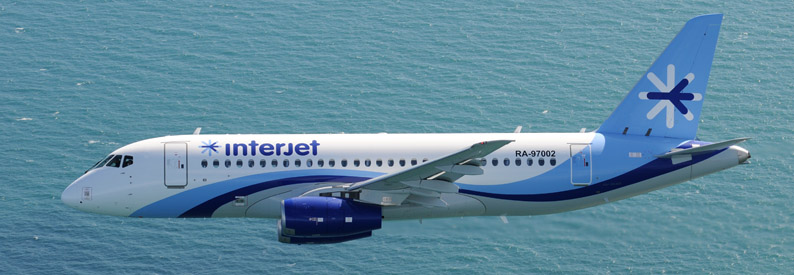
In 2017, the carrier kept four Sukhoi Superjet 100 jets on the ground due to the lack of spare parts. Interjet used grounded superjets as spare part suppliers.
Problems in the supply chain of the Russian-made regional jet led to flight cancellations and caused revenue losses. Only four out of 22 SSJ100s are still active.
Interjet (4O, Toluca) is nearing a deal for twelve A220s to replace its mostly grounded fleet of SSJ 100/95s, Reuters has reported citing industry sources.
Neither the carrier nor the manufacturer commented on the report but Interjet told Mexican aviation website EnElAire that a formal statement is to be expected.
With twenty-one SSJ 100/95s in its fleet, Interjet is the second-largest operator of the Sukhoi Civil Aircraft regional jet globally after Aeroflot, and also one of only two operators outside of Russia and the CIS countries (the other one being the Royal Thai Air Force with three aircraft). Interjet has been struggling with the reliability of the SSJs for a long time. Currently, only four units are active. The Mexican carrier recently decided to sell its entire fleet of SSJs.
Mexican low-cost carrier and all-Airbus operator Interjet signed a purchase agreement for 40 A320neo aircraft. Interjet will announce the aircraft’s engine selection at a later date. The A320neo has over 95 percent airframe commonality making it an easy fit for Interjet’s fleet of 36 A320s. Later this month, Interjet will receive an additional A320 aircraft.
In only seven years of operations, Interjet has become a leading domestic airline in Mexico, having quickly expanded their network throughout the country and into the United States, Central America and the Caribbean. The new A320neo will support their continued network expansion and fleet renewal plans. Interjet has a backlog of 45 A320 Family aircraft, including today’s order.
“Adding the newest aircraft technology to our already young and efficient A320 fleet will allow us to operate some of the most cost-efficient and environmentally-friendly equipment available in aviation,” said Interjet Chairman Miguel Aleman Velasco.
“The A320neo will help Interjet maintain our leading position in Mexico’s airline business,” said Interjet President Miguel Alemán Magnani. “This order solidifies an already strong partnership with one of Mexico’s leading airlines. It also reinforces Latin America’s growing trend of operating some of the world’s youngest and most efficient aircraft,” said John Leahy, Chief Operating Officer, Customers. “Interjet will be one of the first airlines in the region to operate the A320neo and to benefit from the 15 percent reduction in fuel burn it delivers.”
To date, more than 8,600 Airbus A320 Family aircraft have been sold and more than 5,300 delivered to more than 350 customers and operators worldwide, making it the world’s best selling commercial jetliner ever. With proven reliability and extended servicing periods, the A320 Family has the lowest operating costs of any single-aisle aircraft. The A320neo, with almost 1,500 firm orders from more than 30 customers since its launch, is the fastest selling commercial aircraft ever and is on track to enter service from 2015.
With more than 700 aircraft sold and a backlog of almost 350, over 450 Airbus aircraft operate throughout Latin America and the Caribbean. In the last 10 years, Airbus has tripled its in-service fleet, while delivering more than 60 percent of all aircraft operating in the region.
Airbus is the world’s leading aircraft manufacturer with design and manufacturing facilities in France, Germany, the UK, and Spain as well as subsidiaries in the US, China, Japan and in the Middle East. Headquartered in Toulouse, France, Airbus is an EADS company.