Showing posts with label A330-900NEO. Show all posts

Monday, 3 May 2021

Airbus Updates No.3364

 TAP Air Portugal Airbus A330neo Damaged In Guinea-Bissau

Yesterday, a TAP Air Portugal Airbus A330neo sustained damage after a ground collision at Osvaldo Vieira International Airport (OXB) in Guinea-Bissau. The impact with a lamppost while taxiing caused the aircraft involved to lose one of its wingtips.

None of the aircraft’s occupants were injured in the incident. Photo: Vincenzo Pace | Simple Flying

What happened?

Portuguese flag carrier TAP is one of two airlines to fly from Lisbon to Osvaldo Vieira International Airport, along with euroAtlantic Airways. OXB serves Bissau, which is the capital of Guinea-Bissau, in West Africa. Yesterday, TAP flew an Airbus A330-900 on this route, touching down around half an hour late at 13:50 local time.

However, it appears that the aircraft ran into trouble while taxiing from OXB’s runway 03/21 to its stand. Indeed, Portuguese news site RTP reported that, while undergoing parking maneuvers, the flight in question struck a lamppost with its wingtip. This ground collision damaged the aircraft, causing its left ‘sharklet’ to be sheared off by the impact. The airline confirmed to Portuguese news agency Lusa that:

“The 232 passengers who were onboard disembarked smoothly, and their safety was never at stake. The causes will be properly investigated.”

TAP Portugal Airbus A330neo
The A330-900 struck a lamppost with its left wingtip while taxiing. Photo: Vincenzo Pace | Simple Flying

Stay informed: Sign up for our daily and weekly aviation news digests.

RTP added that, with the plane unable to leave Bissau, the airline was sending a replacement aircraft out to operate the return flight back to Lisbon. This would also allow a maintenance team to travel there to undertake the necessary repairs to the aircraft to return it to service. Thankfully, the plane’s damage is not so severe.

The aircraft involved

The plane that was the subject of the aforementioned ground collision incident was an Airbus A330-900 with the registration CS-TUJ. According to Planespotters.net, this aircraft is just under two years old, having arrived at TAP in July 2019. In addition to its registration, it also bears the name D Maria III, after a former Portuguese queen.

SeatGuru reports that TAP’s A330-900s have a capacity of 298 passengers. This figure consists of 34 business class flatbeds, 96 extra-legroom ‘Economy Xtra’ seats, and a 168-seat economy class section. With 232 passengers having been onboard the affected flight, this gave the service a relatively healthy load factor (under the circumstances) of 78%.

An important route for TAP’s neo families

As we have established, the aircraft that lost its wingtip in the ground collision in Bissau was an Airbus A330-900. This design is the larger of the two variants in Airbus’s next-generation A330neo (‘New Engine Option’) family. TAP Air Portugal is a significant airline for the type, having launched it commercially in December 2018.

Today, Planespotters.net reports that TAP’s fleet features 19 examples of the A330-900. However, this is not the only ‘neo’ aircraft that sees service on its route between Lisbon and Bissau. Indeed, data from RadarBox.com shows that the single-aisle A320neo has also operated this flight since it restarted on March 30th after a five-month hiatus.

The stretched-fuselage A321neo has also previously operated flight TP1477, although not since the service restarted just over a month ago. Specifically, its last rotation on the route took place on October 17th, 2020. Overall, if you’re wanting to experience some of TAP’s newest aircraft, its route between Lisbon and Bissau seems a pretty safe bet!

Airbus Updates No.3363


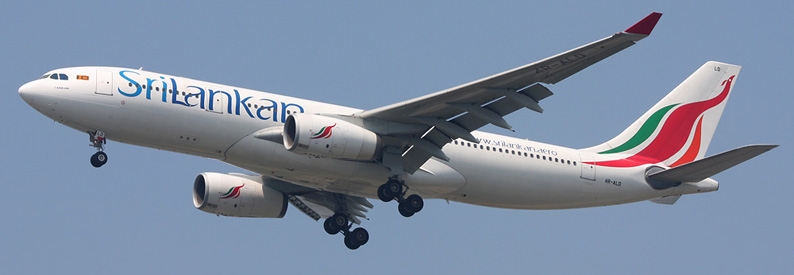
Airbus A350s back on SriLankan Airlines' radar post-COVID

SriLankan Airlines (UL, Colombo Int'l) is planning to take advantage of depressed lease rates to renew its ageing widebody fleet and has again warmed up to the idea of adding A350 aircraft, Chief Executive Vipula Gunatilleka said during the online Routes Reconnected conference.

"Six or seven aircraft will go out of service in the next two years or so. So we are looking for a replacement. The advantage is that now I can get aircraft at much cheaper prices. We want to keep an all-Airbus fleet, so we will be looking at A330-900s or even A350s. The A350s are now affordable, and with the cargo demand, this might be a handy aircraft for the long-haul," he said.

The carrier still has a firm order for four A350-900s from Airbus as a leftover from its ill-fated 2013 order for a total of eight aircraft, including four from the manufacturer, three from ILFC, and one from AerCap (the two lessors later merged). The type was quickly deemed unsuitable for the airline. SriLankan Airlines has been trying to extricate itself from the deal since 2015. It cancelled the four lease commitments between 2015 and 2017, agreeing to pay a USD98 million penalty and leasing in an A330-200 in an unsuitable configuration instead. The settlement reportedly also included increases in other lease rates. It has also been trying to convert the four remaining orders from Airbus to A330neo aircraft.

In March 2021, SriLankan Airlines filed a lawsuit against Airbus for alleged corruption during the procurement of the A350-900s, seeking USD1 billion in damages and compensation, the cancellation of the outstanding order for four aircraft, and the return of USD19 million in pre-delivery payments for these aircraft. According to the Deferred Prosecution Agreement between the UK Serious Fraud Office (SFO) and Airbus, the manufacturer failed to prevent graft and bribery during the sale of its aircraft to SriLankan Airlines.

The airline's current widebody fleet comprises five A330-200s (18.7 years old on average) and seven A330-300s (6 years). All twelve aircraft are dry-leased, the ch-aviation fleets advanced module shows.

Gunatilleka also reaffirmed that the airline is in the process of looking for its first two dedicated freighters.

He said that during the COVID-19 pandemic, the carrier had reoriented its network to focus on cargo services, including flights to destinations not served previously on a scheduled basis. This also entailed a radical downsizing of its Indian network, previously its most important market for connecting passengers. SriLankan Airlines plans to continue its reliance on cargo as its main revenue driver and rebuild its passenger network around routes with significant freight demand.

"[In the near term,] we will focus on the long-haul mainly, and we will have to reduce our reliance on the Indian market," Gunatilleka said.

He underlined that Sri Lanka hoped to reopen more widely for tourism during the current summer season. While many markets are likely to remain closed, Gunatilleka said he was hopeful that Russian tourists would come in the next few months. While traditionally arrivals from Russia had been concentrated during the winter season, the current restrictions have changed those patterns. Going forward, the recovery will rely heavily on the integration of border protocols, including through digital tools.

"India will recover fast, we would expect the same from China, and the Middle East as well, where there is a lot of Sri Lankan expatriate workers... If India reopens, we will also have more connecting traffic from Australia," he said.

SriLankan is also optimistic about the demand from and to Europe, including the United Kingdom, Sri Lanka's primary destination market. Gunatilleka said the carrier was also considering the relaunch of services to Frankfurt Int'l and Paris CDG.

Friday, 26 July 2019

Airbus Updates No.2232

Indonesia's Lion Air takes delivery of first A330-900


Lion Air (JT, Jakarta Soekarno-Hatta) took delivery of the first of ten A330-900s on July 19, 2019, becoming the first operator of the type in the Asia-Pacific region.
PK-LEI (msn 1926) was ferried from Toulouse Blagnac directly to Jakarta Soekarno-Hatta on July 19-20, Flightradar24 ADS-B data shows.
The Indonesian LCC plans to initially use the new type to run charter Hajj flights to Saudi Arabia. As such, its first commercial service was from Jakarta to Jeddah on July 22.
On dry-lease from BOC Aviation, the Airbus widebody twinjet is powered by Rolls-Royce Trent 7000-72 engines and features 436 all-economy class seats.
According to an airline statement, Lion Air has commitments for ten A330-900s and options for four more. Two are expected this year while the remaining eight are due in 2020.
The ch-aviation fleets advanced module shows the Lion Air Group subsidiary's fleet currently includes three A330-300s alongside thirty-eight B737-800s and sixty-four B737-900(ER)s. It also has ten grounded B737-8s and four B737-9s. Sister carrier Thai Lion Air (SL, Bangkok Don Mueang) also operates three A330-300s, eleven B737-800s, and nineteen B737-900(ER)s.

Monday, 13 May 2019

Airbus Updates No.2151

Brazil's Azul adds first A330neo


Azul Linhas Aéreas Brasileiras (AD, Sao Paulo Viracopos) has taken delivery of its first A330neo following the arrival of A330-900 PR-ANZ (msn 1876) in Belo Horizonte Tancredo Neves from Toulouse Blagnac on May 10. The Rolls-Royce Trent 7000-powered widebody features 298 seats; 34 seats in business class, 108 in Economy Extra, and 156 in Economy.
Azul is expecting a total of five such aircraft from Airbus (AIB, Toulouse Blagnac) to be used in replacing its current fleet of seven A330-200s which collectively average 17 years of age. Given delays in deliveries from Airbus, Azul said in a 1Q19 earnings call that the second jet, that was originally due in June/July, would now only likely arrive during the latter part of the second half of 2019.
The Brazilian hybrid carrier uses its A330s to run flights from Sao Paulo Viracopos, Belo Horizonte Tancredo Neves, and Recife to Florida and Portugal. For its part, the A330neo is due to make its commercial debut on June 10 on the Campinas-Lisbon route.
Azul's other fleet includes thirty A320neo, thirty-three ATR72-600s, seven E190s, and fifty-one E195s. It has also expressed an interest in taking over around ten A320neo that were recently in service with Avianca Brasil (O6, Rio de Janeiro Santos Dumont) but has yet to finalise a deal.

Monday, 11 March 2019

Airbus Updates No.2102

Air Sénégal takes delivery of maiden widebody, an A330-900


Air Sénégal (HC, Dakar Blaise Diagne Int'l) has taken delivery of its first widebody jet, A330-900 9H-SZN (msn 1910). One of two on order from Airbus, the aircraft was positioned to Dakar Blaise Diagne Int'l on Friday, March 8, and has since been deployed into service on the carrier's Dakar-Paris CDG, France route.
As previously reported, Hi Fly Malta (HFM, Malta Int'l) is operating the jet on Air Sénégal's behalf given it does not currently possess the IOSA or European TCO authorizations needed to serve the European Union. As part of plans to develop Dakar Blaise Diagne Int'l into an intercontinental connecting hub, the Senegalese carrier also plans to open up service to Brazil and the United States.
Aside from the A330neo, Air Sénégal also operates two A319-100s (of which one is leased from Air Côte d'Ivoire) and two ATR72-600s. It had also wet-leased an A340-300 from Hi Fly Malta prior to the A330neo's arrival.

Total Pageviews

Airbus Updates No.4733

  Faroes' Atlantic Airways orders two more A320neo aircraft Atlantic Airways (RC, Faroe Islands Vágar ) has placed a firm order with Ai...

Airbus Blogs

Blog Archive

Top 10 Award

Airbus Blogs

Labels