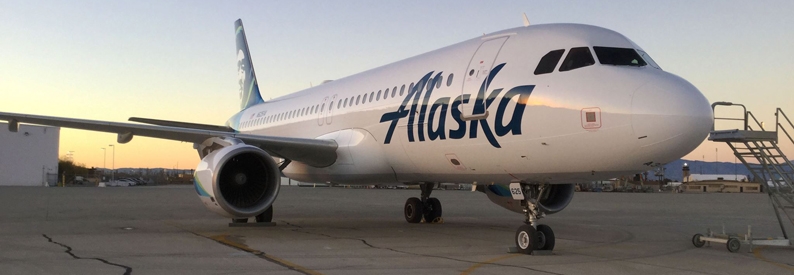
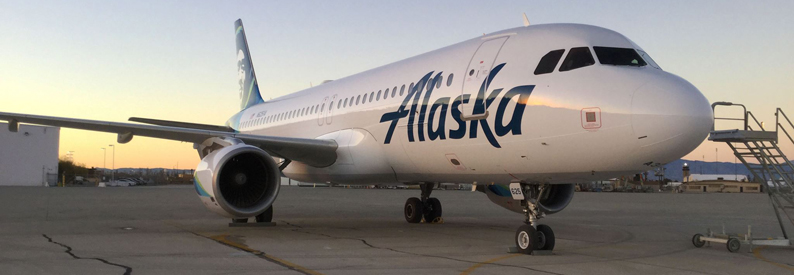
Alaska Airlines retired the ten aircraft, which are just 5.6 years old on average, at the end of September 2023, as it pursues its fleet unification strategy centred on Boeing narrowbody jets. The aircraft were initially contracted by Virgin America on lease from GECASin 2015. Only four were delivered to the low-cost carrier before its takeover by Alaska Airlines, while the other six entered into service directly with Alaska Airlines.
The ch-aviation fleets ownership module shows that Alaska Airlines owned one of the ten aircraft, while the other nine were leased - four from Jackson Square Aviation, two each from AerCap and SMBC Aviation Capital, and one from Merx Aviation Finance. The carrier recorded a USD14 million gain on the "interest expense associated with certain A321neo lease agreements which were modified as part of Alaska's fleet transition".
American Airlines already operates seventy A321-200NX and has four more on order from Airbus (as well as fifty A321-200NY(XLR)s). All of its current A321neo were delivered directly from the manufacturer.
On 30 September 2023, Alaska Airlines conducted its final Airbus-flight. The flight was conducted by A321neo N921VA (7589), which flew as AS1126 from Seattle (WA) to Los Angeles (CA).
Alaska Airlines inherited an Airbus-fleet after it merged with Virgin America in 2018. Since then, the airline operated 53 A320s, and ten A321neos. It even considered ordering new Airbuses but decided against it and to stick with Boeing.
With the retirement of its final Airbus, Alaska Airlines' mainline-fleet now consists of 222 Boeing B737s, splitted into fourteen B737-700s, 61 B737-800s, twelve B737-900s, 79 B737-900ERs, and 56 B737-9s.
Having inherited the Airbus jets from Virgin America via a now concluded merger, Alaska Airlines will once again be an all-Boeing operator in terms of mainline aircraft.
The ch-aviation fleets advanced module shows that the carrier has ten A321neo. While all of them were ordered by Virgin America before its merger with Alaska Air Group, only four were delivered to the low-cost carrier and the remaining six to Alaska Airlines. Five remain active, while the other five were retired in the first half of September 2023.
The ch-aviation schedules module shows that the carrier plans to continue operating the type out of its four main bases - Seattle Tacoma Int'l, Portland Int'l, Los Angeles Int'l, and San Francisco, CA - through the last day. The ch-aviation fleets advanced module shows the airline currently operates thirty-seven A320-200s, of which only 25 remain active. All of the aircraft are leased. Alaska Airlines previously said all A320s would exit the fleet by the end of 2022.
All of the A320s, as well as previously exited A319-100s and still active A321-200Ns, were inherited by Alaska Airlines after its takeover of Virgin America. The A321neo will leave the fleet by the end of 2023. Afterwards, Alaska Airlines plans to consolidate its mainline fleet around the B737 MAX family, while its regional subsidiary Horizon Air (QX, Seattle Tacoma Int'l) will focus on operating E175s.
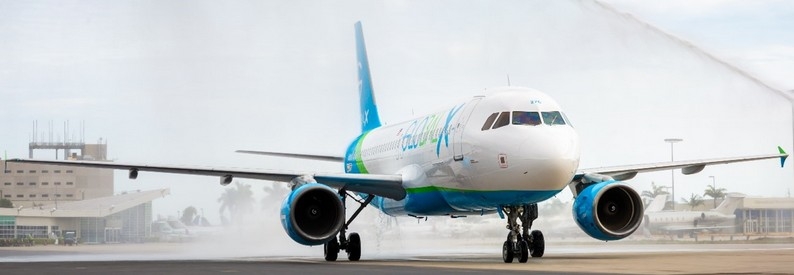
GLOBALX (GXA, Miami Int'l) has announced in an investor update that it has signed a Letter of Intent for a single A319-100 due for delivery by mid-February 2022. The A319 will be 9H-TLS (msn 2662), an ex-Hi Fly Malta aircraft, the carrier confirmed in a follow-up briefing.
Currently, GLOBALX operates five A320-200s and a single A321-200, the ch-aviation fleets advanced module shows. It plans to wet-lease a single A320-200 from minority shareholder SmartLynx Airlines (6Y, Riga) starting next month, and will add a further two in-house units of the type by the end of May. The first of these will be an ex-Alaska Airlines jet due for delivery in March 2022. GLOBALX said it would be N628VA (msn 2993), a sistership of N626VA (msn 2830) and N627VA (msn 2851), both of which are also ex-Alaska Airlines (AS, Seattle Tacoma Int'l) inventory.
The airline underlined that it is planning to add more aircraft to benefit from low lease rates. It said earlier that it planned to add at least five passenger aircraft throughout 2022, including at least one A321-200.
"Our growth continues, and we are being offered additional aircraft at very advantageous lease rates and terms. Our business case remains strong, and we will start our cargo certification with the FAA this quarter with converted A321 freighters being delivered in the third quarter of 2022," Chairman and Chief Executive Ed Wegel said.
The airline plans to take its first three A321-200(P2F)s in 2022. It said it signed an LOI for another two for delivery in 2023, increasing the total confirmed number of converted A321-200s it will take by the end of next year to 11.
Alaska Airlines Reactivating 10 Airbus A320s To Support Recovery
Things are improving for Alaska Airlines. Now, to support the carrier’s recovery, it is planning on reactivating ten Airbus A320ceos. These planes, which are only coming back for a short time, will help tide the carrier over before it gets enough Boeing 737 MAX jets to support its fleet plans.
Alaska Airlines is reactivating 10 Airbus A320s. Photo: Getty Images
Alaska Airlines reactivating 10 Airbus A320s
On the carrier’s second-quarter earnings call, CEO Ben Minicucci stated the following on Alaska Airlines reactivating 10 Airbus jets:
“We are planning to reactivate approximately 10 Airbus aircraft and begin flying them this fall and winter. This temporary return of several Airbus airplanes allows us to create capacity quickly and protects against unforeseen events that could be outside of our control, such as supply chain disruption.”
Alaska Airlines is bringing back the Airbus A320s to add temporary capacity as it waits for more MAX jets. Photo: Getty Images
The Airbus jets that are coming back will come online later this year, toward the fourth quarter. The jets are mainly there to support the airline’s recovery heading into summer 2022. While it is reactivating these jets, the airline is still confident in Boeing’s ability to deliver the MAX jets Alaska has on order. As Mr. Minicucci stated:
I am 100% confident in Boeing’s ability to deliver. You know, our view is that there are things right now in the economy, with supply chain, that some of us can’t even see– out of our control, out of Alaska’s control, out of Boeing’s control, and these Airbus, what it does is just gives us dry powder to either backfill any issues that we may experience because of it, or like Andrew said, we can grow up to 8% for the next summer of 2022.”
Stay informed:Sign up for our daily and weekly aviation news digests.
Alaska’s Airbus A320ceos
The jets that are coming back are 10 Airbus A320ceos. These planes have room for 150 passengers. There are 12 in first class, 24 in extra-legroom economy, and 114 in standard economy. These ten jets will complement the 21 existing Airbus A320s alaska recorded in its fleet at the end of the first quarter.
The Airbus A320ceos were additions to Alaska’s fleet after the merger with Virgin America. However, Alaska had consistently sought to return to its all-Boeing roots. To replace the A320s, it turned to the Boeing 737 MAX. It will also continue to fly the Airbus A321neo.
After placing a large 737 MAX order, the carrier turned to accelerated Airbus A320ceo retirements. In the early days of the crisis, it got rid of its Airbus A319s, leaving only the A320ceos and ten A321neos left in its fleet.
However, Alaska Airlines now needs the added capacity to support its ongoing recovery. The summer has been turning out to be a good one for travel in the United States, and demand continues to return as various states and attractions reopen. It made decisions to retire the Airbus A320s quickly before seeing the quick return of demand
The Airbus A320s are only coming back temporarily. Alaska Airlines is expecting to take 31 Boeing 737 MAX 9s next year, and those will help support the airline’s future fleet plans and lead to more Airbus A320ceo retirements.
Where Alaska’s recovery stands
Things are looking up at Alaska Airlines. The carrier is planning to return to 100% of 2019-levels of flying by summer 2022 at the latest, though it will accelerate that timeline if the demand environment warrants. Currently, Alaska Airlines plans to fly capacity 17-20% below 2019 levels in the third quarter, with load factors at roughly 82-85%.
The goal is to get Alaska back to a mostly Boeing fleet with the 737 MAX. Photo: Vincenzo Pace | Simple Flying
Altogether, the summer has proven to be a great season for Alaska Airlines. The carrier is coming back strong, and it is headed back toward profitability in its own right without government support. With the recovery continuing in earnest, Alaska Airlines needs more planes, and it is gearing up for the flexibility to fly more than 2019-levels of capacity sooner if necessary.
Spanish low-cost carrier Volotea, which recently phased out its Boeing 717s (see news 11 January 2021), will add five Airbus A320 aircraft to its fleet in the near future.
Following the retirement of the B717 it looks like Volotea has become an all A319 operator, from which it has twenty aircraft in its fleet with three more to join in the coming months.
However, early January 2021 four ex Aeroflot A320s that were stored at Ostrava and Mineralnye Vody were registered in Spain. In mid-January one of these aircraft was painted in Volotea colours, revealing the identity of the new Spanish operator.
Besides these four ex Russian Airbus' Volotea will also add a fifth A320, which is coming from Alaska Airlines.
The Airbus A320s involved are:
EC-NNL (msn 3545), ex Aeroflot VP-BKC EC-NNM (msn 3574), ex Aeroflot VP-BZO EC-NNN (msn 3835), ex Aeroflot VQ-BBC EC-NNY (msn 3786), ex Aeroflot VQ-BAY EC-NNZ (msn 2616), ex Alaska Airlines N621VA
It is not the first time an Airbus A320 will be operated for Volotea, because in the summer of 2018 the airline hired an Airbus A320 (msn 1296, EC-MQH) from Gowair Vacation Airlines. This aircraft only had additional Volotea titles and not the full colour scheme.
Alaska Airlines (AS, Seattle Tacoma Int'l) is evaluating options regarding the dry-leases of around two-thirds of its Airbus aircraft which are due to expire over the next three years, Executive Vice-President and Chief Financial Officer Shane Tackett said during the carrier's quarterly earnings call.
"Over the next three years, we will see the expiration of 42 of our 61 Airbus leases, which represents an opportunity to either extend those leases at far lower rates to what we pay today or possibly replace them with larger, more efficient aircraft," he said.
According to the ch-aviation fleets advanced module, Alaska Airlines currently operates fifty-one A320-200s and ten A321-200Ns. All of these aircraft were inherited from Virgin America (VX, San Francisco, CA), although six A321neo were delivered to Alaska after the merger. The carrier owns ten A320-200s and dry-leases the remaining 51.
Tackett underlined that the expiration of the leases would not necessarily lead to the trimming of the airline's fleet. As Alaska Airlines is "very cognizant" of its lease expenses, it will also consider sourcing cheaper aircraft to replace those that are set to expire.
"We love all of our airplanes, but the [already retired] A319-100s and A320s are uneconomic relative to others. It's a logical time as we're resizing our fleet getting it to best-match demand, to really figure out how do we get the best economic aircraft on the field and with the A320s, you can either shrink that fleet, we can extend leases or we can replace them with something better," Senior Vice-President (Fleet, Finance, and Alliances) Nat Pieper added.
Pieper added that the carrier was talking with Airbus, Boeing, and an ensemble of lessors about its potential fleet changes. He underlined that Alaska Airlines was positive about the recertification of the B737 MAX and would factor this type into its considerations. It has thirty-two B737-9s on firm order from Boeing.
Alaska Airlines (AS, Seattle Tacoma Int'l) has resolved to retire its ten owned A320-200s "earlier than previously scheduled" without disclosing a specific date for the phase-out, the carrier said in an SEC filing.
The airline said that it "concluded that the carrying value [of the A320-200s] was no longer recoverable". The accelerated retirement would result in a USD115-125 million impairment charge, which is still subject to finalisation.
The carrier inherited all of its Airbus narrowbodies from Virgin America (VX, San Francisco, CA) after the takeover of the latter. According to the ch-aviation fleets advanced module, Alaska Airlines currently operates fifty-one A320-200s, of which forty-one are dry-leased, and ten are owned. The ten owned units are relatively young aircraft, ranging from 4.3 to 5.3 years of age. As such, they are the ten youngest A320-200s in Alaska Airlines' fleet. The average age of the entire fleet of fifty-one A320s is ten years old on average.
All but one of the owned aircraft were removed from revenue service by April 7, 2020, and have remained in storage since then. The only operational aircraft from the ten is N364VA (msn 7138), Flightradar24 ADS-B data shows.
The decision is an incremental downsizing of Alaska Airlines' Airbus fleet this year. The carrier has already retired all ten of its A319-100s and two A320-200s earlier this year and said that it planned to retire a further seven A320-200s in 2021.
Alaska Airlines used to be an all-Boeing mainline operator until the merger with Virgin America. It continues to operate eleven B737-700s, sixty-one B737-800s, twelve B737-900s, and seventy-nine B737-900(ER)s, as well as three B737-700(BDSF) freighters. It also operates ten A321-200Ns, which were ordered by Virgin America (although some of them were delivered already post-merger).
Alaska Airlines (AS, Seattle Tacoma Int'l) has resolved to retire twelve Airbus narrowbodies permanently, including all ten of its A319-100s, as a part of its post-COVID recovery strategy, Chief Financial Officer Shane Tackett said during the carrier's quarterly earnings.
"We have determined that at least 12 mainline aircraft would be permanently parked, including 10 A319s that were among the smallest and least efficient aircraft we have, and two leased A320s that had not yet been reconfigured to our new interior. The rest of the parked aircraft are being stored and maintained so they can reenter service," Tackett said.
Out of Alaska Airlines' fifty-one A320-200s, which are 9.6 years old on average, ten are owned, and the remainder is leased. The airline's Airbus fleet also includes ten A321-200neo.
Tackett added that as a "byproduct" of the carrier's decision to retire 12 Airbus aircraft, it is currently retraining around 240 pilots to its Boeing subfleet, which includes eleven B737-700s, sixty-one B737-800s, twelve B737-900s, seventy-nine B737-900(ER)s, and three B737-700(F)s.
The airline said that it halted all additional aircraft capital expenditure, although Tackett underlined that this did not entail deferring all future deliveries.
"We do have a lot of pre-delivery payments money on deposit with Boeing, and we can take aircraft under some of that and so there is an opportunity for us to do that without new cash going out the door actually," Tackett said.
The airline has thirty-two B737-9s on firm order from Boeing, as well as thirty A320neo orders inherited from Virgin.
Tackett stated that when the airline feels there is a need to "backfill" the capacity lost due to the retirement of the twelve Airbus narrowbodies, it will be doing so "by Boeing that we have on order today".
Aircraft part specialist TDA to disassemble youngest Airbus A320 ever
The American aircraft part specialist TDA has announced it acquired an Airbus A320 from Alaska Airlines for immediate teardown.
The Airbus A320 is the youngest aircraft that will be disassembled by TDA. The aircraft (MSN3359) was delivered to Virgin America in 2007. The airline merged with Alaska Airlines in 2018. It has been operated by Alaska Airlines since then.
It’s not the first time TDA breaks records with the disassembly of an A320. In 2016, we acquired MSN2137 for teardown: an ex-AirAsia A320 of just 12 years old, which then was the youngest teardown project ever.
MSN3359 shall be disassembled at Pinal Park in Marana, AZ, USA. The parts in good condition will be shipped to TDA's sale hubs around the world.
"We have an opportunity to replace sixty-one A319-100 and A320 aircraft with larger gauge, more efficient assets, either B737-9s and B737-10s or A321-200neo, all of which would give us the ability to generate more revenue while lowering unit costs. The economics of upgauging over the next several years are compelling, and we're looking forward to finalizing plans to do this is one of our main 2020 objective," he said.
According to the ch-aviation fleets advanced module, Alaska Airlines currently operates ten A319-100s (12.3 years old on average) and fifty-one A320-200s (9.3 years). It also took over ten A321neo from Virgin America although these aircraft, with an average age of just 1.9 years, are not slated for replacement in the near future.
The airline underlined that while the grounding of the B737 MAX was a challenge, it did not fundamentally alter its timeline for a decision.
"Boeing's challenges with the MAX did cause us to rework the sequencing of events and some of our timing. But we're confident that over the next six to nine months, we're going to come with a good decision for Alaska. Later this quarter, we're going to start the acquisition process. We will work it through the summer, and we're confident we'll come up with an answer in the third quarter, fourth quarter of this year," Senior Vice President (Fleet, Finance, and Alliances) Nathaniel Pieper added.
The bulk of the carrier's A320 Family aircraft are leased with just ten A320-200s owned by Alaska Airlines.
Prior to the merger, Alaska Airlines was an all-Boeing operator. Its fleet currently includes eleven B737-700s, sixty-one B737-800s, twelve B737-900s, and seventy-nine -900(ER)s, as well as three B737-700(F)s. In contrast to the A320s, the airline owns almost all of its B737s except for ten -800s.
It also has thirty-two B737 MAX 9s and thirty A320-200neo on firm orders from the two manufacturers. The order for A320neo has been inherited from Virgin America.
Alaska Airlines originally expected three B737 MAX 9s to deliver in 2019 and a further seven in 2020.