Showing posts with label AIRBUS A380 RETIREMENTS. Show all posts

Wednesday, 2 March 2022

Airbus Updates No.3794


China Southern Airlines to retire A380s by YE22
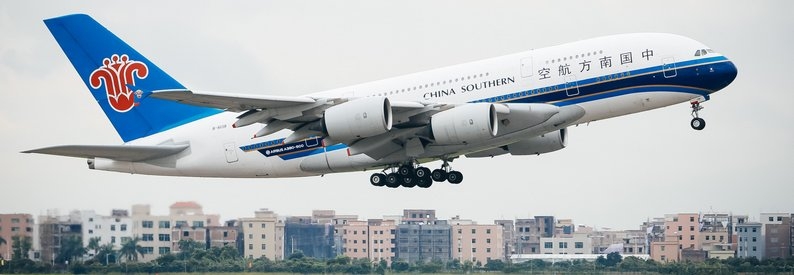
China Southern Airlines (CZ, Guangzhou) is set to retire all of its remaining A380-800s by the end of 2022, Chinese media has reported.

The Chinese carrier owns and operates five A380s, which are 10.3 years old on average, the ch-aviation fleets advanced module shows. The first two, B-6136 (msn 31) and B-6137 (msn 36), were retired from revenue service in late October and early November 2021, respectively. On February 24, both aircraft were ferried from Guangzhou via Victorville to Mojave for storage, Flightradar24 ADS-B data shows. For the time being, the other three remain in active service, although each of them operates only every few days. The type is deployed to Amsterdam SchipholLondon HeathrowLos Angeles Int'lSydney Kingsford Smith, and Melbourne Tullamarine, the ch-aviation schedules module indicates.

China Southern Airlines is the only A380 operator in China. It stood out during the COVID-19 pandemic as it has never fully grounded the type, although its utilisation was minimal. In April 2021, as other airlines were revealing plans to reactivate their A380s, the Chinese airline was much more hesitant to commit to their long-term operation.

Once the A380s are retired, China Southern Airlines' largest widebody aircraft type by passenger capacity will be the B777-300(ER)s, seating up to 361 passengers each. Its A380s can seat up to 506 passengers each. The airline never operated B747s in passenger configuration, although it does have two B747-400(FSCD)s.

Monday, 11 October 2021

Airbus Updates No.3592

 Asiana And Korean Air To Retire Their Airbus A380s Within Five Years

The A380 has suffered another blow this week as Korean Air has confirmed that it will be retiring its superjumbos within the next five years, ending the type’s tenure of a decade and a half. However, the upcoming merger with Asiana means that it too will lose all six of its A380s, which have served less than a decade currently. Let’s find out more about the loss of two superjumbo operators.

Asiana A380

Out

According to Executive Traveller, Asiana will follow Korean Air’s decision to ax the Airbus A380 from its fleet within five years. The private South Korean airline flies six superjumbos currently, which are some of the youngest in the skies. Having only taken its first delivery in 2014, Asiana’s A380s only average an age of 6.6 years.

However, these aircraft are unlikely to survive much longer than a decade. As the merger of Korean Air and Asiana begins to take shape, the decision to remove the A380 seems to have been set in stone. With the deal set to close in 2024, there is a small chance that the carrier will operate 16 A380s, but this will be at most for two years.

While disappointing to many, Asiana’s move hardly comes as a surprise. Considering Korean Air is buying the airline, it would make little sense to operate a smaller fleet of six planes while 10 are retired. Instead, Korean will focus on using twin-engine widebodies for most of its missions, while relying on the 747-8 for high-density ones. The 747s are here to stay for nearly another decade.

Two down

While Korean and Asiana aren’t saying goodbye to their A380s during the pandemic, it is certainly due to it. As the global aviation recovery still struggles to find its feet, there is little use for the 400+ seater jets currently. While the planes will likely make a comeback by next year or so, their efficiency remains largely in doubt compared to newer aircraft.

The decision will leave two fewer superjumbo operators going into the next half of the decade. While Emirates and Singapore Airlines will retain their top two positions, they will only be joined by four others for certain. For several other carriers, like Qatar Airways, the A380 plans remain a mystery.

Korean-Air-Asiana-Merger

Not the end

While the announcement of the A380s departure isn’t good, its continued presence is! The fact that Korean and Asiana will both maintain their A380s for the next five years is a shot in the arms for fans and another chance to fly the bird. Once these planes return to the skies, expect to see more travelers as the era of the double-decker jets begins to come to a close.

Tuesday, 4 May 2021

Airbus Updates No.3368

Malaysia Airlines To Retire Airbus A380 Fleet In Coming Months

Malaysia Airlines has become the latest in a string of airlines to ditch the Airbus A380. The airline plans to retire its Airbus A380s over the coming months. Given the poor second-hand market for the jet, the airline is still figuring out its gameplan to retire the type.

Malaysia Airlines, Airbus A380, Retirement
Malaysia Airlines becomes the latest airline to cast doubt on the Airbus A380’s retirement. Photo: Getty Images

While the Airbus A380 is an excellent aircraft for its purpose, its purpose is sadly relatively niche. Even before the current pandemic, some airlines were looking to retired the type at just ten years old. Airbus even saw the futility in continued marketing of the A380, pulling it from sale in early 2019.

Malaysia’s A380s going, going, gone

According to Reuters, Malaysia Airlines is set to retire its entire Airbus A380 fleet over the coming months. According to the publication, the airline’s Group Chief Executive Captain, Izham Ismail, commented,

“We are cognizant of the challenges to sell this aeroplane, but we are still looking at ways and means to dispose of our 380 fleet. At the moment, the management is convinced that the 380 doesn’t fit the future plan.”

Malaysia Airlines, Airbus A380, Retirement
Malaysia Airlines’ fleet of six Airbus A380s has an average age of nine years. Photo: Getty Images

How do you get rid of an Airbus A380?

Getting rid of an Airbus A380 isn’t the easiest thing to achieve in the world. Typically such a young aircraft would be sold on to have a second chance at life once its first owner has finished with it.

While a handful of airlines are interested in preserving their existing Airbus A380 fleets, they are not currently interested in taking any more aircraft, with the expectation of Emirates who is still expecting five new A380s from Airbus.

Outside of existing A380 operators, nobody wants to go near the giant with a four-foot barge pole. A second-hand market for the jet never got going. The aircraft is undesirable as, outside of a few niche applications, it is hard to fill, expensive to run, and inefficient.

For the time being, many airlines have simply been sending their retired A380s to long-term storage in the desert. Teruel, in Spain, has jets from four airlines. While the British Airways aircraft haven’t been ruled out of returning, some jets from Lufthansa, Air France, and Etihad won’t return to the skies. To date, only three Airbus A380s have actually been dismantled.

Malaysia Airlines Airbus A380 fleet

Malaysia Airlines currently has a fleet of six Airbus A380 aircraft. Planespotters.net reveals that the airline’s oldest jet is 9.5 years old, while the youngest is 8.5 years old. According to Airbus’ iflyA380 website, the aircraft officially flew to London and Hong Kong at the time of its grounding. The jet has been seen operating other routes in the past. The aircraft was also used by the airline to operate Hajj pilgrimage flights between Kuala Lumpur and Jeddah in Saudi Arabia.

One of the more exciting roles played by the Malaysia Airlines A380 saw it drafted in to help in the aftermath of the Thomas Cook collapse in September 2019. Alongside the only ever second-hand A380 operated by Hi Fly, one of Malaysia Airlines’ A380s carried stranded passengers back to the United Kingdom as part of the UK’s massive ATOL repatriation effort. Like Hi Fly’s A380, the airline also used an A380 to carry cargo around a year ago, becoming the first airline to do so with the giant.


Wednesday, 21 April 2021

Airbus Updates No.3338


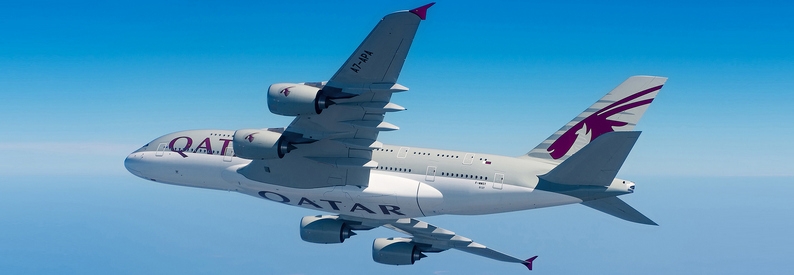
Qatar Airways confirms retirement of five Airbus A380s

Qatar Airways (QR, Doha Hamad Int'l) has confirmed it has taken impairment on half of its fleet of ten A380-800s, with five of the world’s largest passenger airliners not returning to service and the remaining five facing the same fate if the COVID-19 crisis lasts another two to three years.

“There is no future for the A380. It was the wrong aeroplane at the wrong time. It is something that passengers love, many liked to travel on the A380. It's very quiet and it's very spacious, but at the end of the day, for the operator, it's really painful to keep them in the skies,” Qatar Airways Group Chief Executive Officer Akbar Al Baker has told aviation and travel blogger Sam Chui.

He said the operating and maintenance costs of the “superjumbo” were prohibitive in the current economic climate. “An A380 at C-check is three times the cost of that of a B777 or an A350-1000,” he added. "If you look at the fuel burn per seat mile, it's way above that of any other airplane that is flying today.”

Al Baker was reiterating statements he made in January 2021 at a CAPA Live event when he said that half of the airline’s fleet of A380-800s would be retired.

The controversial Qatar Airways boss has been outspoken in recent years about the four-engined aircraft’s environmental impact, repeatedly calling it one of the “worst aircraft” in terms of carbon emissions. “It is the aim of Qatar Airways to keep on growing and become carbon neutral with that growth. That airplane just doesn't help us in that respect," he reiterated.

“I not only think the A380 is an inefficient aircraft, but some people are still bragging that they're going to start operating it and that it's going to be a very profitable airplane. Let's see how long they will be able to sustain that after the pandemic. When there is a huge movement on the green front, passengers will not want to get into an airplane that has a high pollution rating.”

“If they produce an aircraft that has more efficient fuel burn, then we would immediately place an order for that airplane because we want to make sure that we keep on growing and working towards the goal that we have undertaken of carbon neutrality.”

He said more than half of Qatar Airways’ fleet now comprised A350s and B787s. “So we will continue to keep on investing, while at the same time we are doing everything we can to sustain the environment.”

According to the ch-aviation fleets advanced module, the Qatar Airways fleet comprises nineteen A350-1000s with twenty-three of the type on order; and thirty-four A350-900s. It also has thirty B787-8s and seven B787-9s, with twenty-three of the latter to be delivered.

Qatar Airways became the ninth customer of the A380-800 in 2001 when it ordered two of the type plus two on option. It firmed up the USD1.2 billion commitment at the 2003 Dubai Air Show. Qatar Airways ordered three more A380s during the 2007 Paris Air Show. It ordered a further five A380s as part of an order for 55 Airbus aircraft during the 2011 Dubai Air Show.

The carrier expected to take delivery of its first three Airbus A380-800s in June 2014, with plans for the aircraft to be displayed at the Farnborough Air Show. In late May 2014, it was reported the delivery of the aircraft would be delayed by several weeks. Further delays shifted the start of A380 services to London Heathrow to August 1, 2014. Delivery of the first aircraft of the type finally took place on September 16, 2014. A380 services to London eventually commenced in October 2014.

Fellow Middle East carrier, Emirates (EK, Dubai Int'l) has been the biggest A380 customer with 123 ordered of which 118 have been delivered.

Thursday, 21 May 2020

Airbus Updates No.2664

AirFrance announced this afternoon (Wednesday) that it is withdrawing all of its A380’s from service permanently from today.
Having decided nealry a year ago not to spend the almost $US75m it would have taken to refurbish the aircraft interiors (they’re as delivered), the ailrine then said it would remove half of them on lease by 2022 and then the rest as appropriate, but likely by 2028.
Following the Covid19 pandemic, and the long road ahead to return to 2019 flight levels, the airline has decided to remove them immediately, making the largest aircraft in the airlines fleet its 773ER’s.
The aircraft are for the most part barely ten to eleven years old with the youngest just six.
Its an extremely sad day for aviation enthusiasts and must be deeply disheartening for those who spent millions of man hours assembling these huge aircraft, which should really have lasted at least thirty years.

Total Pageviews

Airbus Updates No.4701

  Brazil’s Azul to add four more Airbus A321 freighters Azul Linhas Aéreas Brasileiras (AD, São Paulo Viracopos ) will add four more A321-2...

Airbus Blogs

Blog Archive

Top 10 Award

Airbus Blogs

Labels