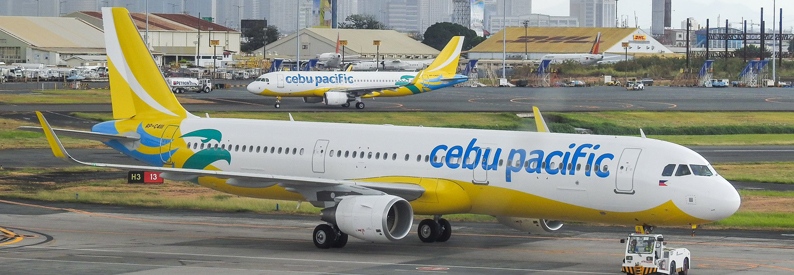
On 2 July 2024, Cebu Pacific announced it has signed a Memorandum of Understanding (MoU) with Airbus for an order of up to 152 new narrowbody aircraft. Already back in October 2023, Scramble reported about the airline's plan to do so.
In total, Cebu is ordering 102 A321neos, with options on another 50 A320neo-family aircraft. The airline also secured the right to switch between types if needed, so the final composition of this order can change. It's expected that the order will be finalised in the third quarter of this year and, once done, will be the largest order in Philippine aviation history to date.
No delivery timelines have been communicated in the airline's press-release, which will use the new Airbuses to replace older aircraft in the fleet as well as for expansion.
Cebu Pacific, a low-cost carrier, began flying in March 1996. It has bases at Cebu, Clark, Davao, Iloilo, and Manila. It's fleet is currently made-up of two ATR72-500Fs, sixteen ATR72-600s, nineteen A320s, twenty A320neos, seven A321s, fifteen A321neos, and eight A330-900s.
flypop Partners With Hi Fly To Begin Airbus A330 Operations
Getting in on the surging demand for air cargo transportation, flypop has partnered with Hi Fly to begin Airbus A330 services. With the announcement made on Thursday, these services will not have passengers and would instead be fully cargo. Let’s take a look at flypop’s first aircraft.
Zero LOPA cargo operations
LOPA, or the layout of passenger accommodations, is fairly self-explanatory in that it describes the seating configuration for passengers. Thus, when a plane is “zero LOPA,” this means that the aircraft is not configured to host passengers at all.
With this in mind, flypop proudly announced a partnership with Portugese wet lease firm Hi Fly to commence zero LOPA cargo operations.
In a statement, (Nino) Navdip Singh Judge, CEO & Principal of flypop, commented:
“This is another major milestone in the flypop journey as we have inducted the first of our four aircraft. We hope our cargo routes will assist with the global demand for cargo and help to alleviate cargo shortages for the Christmas holidays and beyond.”
flypop notes that Hi Fly is the largest widebody aircraft wet lease specialist in the world and has Air Operator Certificates in Portugal and Malta, with license to operate globally. Hi Fly operates a large fleet of all Airbus aircraft, which include the Airbus A320, A330, and A340. Hi Fly also gained fame for being the only carrier ever to acquire a used A380 to use for passenger services.
The aircraft
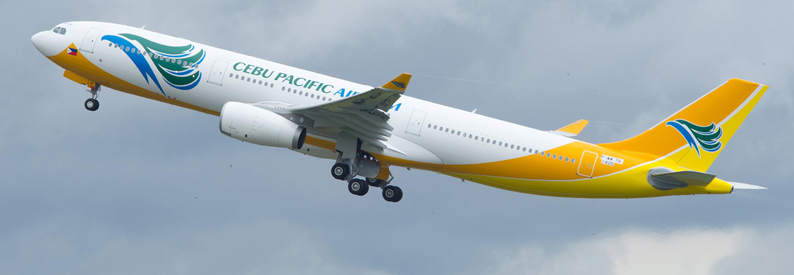
Registered as 9H-POP, flypop’s A330 is an eight-and-a-half-year-old Airbus A330-300. Originally operated by Cebu Pacific, the jet was first configured with 436 seats in a single-class, all-economy layout. However, with flypop looking to commence zero LOPA operations, the airline will not have any seats installed on this first aircraft for the time being.
According to RadarBox.com, the aircraft is currently flying from Hi Fly’s home airport of Beja in Portugal to the Western Canadian city of Edmonton.
Hi Fly is a widebody wet lease specialist. Photo: Nino Judge via Twitter
Passenger services will follow soon
It should be noted that cargo operations aren’t flypop’s main mission. Indeed, the UK startup carrier was launched with the goal of offering low-cost flights between the UK and parts of India. However, global conditions for travel have served to stifle this part of the airline’s launch. In a statement, flypop said:
“flypop plans to commence its first passenger services between London Stansted and India once the global pandemic situation becomes clearer. Several destinations on the Indian subcontinent are currently being considered including Amritsar, Hyderabad, Goa, Kolkata, Ahmedabad, Kochi and Chandigarh.”
flypop adds that it is “focused on serving the Indian and South Asian diaspora communities living in the UK and their visiting friends and relatives.” The airline says that its newly announced cargo-focused partnership with Hi Fly is the “most effective way to start flying operations…until the frequency cap on UK-India flights is increased.”
Although a UK-India passenger service is high on the list, the airline has goals of eventually serving other markets with ambitions to one day serve Africa, South America, and the US.
The first aircraft for UK-based start-up flypop has entered the paintshop in preparation for its delivery. The aircraft involved is A330-300 with MSN 1445, which was previously in use with Cebu Pacific as RP-C3342 and has been at Guangzhou since 24 May 2021 for maintenance and the paintjob.
The new airline is planning to connect the UK with India and will open its first base at London-Stansted. From there it plans to fly to Amritsar, Ahmedabad, Goa and Kolkata once it has received its AOC.
Cebu Pacific Air (5J, Manila Ninoy Aquino Int'l) has converted two of its eight A330-300s into makeshift freighters, conversion specialist Aircraft Interior Refurbishment España (AIRE) said in a press release.
"We saw this pandemic as an opportunity to revisit our operations to further improve wherever possible. Now more than ever, transport of goods must not be hampered, and the A330 reconfiguration will help us address the growing demand with a cabin fully dedicated for cargo. These converted aircraft will effectively enable us to carry more goods while doing so in a more efficient manner compared to regular A330s that rely on belly space," Vice-President (Commercial) Alex Reyes said.
The Filipino low-cost carrier operates eight A330-300s, out of which two are in long-term storage at Alice Springs. Another one, RP-C3345 (msn 1552) has been parked at Manila Ninoy Aquino Int'l since November 4, 2020, while the other five are active on regional, mostly cargo-only routes, Flightradar24 ADS-B data shows.
An airline spokeswoman has since confirmed to ch-aviation the first aircraft to undergo conversion is RP-C3344 (msn 1527) while the identity of the second has yet to be decided on.
Cebu's cargo flights are normally served by one ATR72-500(F) operated by regional subsidiary Cebgo (DG, Manila Ninoy Aquino Int'l). During the COVID-19 pandemic, the unit also started deploying one of its ATR72-500s for cargo-only flights. The airline has also been using A330s, An-320200s, A321-200s, and A321-200Ns to operate cargo-only flights.
Cebu Pacific Sends 9 Aircraft To Desert For Indefinite Storage
Philippine low-cost airline Cebu Pacific has this week relocated nine of its aircraft to a desert storage facility in Alice Springs, Australia. After being grounded nearly four months ago in the wake of the coronavirus outbreak, the aircraft have been moved to cut costs resulting from high airport parking fees.
Cebu Pacific has sent nine aircraft for long term storage: Photo: Cebu Pacific
Cebu Pacific optimizes its fleet
As reported by Aviation Updates Philippines on Monday, Cebu Pacific sent seven Airbus 321-211 and two A330-343 airplanes to Asia Pacific Aircraft Storage (APAS) for indefinite storage. The facility is based at Alice Springs Airport in Australia’s Northern Territory. An additional A321neo flew to APAS to ferry the flight crews back to Manila.
Two of the A321s had been parked at Clark International Airport and the rest at Manila Ninoy Aquino International Airport. The aircraft formed a long parade across the South Asian skies as they made their way to the Australian desert location.
The planes had the following registrations: RP-C4111, RP-C4112, RP-C4113, RP-C4114, RP-C4115, RP-C4116, RP-C4117, RP-C3341, RP-C3342. The ferry aircraft was RP-C4123.
According to Planespotters.net, Cebu Pacific currently has 75 strong fleet with an average age of 5.4 years. It consists of 34 Airbus A320s, 13 A321s, 8 A330s, and 20 ATR42/72 aircraft. Only 25 of the fleet are still in service.
At the end of May, it was reported that the airline was seeking sale-and-leaseback arrangements for 17 A320ceo aircraft as a part of its ongoing review of its long-term operations. It will instead move towards the more efficient neo variants.
The airline is moving the planes to avoid high parking costs. Photo: Cebu Pacific
Alice Springs storage facility
The APAS facility in Alice Springs has 100 hectares of storage and has significant space for future expansion. It claims to offer,
The arid desert location has an average humidity of around 25% all year round, low rainfall, and low-lying vegetation that helps to suppress dust. The runway is capable of handling any aircraft, and it has rail access which facilitates the transportation of aircraft parts.
Stored aircraft are not forgotten or abandoned. They are sealed and sensitive parts such as the engines are covered. They will also be checked weekly by mechanics and switched on periodically to ensure that they are kept in flight-ready condition.
The Cebu Pacific aircraft at APAS join those of other airlines, including six Singapore Airlines Airbus A380s. With the huge drop in passenger numbers, the superjumbos have become surplus to requirements. The world’s A380s are stored at just 24 airports.
The world’s A380 fleet is currently spread across 24 airports. Photo: Getty Images
Aircraft graveyards in demand
Since many airlines around the world grounded their fleets because of the pandemic, parking space at airports is at a premium. It can also be very expensive by the time you factor in maintenance and upkeep costs. Because of this, aircraft graveyards are providing a more cost-effective solution.
The Mojave Desert in California offers a huge plane storage facility, which also provides the arid, low humidity climate that is ideal for mothballing aircraft. Teruel in Spain has become the long-term home for the aircraft of many European airlines.
These facilities were more commonly used as the final resting place for planes at the end of their life, which is why they are known as aircraft graveyards.
Cebu Pacific order 16 A330neo, 10 A321XLR and 5 A320neo aircraft
Le Bourget – Cebu Pacific (CEB), a Low Cost Carrier based in the Philippines, has signed a Memorandum of Understanding (MOU) for 31 Airbus aircraft, comprising 16 A330neo, 10 A321XLR and 5 A320neo.
Cebu Pacific’s A330neo aircraft will be a higher capacity version of the A330-900, with 460 seats in single class configuration. The airline also becomes one of the launch airlines for the A321XLR, which will be able to fly nonstop from the Philippines to destinations as far afield as India and Australia. The A320neo aircraft announced today will be the first of the type to feature 194 seats in a single class layout.
This latest agreement supports CEB’s ongoing fleet renewal programme, which aims to have only new generation, environmentally efficient aircraft by 2024. The fast-growing carrier’s decision also strengthens its all-Airbus fleet status in the jet category.
Selected for their outstanding operational efficiency, comfort and increased range, these new-generation aircraft will allow Cebu Pacific to further expand its Asia-Pacific network and position itself even more competitively.
The A320neo and A321XLR are members of the A320 Family incorporating the very latest technologies, including new generation engines and Sharklets, which together deliver fuel savings of 20 percent. At the end of May 2019, the A320neo Family had received more than 6,500 firm orders from over 100 customers worldwide.
The A321XLR is the next evolutionary step from the A321LR which responds to market needs for even more range and payload, creating more value for the airlines. From 2023, it will deliver an unprecedented Xtra Long Range of up to 4,700nm – 15 percent more than the A321LR and with 30 percent lower fuel burn per seat compared with previous generation competitor aircraft.
The A330neo Family is the new generation A330, comprising two versions: the A330-800 and A330-900 sharing 99 percent commonality. It builds on the proven economics, versatility and reliability of the A330 Family, while reducing fuel consumption by about 25 percent per seat versus previous generation competitors and increasing range by up to 1,500 nautical miles, compared to the majority of A330s in operation.
The A330neo is powered by Rolls-Royce’s latest-generation Trent 7000 engines and features a new wing with increased span and new A350 XWB-inspired Sharklets. The cabin provides the comfort of the new Airspace amenities including state-of-the-art passenger inflight entertainment and Wifi connectivity systems.
The twinjet is expected to be deployed into service early next month on domestic Filipino flights first (General Santos, Iloilo, and Cebu) followed by regional Asian destinations thereafter.
Cebu Pacific has a total of seven A321ceo due from Airbus (AIB, Toulouse Blagnac). The aircraft were ordered so as to mitigate delays in deliveries of its A321neo jets, all thirty-two of which are due to deliver between late 2018 and 2022.
Aside from this recent induction, Cebu Pacific's mainline fleet also includes thirty-six A320-200s and eight A330-300s.
Cebu Pacific of the Philippines has placed an order with Airbus for seven A321ceo to meet ongoing strong growth on its domestic and regional network. The latest contract comes on top of an existing order for 32 A321neo. The aircraft will start joining the carrier’s fleet next year.
“We are very excited about adding the A321 to our fleet,” said Lance Gokongwei, Cebu Pacific President and CEO. “The aircraft will enable us to increase capacity on popular routes, while at the same time benefiting from the lowest operating costs in this size category. This will mean more low fares for more customers flying across our domestic and regional network.”
"We are pleased to sign this additional order with one of the most successful airlines in the Asian region,” said John Leahy, Airbus Chief Operating Officer, Customers. “With the A321 Cebu Pacific will be able to respond to growing demand with the highest levels of efficiency. Carrying more passengers further, and at lower cost, the A321 is the perfect solution to meet the requirements of airlines worldwide in the middle of the market segment.”
Manila-based Cebu Pacific is one of Asia’s leading low cost carriers. Operating domestic, regional and long haul services, the carrier flies to over 60 destinations in Asia, Australia, the Middle East and the USA. The carrier’s in-service Airbus fleet currently comprises 36 A320s and four A319s flying on domestic and regional services, plus eight widebody A330-300s operating on high capacity regional and long haul routes.
The A320 Family is the world’s best-selling single aisle product line. To date, the Family has won over 13,000 orders and more than 7,500 aircraft have been delivered to some 400 customers and operators worldwide. With one aircraft in four sizes (A318, A319, A320 and A321), the A320 Family seats from 100 to 240 passengers. The Family features the widest cabin in the single aisle market with 18” wide seats in Economy as standard.
 Cebu Pacific signs MoU with Airbus