Five Airbus A320neos sustained minor damage due to thunderstorm and strong winds at Ahemdabad Airport
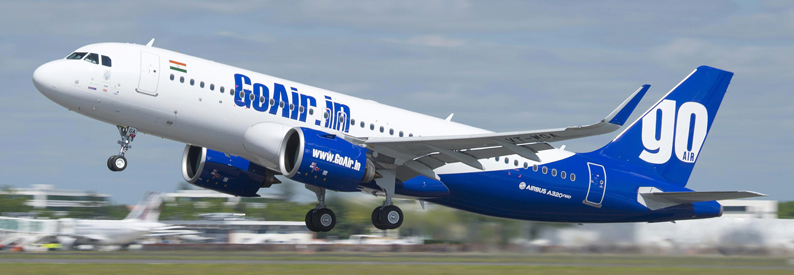
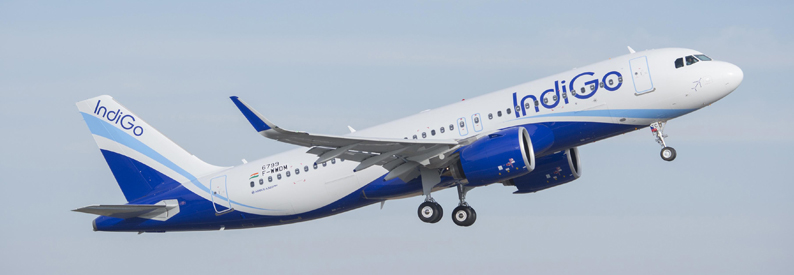
Three A320neos of IndiGo, with registration VT-ITD, VT- IVO, and VT-IVQ, whereas two A320neos of Go First, previously known as GoAir, were damaged in the incident. The Go First’s A320neos were registered as VT-WGV and VT-WJG.
The airlines have pulled these A320neos out of service for repairs and checks before returning them to service. In a statement, an IndiGo spokesperson said:
“Ahmedabad airport was hit by an unexpected thunderstorm with extremely high winds last evening. This impacted all airlines’ aircraft parked at Ahmedabad airport. Three IndiGo aircraft sustained minor/non-structural damages which will require replacement of certain parts.”
Airbus has today shared details of its deliveries for April. A total of 45 aircraft were delivered during the month. Even though this figure is lower than March’s numbers, it’s a vast improvement on April 2020’s deliveries.
Delta was busy taking deliveries and making orders with Airbus during the month of April. Photo: Delta Air Lines
Year-on-year improvements
In total, 45 aircraft were delivered to 30 customers across the industry last month. This factor brings the total 2021 deliveries to date to 170 units to 55 customers. Moreover, 48 orders for planes were made in the month.
In April 2020, 14 deliveries were made from the A320, A330, and A350 types. Furthermore, only nine new orders were placed during that period.
So, overall, April 2021’s results reflect the improving climate across the aviation industry following the significant downturn amid the pandemic. Notably, last year’s results were on the back of the first mass suspensions and groundings due to the unprecedented flight restrictions.
Including leasing firms, the following companies received aircraft in the month of April:
A220-300: Delta Air Lines, JetBlue, AirBaltic
A320neo: IndiGo, ALAFCO (SAS), TAP Air Portugal, China Southern, Frontier (3), flynas (2), ICBC (Air Cairo), CMB (TAP), Juneyao Airlines, Pegasus, GECAS (AirAsia India), GoAir, Sichuan Airlines, BOC Aviation (Azul).
A321ceo: Delta Air Lines (3)
A321neo: Air Lease Corporation (Air Arabia), Middle East Airlines, American Airlines, China Eastern, Wizz Air, Turkish Airlines, Aviation Capital Group (Juneyao Airlines), BOC Aviation (Ural Airlines), JetBlue, VietJet, Cathay Pacific Aircraft (Cathay Pacific), Turkish Airlines, Boc Aviation (Azul)
A330-900: CIT Leasing (Corsair), Delta Air Lines
A350-900: Air France, China Eastern, China Southern, Air France, Air China (2)
As expected, orders for new widebodies have been minimal amid the challenges that long-haul travel is facing in the present climate. Photo: Getty Images
Busy in Atlanta
Looking at the breakdown, Delta Air Lines was one of the most prolific airlines when it came to deliveries in April. Additionally, it has also been busy placing orders. The airline ordered 25 A321neos on April 22nd. The airline stands out as leasing powerhouse Avolon made up the remaining orders, which are split between 12 A321neos and 14 A320neos.
Hopeful signs
Altogether, Airbus will be glad that there is an improvement in deliveries and orders this year. The manufacturer reported a first-quarter net profit of €362 million ($439 million) last month. This means that the business has reported three profitable quarters in a row, a contrast to the loss of €481 million ($522 million) in Q1 2020.
Airbus will undoubtedly be hoping that the conditions continue to progress heading into the summer. The improved situation across certain regions such as the United States gives hope for continued growth. However, several regions still remain heavily impacted by the difficulties of the pandemic as the vaccine rollout continues.
Mumbai, India - Indian budget carrier GoAir has begun to phase out its Airbus A320ceo jets. The airline already moved two A320ceo aircraft from the fleet.
Last year, GoAir pushed back the removal of its A320ceos to secure the slots emptied by the bankrupt Jet Airways. The airline also had to ground at least nine A320neo aircraft due to the problem with the Pratt & Whitney engines.
Indian regulator DGCA has ordered local airlines operating A320neos with Pratt & Whitney engines to replace at least one engine after certain flying hours. Go Air has 43 Airbus A320neos in service and 101 on order.
GoAir (G8, Mumbai Int'l) has been forced to temporarily ‘suspend certain flights’ due to the unplanned grounding of existing aircraft and delays in the delivery of its A320-200neo. However, the airline reiterated that it remains on track to meet capacity expansion targets, according to customer note posted on its official Facebook account.
Over the last four weeks, it has suffered from unscheduled aircraft groundings. In addition, it has now be informed by Airbus and Pratt & Whitney of "their inability to deliver previously promised aircraft and engines through March 9, 2020." The airline said that it had "undertaken these [flight] suspensions as far ahead of time as possible in order to minimise the inconvenience to our customers" and that it intended to "reinstate these flights and operate at the earliest opportunity."
The low-cost carrier (LCC) has firm orders for 144 A320neo and remains on track for double-digit growth; it has grown by a robust 30% per annum for each of the last three years.
According to the ch-aviation fleets advanced module, the LCC has a fleet of forty-three A320-200neo and sixteen A320-200s in service. However, A320neo VT-WGO (msn 7871) has been inactive since December 11, Flightradar24 ADS-B data. Other GoAir aircraft currently listed as inactive include:
A320-200, VT-WAH (msn 3616), in maintenance since late October;
A320-200, VT-WAG (msn 3597), in maintenance since early November;
A320-200, VT-WAF (msn 3306), in maintenance since late December, and;
A320-200, VT-GOI (msn 5016), in maintenance since late November.
The Indian Directorate General of Civil Aviation (DGCA) has extended by five days to November 24, 2019, the deadline for IndiGo Airlines (6E, Delhi Int'l) and GoAir (G8, Mumbai Int'l) to replace engines on a total of twelve A320-200neo aircraft, the Indian media have reported.
According to the Economic Times, the DGCA said that IndiGo Airlines has so far replaced engines on 15 out of 23 aircraft it was mandated to upgrade before the November 19 deadline. For GoAir, the number stands at nine out of 13.
"Needless to say that this is below expectation. Nonetheless, as the task is onerous and availability of such engines is an issue, the DGCA has now asked the airlines to complete the task of engine replacement by 24 November," the DGCA said in a statement.
The two LCCs were tasked to replace select, older Pratt & Whitney PW1127G engines with modified low-pressure turbines on a total of 36 A320neo at the end of October. In addition, the DGCA ordered IndiGo Airlines to replace engines on all ninety-seven A320neo and A321-200neo by the end of January 2020.
According to the ch-aviation fleets advanced module, GoAir currently operates thirty-eight A320neo (and sixteen A320-200s), while IndiGo Airlines operates ninety A320neo and seven A321neo (as well as 127 A320-200s and twenty-three ATR72-600s).
GoAir (G8, Mumbai Int'l) has terminated negotiations with Vietnam's start-up Bamboo Airways (Qui Nhon) regarding wet-leasing of nine A320-200s after the two airlines could reportedly not agree on a price, the Financial Express has written.
The Vietnamese full-service start-up has already delayed its October launch. The carrier is due to commence operations initially with two A320s wet-leased from Small Planet Airlines (S5, Vilnius). It is also planning to dry-lease three aircraft from FTAI Aviation, namely one ex-SilkAirA319-100 and two ex-Turkish Airlines A320-200s. None of the five aircraft has been delivered to Vietnam so far.
As of March 2019, the start-up will also dry-lease three A320-200s from CDB Leasing.
For its part, GoAir is currently trying to either wet-lease or return to lessors its A320-200s as it transitions to an all-A320neo airline. According to the ch-aviation fleets module, the Indian LCC currently operates nineteen A320-200s and twenty-two A320neo. Of the latter, four units are presently grounded due to the lack of spare parts for Pratt & Whitney engines and one more due to unspecified "airframe related issues", the Economic Times has reported.
GoAir (G8, Mumbai Int'l) has once again grounded a number of its A320neo due to issues with Pratt & Whitney PW1100 Geared Turbo Fan engines, AIN has reported.
According to Flightradar24 ADS-B data, the five grounded units are:
- VT-WGA (msn 7047) since July 6;
- VT-WGD (msn 7205) since July 9;
- VT-WGK (msn 7753) since May 13;
- VT-WGM (msn 7859) since May 26, and
- VT-WGP (msn 8146) since July 6.
Except for the last unit, which is stored at Hyderabad Int'l, the four others are grounded at Delhi Int'l.
"Engine removals are being planned and coordinated with the airlines in India as we continue to successfully retrofit the fleet with the latest-configuration engines. Some aircraft will be out of service temporarily as they perform these removals," Pratt & Whitney said.
Fellow Indian LCC IndiGo Airlines (6E, Delhi Int'l) also recently grounded five A320neo. The issues facing both airlines are specific to India as the high concentration of particulates in the air causes the combustion chamber linings to develop unanticipated hot spots, reducing the engines' service life.
According to the ch-aviation capacity module, GoAir currently operates seventeen A320neo and has a further 127 units of the type on order from Airbus. Rival IndiGo operates thirty-nine A320neo and is the world's largest operator of the type. It still has a further 366 units, as well as twenty-five A321neo, on order with Airbus.
GoAir (G8, Mumbai Int'l) will explore options to lease out some of its incoming Airbus A320neo as it faces a shortage of pilots for the type, the Economic Times has reported citing people with knowledge of developments.
"The scarcity of commander pilots is a reality and GoAir is already feeling the pinch. The airline has been mulling a plan to lease out some of its A320neo planes, possibly from the ones yet to be delivered," one of the sources said.
The Indian LCC adopted a strategy to hire predominantly local cockpit staff and train its own captains but is currently unable to maintain a sufficiently high rate of training. Hiring foreign pilots remains an option but would raise labour costs for the airline.
According to the ch-aviation fleets module, GoAir currently has an all-A320 fleet with nineteen A320-200s and seventeen A320neo. It has a further 127 A320neo on order with Airbus. It is one of the largest customers of the programme globally, although much smaller than local rival IndiGo Airlines (6E, Delhi Int'l) which has already taken delivery of thirty-eight A320neo and has a further 369, as well as twenty-five A321neo, on order.
India's Directorate General of Civil Aviation (DGCA) has grounded eleven Pratt & Whitney-powered A320neo in service for GoAir (G8, Mumbai Int'l) and IndiGo Airlines (6E, Delhi Int'l) as the fallout from the latest round of operational issues relating to the PW1100 Geared Turbo Fan continues.
In a statement seen by Reuters, the regulator said the grounding affected eight IndiGo A320neo and three with GoAir. It has asked both carriers not to refit the affected engines until further notice.
Last month, the European Aviation Safety Agency (EASA) issued an Emergency Airworthiness Directive (EAD) that warned of In-Flight engine Shut-Downs (IFSD) and Rejected Take-Off (RTO) events for select Pratt & Whitney PW1100 GTF-powered A320neo/A321neo aircraft.
EASA's operational restrictions entailed the grounding of aircraft with two affected engines pending repair/change out, the de-pairing of affected engines, and the discontinuation of Extended Range Twin-engine Operations (ETOPS) for aircraft fitted with affected engines.
Indian low-cost airline Go Air has chosen Airbus for its further expansion plans by signing a Memorandum of Understanding (MoU) for 72 A320neo aircraft at the Farnborough International Airshow.
Go Air, a Wadia Group company, announced its latest order following a similar agreement for 72 A320neo placed in 2011 bringing the total order book to 144 aircraft. The first two aircraft from this order were delivered in June. With the NEO induction, Go Air will expand its network and offer fliers better connectivity and continue its growth as one of India’s preferred low-cost airline.
“The new A320neo provide us the competitive edge to achieve our growth targets and help us strengthening our presence in the wider region. It also reaffirms Go Air’s commitment to deliver the most modern, comfortable and excellent air travel experience to all customers as well as to strengthen the sustained positive growth and business expansion of the company. The new aircraft will help us in unlocking new domestic routes while providing a springboard for continued international network expansion in the years to come.” said Go Air CEO Wolfgang Prock-Schauer.
“This further commitment by Go Air is a testament to the reliability, passenger popularity and unbeatable operating economics of the A320 Family. I congratulate Go Air,” said Airbus Chief Operating Officer Customers, John Leahy.” Go Air is among the three first A320neo operators, and with an order for 144 is one of the leading operators of the type.”
Go Air is the first airline to use A320 NEO in Spaceflex configuration with 186 seats without compromising on the passenger leg room and comfort. This configuration will also enable better service and availability during peak season for the travelers.
The A320neo Family incorporates latest technologies including new generation engines and Sharklet wing tip devices, which together deliver more than 15 percent in fuel savings from day one and 20 percent by 2020 with further cabin innovations.
The A320neo Family is the world’s best-selling single aisle product line with over 4,500 orders from 83 customers since its launch in 2010 capturing almost 60 percent share of the market. Thanks to their widest cabin, all members of the A320neo Family offer unmatched comfort in all classes and Airbus’ 18” wide seats in economy as standard. To date, nine A320neo aircraft have been delivered to three customers.
Mumbai, India based GoAir has taken delivery of its first A320neo aircraft, becoming the world’s third operator to do so. The A320neo powered by Pratt and Whitney engines, is the first of 72 A320neo on order and joins GoAir’s existing fleet of 19 A320 aircraft.
The aircraft is configured in a conformable layout and is the first A320neo equipped with the innovative Spaceflex cabin configuration with 186 seats. GoAir currently flies to 22 Indian destinations. With the NEO induction, GoAir will expand its network and offer fliers better connectivity and continue its growth as one of India’s preferred low-cost airline.
GoAir’s first A320neo is the first of the type to be financed on a sale and leaseback through SMBC Aviation Capital.
The A320neo Family incorporates latest technologies including new generation engines and Sharklet wing tip devices, which together deliver more than 15 percent in fuel savings from day one and 20 percent by 2020 with further cabin innovations.
The A320neo Family is the world’s best-selling single aisle product line with over 4,500 orders from 82 customers since its launch in 2010 capturing almost 60 percent share of the market. Thanks to their widest cabin, all members of the A320neo Family offer unmatched comfort in all classes and Airbus’ 18” wide seats in economy as standard. To date, seven A320neo aircraft have been delivered to three customers.
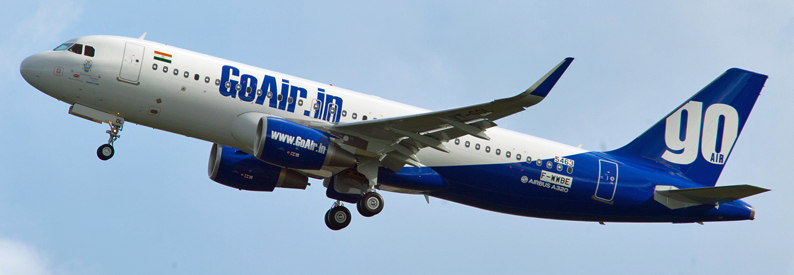
India’s GoAir, ‘The Fly Smart Airline”, wholly owned by the Wadia Group, has taken delivery of its first Sharklet equipped A320 aircraft financed by ACG (Aviation Capital Group) under a sale and leaseback arrangement which will see the Aircraft added to ACG's growing portfolio of Airbus A320 family aircraft.
The aircraft is part of an order placed by GoAir for 20 A320ceo in 2006. So far 13 aircraft have been delivered to GoAir making the first Sharklet equipped A320 the 14th to join the fleet. All subsequent seven deliveries will be equipped with Sharklets.
“We already operate one of the youngest and most fuel efficient aircraft fleets anywhere in the world and the introduction of the Sharklet will add further efficiency. Our investment in the every latest technology like Sharklets, and also the A320neo, is a demonstration of our commitment to our customers and to the growth of our valued airline,” said Giorgio De Roni, GoAir CEO
“We are delighted to be partnering GoAir with their fleet expansion and the introduction of the fuel saving Sharklet. We strive to always have the most modern aircraft in our aircraft portfolio and the A320 equipped with Sharklets is a perfect fit,” said Denis Kalscheur, ACG CEO.
“The Sharklets deliver up to four per cent fuel burn reduction on longer sectors, and this translates into impressive cost savings,” said John Leahy, Chief Operating Officer – Customers. “GoAir passengers can also be confident that on board their Sharklet equipped A320s, they’ll be flying the world’s greenest single aisle aircraft.”
Due to the very strong customer demand for Sharklets, all Airbus’ single-aisle final assembly lines (FALs) will be engaged in building A320 Family aircraft with Sharklets. These FALs are located in Toulouse (France), Hamburg (Germany) and Tianjin (China) and will soon be followed by an additional A320 FAL in Mobile (Alabama, USA).
Sharklets are an option on new-build A320 Family aircraft and offer operators the option of an additional 100 nautical miles range or increased payload capability of up to 450 kilograms. Sharklets are standard on all members of the A320neo Family. In 2011, GoAir placed an order for 72 A320neo aircraft.
The A320 Family is the world’s best-selling and most modern single aisle aircraft Family. To date, over 9,000 aircraft have been ordered and over 5,400 delivered to more than 380 customers and operators worldwide.