As 1969 began, the British government had made clear it would not provide financial support for the plan to develop a European twin-aisle airliner. The French and Germans had pledged to back a joint European commercial aircraft program, after the many failures of aircraft launched by national industries individually. But without British involvement, the proposed Airbus A300 had no engine. While that issue was solved with the help of General Electric’s CF6 replacing the proposed Rolls-Royce RB207, the aircraft still had no supplier to produce its wings. Were the Europeans missing their chance for a big role on the world stage of commercial aircraft manufacturing?
Fifty years later, Airbus is nearing its 20,000th aircraft order and 12,000th delivery, and it is firmly entrenched in a comfortable, if competitive, duopoly with Boeing. The company is the leader in the high-volume single-aisle market and looks likely to remain so for some time. In the widebody market, the A330 and A350 have been hits. And while the A380 was a spectacular market flop, Airbus is strong enough to shrug off the blow. After all, most of its former competitors have disappeared, and new entrants to the market are a long way from being a real threat.
The Airbus that turns 50 on May 29 is a company renowned for quality, customer service and technological innovation. It has contributed greatly to the commercial aviation industry’s capabilities by introducing such advances as fly-by-wire technology, flight-envelope protection, new materials and the forward-facing crew cockpit (FFCC), which eliminated the flight engineer. Even skeptics of the A380 acknowledge the aircraft was a technological marvel.
But it took a long time to reach the top. Airlines such as Air France initially balked at Airbus products, and Lufthansa chief Herbert Culmann famously proclaimed: “If someone wants to force me to buy this Airbus, I will take my hat and leave tomorrow.” Demand was so weak that production was down to one aircraft a month when Airbus finally broke into the U.S. market in 1977 by giving struggling Eastern Air Lines free use of four A300B4s for half a year. Even then, Boeing’s “exclusivity” agreements with American Airlines, Delta Air Lines and Continental Airlines kept Airbus locked out of a large portion of the world’s largest airline market for years.
The company did not deliver 100 airplanes in a single year until the late 1980s and did not catch Boeing in market share until the end of the 1990s, three decades after French and German officials signed the “Airbus pact” at the 1969 Paris Air Show.
Today’s Airbus still faces major challenges. Despite structural reforms under recently retired CEO Tom Enders that reduced government interference and put more focus on the bottom line, critics say the company still remains too bureaucratic. French and British authorities are investigating allegations of bribery and corruption. And its profitability lags Boeing’s by a sizable measure.
Antoine Gelain, managing director of Paragon European Partners in London, estimated in a recent column for Aviation Week that the A320 single-aisle family accounts for half of the company’s revenues and at least two-thirds of its profits (AW&ST March 11-24, p. 10). “Beyond that, the A350 production forecasts keep being revised downward, the A330 is at a standstill, the A380 has just been canceled, and the A400M military transport is a financial chasm,” Gelain says.
Airbus’ creation and its longevity were made possible by three factors: politics, people and technology. Without the political backing in France and Germany, the A300 would not have taken off. Without the skills of Bernard Ziegler, Roger Beteille and Felix Kracht, it would not have been developed. Without the persuasiveness of Jean Pierson, John Leahy and others, it would not have sold enough products to gain a foothold in the market. And without industrial strategists such as Jean-Luc Lagardere, Manfred Bischoff and later Enders, Airbus would not have become the integrated, globally focused company that it is today.
Beginnings
On Oct. 6, 1968. Ziegler hosted Beteille at his home on Avenue Stephane Mallarme in Paris. Their joint project was in crisis, and the two were keen to save it. In May, Rolls-Royce had come up with a price tag for the proposed RB207 engine that was to power the original A300. “The difference in price of the RB211 for the Lockheed L-1011 was simply unacceptable, and we realized that Rolls was playing another game without admitting it,” Beteille said at the time. “By continuing in that way, we would have ended up with nothing more than a superb glider.” The meeting was recounted in Airbus: The True Story, a 2006 book written by the late Pierre Sparaco, Aviation Week’s longtime European bureau chief.
Beteille and Ziegler decided to take the risk and propose a major change in the A300 layout. If the aircraft was no longer targeting the 300-seat short-haul market but was shrunk to an 80% scaled version of its former self, Airbus would not only have to spend much less on development, it also would suddenly have engine choice: The RB211 was big enough and so would be the CF6.
Sure enough, soon after the meeting, talks began with GE’s engine division—including its then-CEO of German origin, Gerhard Neumann—and the CF6 became the A300’s first engine. Only much later was the Pratt & Whitney JT9D added. Rolls-Royce never supplied an engine for the first- and second-generation (A310) of Airbus aircraft.
On May 29, 1969, the French and German governments agreed on a memorandum of understanding at the Paris show to jointly develop the A300B. At the time, it was not a momentous event: That week’s edition of Aviation Week & Space Technology buried the news on page 33. But the Airbus project was a reality.
Following the engine sourcing, the quandary over the A300’s wings nearly killed the development program. While UK-based Hawker Siddeley was willing to take on the wing work, the British government refused to provide development money. The German government came to the rescue by agreeing to fund the work, removing one of the last major hurdles to program launch.
Political influence on Airbus management was long considered an albatross, because until 2007, the company was led by two co-CEOs—one French, one German—to ensure that each nation’s interests were protected. But in the beginning, political support for financing was crucial.
A controversial German politician, Franz Josef Strauss, played a crucial role. Strauss, who was later elected leader of the Bavarian conservative party CSU, defense minister and prime minister of Bavaria, was an aviation enthusiast and private pilot. He became the first chairman of the Airbus Industrie supervisory board in 1970 and stayed in that role until his death in 1988, helping ensure that Airbus survived difficult times.
Ziegler was named as the first CEO of the Airbus Industrie consortium, Beteille became chief operating officer, and Felix Kracht, who had played an important role in the background, headed production. German-born Kracht seemed like the ideal person for the job. An engineer and pilot, in 1937 he became the first person to cross the Alps in a self-constructed glider. Later, he pioneered inventions like the airborne coupling of aircraft to allow refueling. He also worked on the DFS 228, a high-altitude reconnaissance aircraft. Starting in 1959, he served as the representative of France’s Nord Aviation at German aircraft manufacturer Weser Flugzeugbau and played a leading role in developing the Franco-German Transall C-160.
In 1967, Kracht became managing director of Deutsche Airbus, which was to consolidate Germany’s workshare in the upcoming program. Along with Beteille and Ziegler, he was the mastermind behind the A300B, a technically ambitious aircraft. He pushed to use the best technology available, wherever it came from. “If the Chinese have the best engine, we will use it,” he said. Beteille, Ziegler and Kracht also agreed that Airbus would not succeed in the long term with only a single product. The A300B would have to be developed into a family of aircraft if the Europeans were to compete with Boeing, McDonnell Douglas and Lockheed. To say so publicly early on did not seem prudent politically, so they kept the idea to themselves initially.
Market Entry
Following a nearly flawless flight-test campaign, the A300B was certified in 1974. Yet demand remained anemic: Airbus had collected orders for just 30 aircraft but had committed to producing 52 at a rate of 2.5 per month.
The consortium finally convinced Air France to buy the airliner by offering a -B2 version with three more seat rows. Even with the A300B2 in commercial service, though, the European venture’s future was still uncertain.
Then came a day in May 1977 that would be a crucial turning point. On that day, Ziegler’s successor, Bernard Lathiere, shook hands on a deal with Eastern Air Lines Chief Executive Frank Borman, and Thai Airways International signed up for A300s. Under the Eastern deal, the airline would get four A300B4s free of charge for six months. The American carrier could not afford a real order—it had lost money over the past 10 years—but Airbus desperately needed a customer in the U.S. Production was down to one aircraft per month.
The experiment became a big success. Eastern ordered 23 aircraft in April 1978. The agreement between two rather desperate companies—Eastern eventually filed for bankruptcy in 1989 and ceased flying in 1991—was Airbus’ breakthrough in the U.S.
Kracht’s and Beteille’s vision of a family of Airbus aircraft also became a reality. Studies of various aircraft, such as A300B derivatives, short-haul and long-haul models, had been discussed for years. Some plans assumed cooperation with other manufacturers including, at some point McDonnell Douglas. Ultimately, it became clear that Airbus had to go it alone.
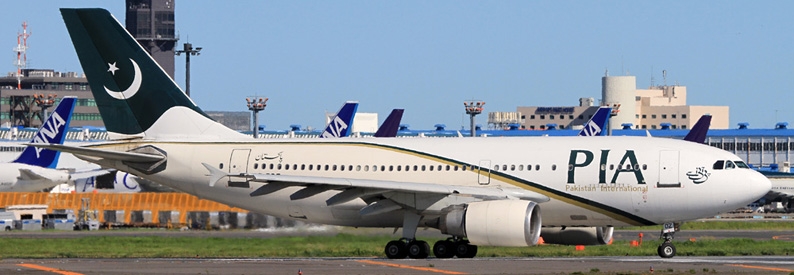
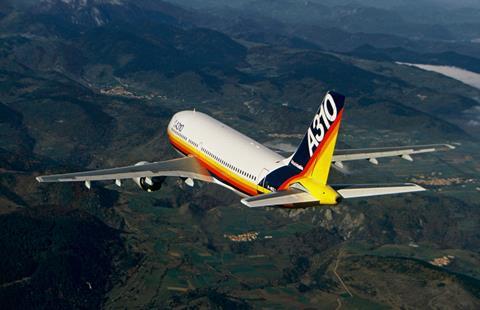
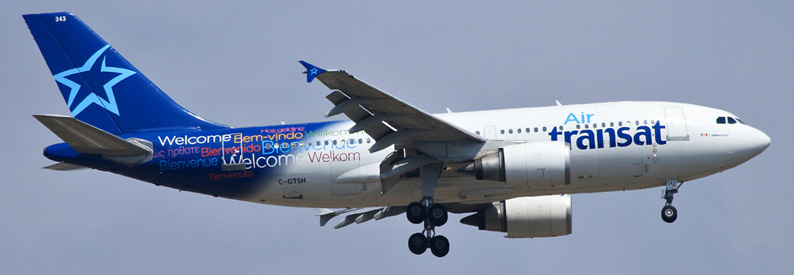
The A310, initially designated the A300B10, became the first derivative. In 1978, Lufthansa and Swissair were launch customers for the aircraft, which featured a shortened fuselage and new wings and engines. Most important, the aircraft also had a two-crew cockpit that caused discord with the Air France pilot unions, which wanted to stick to three in the cockpit. The derivative flew for the first time in 1982.
Not only was the A310 the first substantially different Airbus aircraft after the A300, the program also marked the return of the UK aerospace industry to the partnership. British Aerospace took a 20% stake in the program that it would keep for 27 years. There were other types in the making: a single-aisle aircraft that ultimately became the A320, and the TA9 and TA11 projects, today known as the A330 and A340. It was long debated which one should have priority.
Just two years after the A310’s first flight, Airbus launched the A320 narrowbody in 1984. It entered service in 1988 and has become the backbone of the manufacturer’s success and its profit engine. The same year the A320 was launched, the last of Airbus’ founding managers departed. A strong new leader had to be found.
Rivaling Boeing
Jean Pierson, 44 years old and head of Aerospatiale’s aircraft division, was picked to head the second generation of Airbus leadership. Pierson had no political background, but he brought solid industrial experience and a clear vision. Within six months of being appointed, he submitted his view of Airbus’ future to the supervisory board. “We intend to remain the leaders in the widebody market for medium-/long-range aircraft, and we also want to enter the market for very-long-range, widebody 250-seaters,” it stated. “We want to be present in both of the markets by the early 1990s.”
The A340 first flew in 1991; the A330 a year later. The two aircraft were designed to be as similar as possible, aside from the number and types of engines. To ease pilot transition, they also were developed to be as similar to the A320 as possible.
Pierson wanted Airbus to control 30% of the world market for large commercial aircraft, up from the 17% in 1984. For this vision to become reality, he made a daring move. Traditionally, the sales director had been British, in keeping with the tradition of splitting senior management duties between shareholder nations. But Pierson picked an American, John Leahy, a brash New Yorker who had turned around Airbus’ North American sales organization after joining the company in 1985 and landed a breakthrough order from Northwest Airlines for 100 A320s.
“The culture [in Toulouse] was already changing, but not by much,” Leahy recalled in a 2018 interview with Aviation Week (AW&ST Jan 29-Feb. 11, 2018, p. 64). “It was still a lot of ‘We know how to sell airplanes. Air France will buy, Lufthansa will buy, British Airways will not buy,’ and so on. We really had to learn how to become an international sales organization.”
Leahy quickly sought to extend his formula for success in North America to other regions. “When I got here, our vice president for China was sitting in a hotel suite in Beijing. That was the office. So we quickly broke ground for new quarters outside of the city by the airport. We put in a training center, parts center and vendors.”
Leahy told the Airbus board in 1995 that a market share of 50% should be reached by 2000, given that McDonnell Douglas was about to be merged into Boeing. That goal was met, but matching Boeing became an obsession that dominated Airbus thinking at times and led its leaders to make big mistakes.
Two errors in particular stand out. In the early 1990s, management still believed that the future of true long-haul flying was with four-engine aircraft, even though Boeing was already working on the 777, which entered commercial service in 1995. Airbus believed the A340 was the right aircraft to compete with the 777—after all, key airlines such as Lufthansa had encouraged it to go for four engines. Lufthansa still operates a sizeable A340 fleet, which it now regrets because of the high operating costs.
The second mistake was the belief that Airbus needed its own very large aircraft to compete with Boeing’s 747, which was suspected of generating monopoly margins. The first studies were conducted in the late 1980s; one was the ASX 500/600 study Aerospatiale presented in 1990 to airlines for comment. These analyses were part of the basis for the later A380 development work that led to industrial launch in 2000.
Looking back, the A380 is the symbol and result of a colossal misreading of the market. In the mid- and late 1990s, the 747 was past its peak—in spite of the 1988 introduction of the 747-400, a major upgrade. For years, smaller widebodies like the 767 had arrived in growing numbers on transatlantic routes. Then came the 777, which turned into a huge success. Airbus was after the wrong target.
The decision to pursue the A380 was not purely rational. Europe’s aerospace leaders wanted their own big jet. “The A3XX will still be in service when Airbus celebrates its centenary,” Pierson proclaimed in 1997, one year before he left the company at age 58. That enthusiasm was carried forward by Noel Forgeard, a representative of the industrial and political elite in Paris who took the reins of the company in 1998 and officially launched the A380 program in 2000.
Airbus had grandiose plans for a family of A380s: The -800 was to be followed by the 800ER, then a stretched -900 and a shorter -700, plus a freighter. The A380-800 wing was designed so it could be used on a larger variant, which made it less efficient.
Some airlines also joined the euphoria. Virgin Atlantic, one of the original launch customers, promoted a view of the aircraft as a luxury hotel in the sky. The closest any carrier got to that were the famous showers on Emirates Airline’s A380s and the Etihad Airways’ first-class apartment. Virgin Atlantic never took a single A380.
Long before the 2019 decision to terminate the program in 2021, it was clear the A380 would never make a profit. Airbus sunk more than €20 billion ($22.3 billion) into the project, but the aircraft, which entered service in 2007 with Singapore Airlines, was too big. It was superseded by more efficient twins like the 787, the A350 and the upcoming 777X. Yet, for all its challenges, the A380 was a technological success, and knowledge gained through the program flowed into the A350.
Crisis Years
In 2005, a discovery that A380 cables were too short highlighted shortcomings in Airbus’ industrial system. The crisis led to a series of structural reforms that ultimately led to Airbus’ parent company merging with the commercial unit a decade later.
The A380 was not the company’s only headache. Having seriously underestimated the 777 in the 1990s, Airbus now grappled with how to respond to Boeing’s new 787. Its initial response—reengining the A330—triggered an outcry among customers. Steven Udvar-Hazy, then CEO of aircraft leasing powerhouse International Lease Finance Corp. (ILFC), made sure Airbus understood it needed a better design. Several turns later, in 2006, Airbus made the crucial decision to launch the A350. The aircraft helped make up for the A340 mistake, and its relatively smooth development, testing and industrial ramp-up indicated that Airbus had learned many of the painful lessons of the A380 program.
In 2007, Enders took center stage in Airbus’ commercial aircraft business. He had risen mainly on the defense side of the company, serving as co-CEO of the parent company with Louis Gallois. When the board agreed that EADS should be run by a single CEO, Enders proposed that he head up the commercial aircraft business. He became sole CEO of the parent company five years later.
Enders once said it was less important to launch new aircraft programs than to make money on those that are built. He nonetheless reluctantly agreed to the launch of the A350. As Bombardier was starting to make inroads into the narrowbody market with its new C Series, and airlines were demanding more fuel-efficient aircraft, Airbus launched the A320neo in late 2010. It had new engines, but as few other changes as possible from the first-generation aircraft.
Boeing initially tried to ignore the Neo, pushing ahead to develop a clean-sheet successor to its 737. But in a business coup, Airbus won a big Neo order from American Airlines.
“There was a big fight, and Boeing threatened to sue [American] because it all happened before the end of the 20-year exclusivity agreement,” Leahy recalled. “But American said if Boeing wanted a share of the order, they would have to [produce] a 737neo as well. So they did it and did not even know what the aircraft was going to be like because they were so focused on the all-new single-aisle.”
Airlines have since ordered 6,504 A320neo-family aircraft, more than of any other aircraft in the space of nine years. The A321neo now controls the upper end of the single-aisle market and provides the basis for the A321LR, Airbus’ venture into narrowbody long-haul flying. It is also Airbus’ strategic weapon against Boeing’s proposed new midmarket airplane (NMA).
In another stroke, Airbus agreed in 2017 to assume a controlling stake in Bombardier’s C Series program at no cost. Some called it the “deal of the century.” The cutting-edge aircraft now fills out the lower end of the Airbus portfolio and has forced Boeing to react by buying a controlling stake in Embraer’s commercial aircraft business.
In contrast to the commercial successes, Enders did not do as well in his bid to balance out Airbus by bulking up the company’s defense business. His 2012 effort to merge with UK-based military powerhouse BAE Systems was scuttled by the German government. But in the end, there was a silver lining: The French government was so concerned about future interference in Airbus from the Germans that it agreed to governance changes that would severely limit state interference in the company.
Enders was now free to make Airbus even more international, opening an A320 final assembly line in Mobile, Alabama, to complement a similar line in Tianjin, China.
When he retired earlier this year, handing over his responsibilities to Guillaume Faury, Enders looked back at his company’s history. “Launching Airbus today would be impossible,” he said with a view on the rise of nationalism and protectionism that also infiltrates European politics and business decisions. Given this assessment, it is even more remarkable that it was possible for Europeans to join forces 50 years ago, only a little over 20 years after the defeat of Nazi Germany.
In the early days, Felix Kracht put it this way: “In Toulouse, British bolts are torqued into German nuts using French wrenches.” That it is still happening may be one of Airbus’ biggest successes.
article copyright of Aviation Week Network





_-_Airbus_A310_transform%C3%A9_en_bar-restaurant_-_04.jpg)