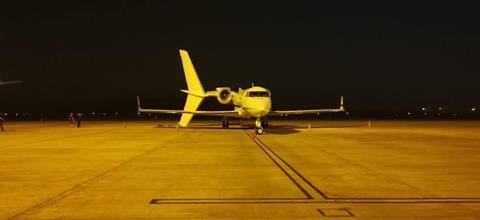
Thai Airways has taken delivery of its first Airbus A321neo. The aircraft, A321-251NX HS-TOA (12846), departed Hamburg-Finkenwerder on 24 December 2025 on its way to Bangkok with a stop-over at Dubai-World Central.
The airline is leasing this Airbus from AerCap and is the first of ten it will lease from this lessor. In total, the airline has secured leases with various companies for 32 A321neos.
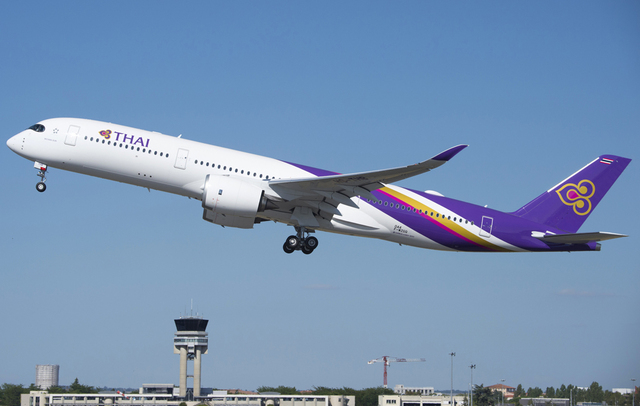
The fleet of Thai Airways is currently made-up of 20 A320s, six A330-300s, 23 A350-900s, three Boeing B777-200ERs, seventeen B777-300ERs, six B787-8s, and four B787-9s.
SMBC Aviation Capital has announced, on 5 February 2025, that it has signed a lease-agreement with Thai Airways. The deal is for eight Airbus A321neos that are planned to be delivered to the airline between 2026 and 2027. The A321neos are coming from SMBC's existing orderbook it has with the European manufacturer.
The eight will join ten A321neos Thai Airways is going to lease from AerCap, of which the first is set to arrive later this year. These leases were announced in February 2024.
The airline will use its new Airbuses to replace its current fleet of 20 Airbus A320s. Thai's fleet further consists of five A330-300s, 23 A350-900s, five Boeing B777-200ERs, seventeen B777-300ERs, six B787-8s, and three B787-9s.
N873CA (msn 1348) was sold to National and registered in the United States on May 28, ch-aviation research has revealed. However, the airframe has not been moved out of storage from Châteauroux Déols Marcel Dassault, according to ADS-B data.
“As part of our recent fleet modernisation and expansion plan, we are delighted to welcome another Airbus 330 into our fleet this week,” said Christopher Alf, chairman of National Airlines, adding that bringing this widebody to the fleet is “an encouraging response” to the rise in customer charter requests.
The airframe, formerly D-AAAS, is an 11.76-year-old A330-300 formerly employed solely by Thai Airways International (TG, Bangkok Suvarnabhumi), according to the ch-aviation fleets module. This carrier operated it between October 2012 and April 2022, and Stratos acquired the aircraft off lease on behalf of an investor and undertook an MRO project on it before delivery to National Airlines.
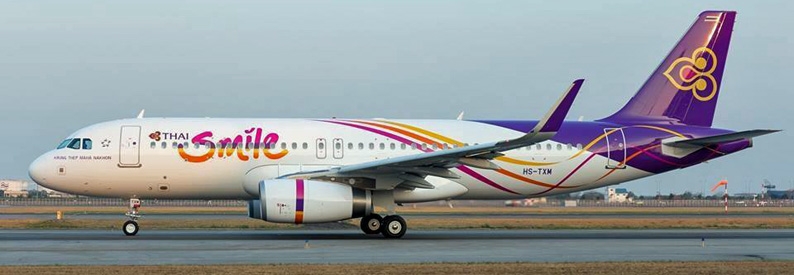
Operating for eleven years, Thai Smile used a fleet of twenty A320-200s leased or subleased from Thai Airways to take over the parent entity's domestic operations and some regional flights. Thai Airways CEO Chai Eamsiri flagged the merger in early 2023, with the entire process taking less than one year. He said the merger and cessation of Thai Smile's operations is a strategic move designed to streamline operations and enhance service efficiency, including improving aircraft utilisation and contributing to the overall profitability of Thai Airways.
Since mid-2023, Thai Smile's A320-200s have been gradually repainted and returned to the Thai Airways' fleet. According to ch-aviation fleets advanced data, all but four aircraft had gone back to the parent airline by the end of 2023. Eamsiri says while Thai Airways has taken over Thai Smile's flights, any outstanding merger business, including transferring any remaining aircraft to the Thai Airways air operator's certificate, should be finalised by January 31, 2024.
The merger also sees Thai Airways return to domestic operations, which it stepped away from after the launch of Thai Smile. The flag carrier is back on nine domestic city pairs, including Bangkok Suvarnabhumi - Phuket; Bangkok Suvarnabhumi - Chiang Mai; Bangkok Suvarnabhumi - Khon Kaen; Bangkok Suvarnabhumi - Hat Yai; Bangkok Suvarnabhumi - Chiang Rai; Bangkok Suvarnabhumi- Udon Thani; Bangkok Suvarnabhumi - Ubon Ratchathani; Bangkok Suvarnabhumi - Krabi; and Bangkok Suvarnabhumi - Narathiwat.
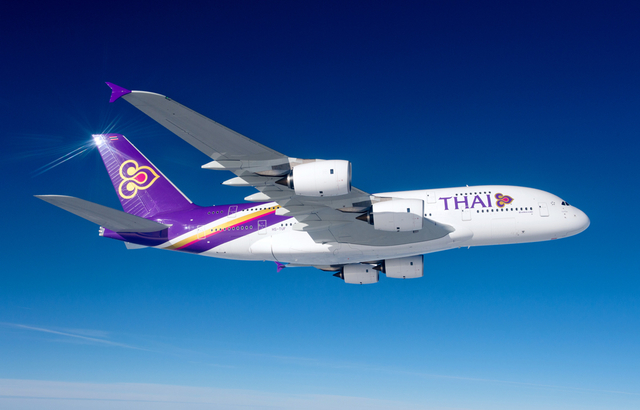
Thai Airways has begun the process of selling all six of its Airbus A380s in an “as-is, where-is” condition. Back in November 2022 we reported on the airline considering putting them back in service as passenger demand increased, but they since have gone back on that decision.
The airline sent out an invitation to interested parties on 23 August 2023, offering them the opportunity to bid on the A380s. All six were stored during the beginning of the pandemic between March and April 2020, with Thai Airways never bringing them back to service.
Bidders interested in acquiring any of the aircraft are welcome to put forth their proposals as well as a $50,000 deposit (per aircraft) no later than 11:59 pm Bangkok time (UTC +7) on 12 September 2023.
By completing the purchase of the aircraft, the buyer would also have to fly their aircraft out of Thailand or would have them dismantled on site. No Airworthiness Directives (AD) or Service Bulletins (SB) were completed on the aircraft. None of the six had their most recent C-checks completed, including two with C3 checks scheduled in May and June 2019.
All aircraft have a three-class layout, with twelve Royal First Class (Venus by Safran), sixty Royal Executive Class (Solstys by Stelia), and 435 Economy Class (CL3510 by Recaro) seats onboard.
Currently, the status of the aircraft is:
HS-TUA (087), delivered on 28 September 2012 and parked at Bangkok-Suvarnabhumi since 26 March 2020.
HS-TUB (093), delivered on 29 November 2012 and parked at Bangkok-Suvarnabhumi since 1 April 2020.
HS-TUC (100), delivered on 21 December 2012 and parked at Bangkok-Suvarnabhumi since 2 April 2020.
HS-TUD (122), delivered on 22 March 2013 and parked at Bangkok-Suvarnabhumi since 31 March 2020.
HS-TUE (125), delivered on 29 October 2013 and parked at U-Tapao since 14 April 2020
HS-TUF (131), delivered on 29 November 2013 and parked at U-Tapao since 14 April 2020
Speaking to FlightGlobal at the IATA annual general meeting in Istanbul, the CEO of Thai Airways International has said the airline is in the process of securing leases for additional aircraft to cope with the sharp increase in post-pandemic demand.
Five Airbus A321neos will be leased, with deliveries beginning in 2025. The airline is also working on securing leases on another five of the type. Interesting to note is that the aircraft will be operated by Thai Airways International itself and not by subsidiary Thai Smile, which means the introduction of a narrowbody aircraft in the mainline fleet.
Thai Airways has also secured leases for eleven additional A350-900s, of which two have been delivered. These two, HS-THO (351), and HS-THP (355) are leased from Avolon and were originally destined for Hainan Airlines.
Next to these leases, it's said that the airline is also in negotiations with both Airbus and Boeing for additional aircraft to boost capacity.
The increase in passenger demand is prompting Thai Airways to investigate the possibility to re-introduce the Airbus A380 in the fleet. Although a final decision hasn't been made, the return would be for three to four years and only three or four aircraft, with the remaining aircraft act as spare.
Thai Airways has operated a fleet of six A380s, which have been phased-out during the Corona-pandemic. Since then, the airline has tried, unsuccessfully, to sell the two aircraft it owned. Currently, the status of the aircraft is:
HS-TUA (087), delivered on 28 September 2012 and parked at Bangkok-Suvarnabhumi since 26 March 2020.
HS-TUB (093), delivered on 29 November 2012 and parked at Bangkok-Suvarnabhumi since 1 April 2020.
HS-TUC (100), delivered on 21 December 2012 and parked at Bangkok-Suvarnabhumi since 2 April 2020.
HS-TUD (122), delivered on 22 March 2013 and parked at Bangkok-Suvarnabhumi since 31 March 2020.
HS-TUE (125), delivered on 29 October 2013 and parked at U-Tapao since 14 April 2020
HS-TUF (131), delivered on 29 November 2013 and parked at U-Tapao since 14 April 2020
Thai Airways Has Sold 5 Airbus A340s That Haven't Flown For Over A Decade
Thai Airways has managed to sell off five Airbus A340s that haven't been in use for around a decade. The carrier has found an undisclosed buyer for one A340-500 and four A340-600s at a price of 350 million baht ($9.6 million).
Thai Airways finds buyer for old A340s
Having already sold off more than 10 decommissioned planes in the last couple of years, Thai Airways has reached an agreement with an undisclosed customer for five unused Airbus A340s. The five Airbus jets, some of which have been in storage for over a decade, have fetched around 350 million baht ($9.6 million).
The deal is for one Airbus A340-500 and four Airbus A340-600s - according to Planespotters.net, Thai Airways' A340-500 fleet has been in storage since 2012, while most of its A340-600s were withdrawn from use in 2015.
This sale adds to the sole Boeing 737-400 and 10 Boeing 737-400 aircraft THAI has managed to sell off in recent years as part of its debt rehabilitation program. According to The Thaiger, these deals were collectively worth around 2 billion baht ($55 million).
The airline still has four A340s in storage and is actively pursuing the sale of these aircraft, while it is also considering flogging other jets in its fleet, including the Boeing 777 and Airbus A380.
A long time coming
Thai Airways has had trouble shifting its A340s since removing them from service. Back in 2019, the airline had hoped to conclude a deal with an unnamed US company for eight A340s worth up to 4.5 billion baht ($120 million), but this agreement eventually fell through.
One A340 sale did go through after the Royal Thai Air Force purchased an A340-600 for 1.75 billion baht ($48 million) in 2016. The value of its A340s have clearly depreciated since then, given that this agreement for just one A340-600 (plus a spare engine and parts) came in at five times the price of Thai's most recent deal.
THAI's A340 days
Thai Airways welcomed its first Airbus A340 jets in 2005, eventually taking four A340-500s and six A340-600s. The long-haul workhorse saw action on THAI's extensive international network, traveling as far as Los Angeles and New York, for approximately a decade before they were withdrawn from use and put into storage.
Thai Airways Set To Sell 3 Airbus A330s And A Flight Simulator
As part of its ongoing restructuring efforts, Thai Airways has put three more widebody airplanes along with a flight simulator up for sale. The three Airbus A330 aircraft join a long list of widebodies that the carrier has already decided to get rid of as it looks to restructure its fleet following the pandemic.
Thai Airways has added three of its A330s to the list of airplanes it wants to sell. Photo: Getty Images
And now the A330s
Like most airlines around the world, Thai Airways plans to rely more on modern fuel-efficient twin-engine airplanes. While the airline had already put several widebody airplanes up for sale late last year, its A330s were not part of the initial list.
Then, last month it was reported that three of its A330s have also fallen prey to the carrier’s restructuring plans. Thai has also added a flight simulator to the list of equipment it no longer needs.
According to a report by AeroTime Hub, of the carrier’s 15 A330s, the following three have been made redundant:
HS-TEN
HS-TEO
HS-TEP
All three airplanes have an average age of around 12.5 years.
The list is long
As reported earlier, Thai Airways put 34 airplanes up for sale late last year, of which 32 were widebodies. The list included 12 of its older 777s, nine A340s, two 737s, one A300, and all 10 of its remaining 747-400s.
Thai Airways dropping its 747s came as no surprise as the fuel-guzzling quadjet is out of favor with most airlines worldwide. However, it will be slightly tricky to find a new owner for these, especially for a passenger version. The Queens are just no longer financially viable, with other more competitive twin jets in the market. Cargo airlines could be potential customers for the jumbos if they are willing to bear the costs of reconfiguration and conversion. However, with airlines tightening their purse strings in a post-pandemic world, this too looks tricky.
The carrier’s A380s have also not remained immune to the pandemic. As reported earlier this year, the airline was testing the market to see if there were any takers for two of its six superjumbos.
Restructuring to stay afloat
Thai Airways has been losing money since before the pandemic. In 2019, the Asian carrier reported a loss of 12.2 billion Baht ($385 million). The forces of pandemic-induced shutdowns were so immense that by May 2020, the airline had to file for bankruptcy protection due to massive debts of more than $9.8 billion.
Over the last few months, the carrier has been making strategic efforts to cut losses to stay afloat. Selling off its old airplanes is part of the larger restructuring plan that Thai has been pursuing aggressively for a while now. Unfortunately, staff lay-offs also feature in the carrier’s long-term rehabilitation plan, possibly reducing up to half of the total workforce in the next four years.
The airline has also found non-traditional ways of generating much-needed cash in recent months. From renting out, and now even selling, its flight simulators to introducing its signature dishes in supermarkets and stores, the carrier collected $48.4 million in the first half of 2021 as non-ticket revenues.
While things are far from perfect for Thai Airways, it continues to crawl to remain in business. In June this year, the carrier’s rehabilitation plan was approved by Bangkok’s Central Bankruptcy Court. The airline has even managed to clear payments of $37.5 million to creditors within the deadline as instructed by the courts. Still, it seems Thai Airways has a long way to go to see any semblance of normality.
Thai Airways Mulls Selling 2 Airbus A380 Superjumbos
THAI Airways is considering the possibility of selling two of its Airbus A380 aircraft. The news comes after it commenced a market survey to gauge any potential second-hand interest in the pair of superjumbos. Interested parties have two weeks to submit their proposals.
Thai Airways received its first Airbus A380 in September 2012. Photo: Tom Boon – Simple Flying
An initial survey of interest
Yesterday saw the Thai flag carrier put out a request for an indication of interest in two of its parked Airbus A380s. According to FlightGlobal, the aircraft in question have respectively amassed 30,645 and 29,639 flight hours. They are currently parked at U-Tapao International Airport (UTP) near Rayong, Thailand.
Planespotters.net shows that the only two THAI superjumbos to be stored here are HS-TUE and HS-TUF. These are THAI’s two newest A380s. For now, the airline is not making a formal offer to sell the planes, but merely gauging market interest for them. It states the survey’s purpose is:
…to identify potential bidders who may be interested in buying the used passenger aircraft, and does not intend to and should not be treated as a formal offer to sell the aircraft by THAI.”
HS-TUF has been in storage at Rayong since April 2020. Photo: Jake Hardiman – Simple Flying
Stay informed: Sign up for our daily and weekly aviation news digests!
Having issued its survey yesterday (March 11th), THAI is giving interested parties a two-week window to express their interest and submit a proposal to the airline. When the deadline elapses on March 25th, the airline will have a better idea of market interest in the aircraft. This will likely influence whether the carrier does ultimately go on to sell the two superjumbos.
A brief history of the A380 at THAI Airways
THAI Airways took delivery of its first of six A380s just over eight years ago. September 27th, 2012 marked the arrival of the first of six superjumbos at the Bangkok-based carrier. The final delivery took place just over a year later, in November 2013.
THAI’s A380s sport the following 507-seat three-class configuration.
12 ‘Royal First’ flatbeds.
60 ‘Royal Silk Business’ flatbeds.
435 economy class seats (including an all-economy lower deck).
THAI was the ninth airline to introduce the A380, and its purple-tailed superjumbos were among the most striking examples of the type. However, eight years on, it has found that there is little place for the double-decker behemoth. Industry trends have begun to move away from the high-capacity, hub-to-hub model that the A380 demands.
The drop in passenger numbers caused by the ongoing coronavirus pandemic has only compounded the aircraft’s struggles. These issues came to a head last month when reports emerged that THAI would be retiring all of its A380s, as well as its A330s and Boeing 747s. Going forward, it appears to be eyeing an all-twinjet long-haul fleet of 777s, 787s, and A350s.
THAI’s Boeing 747s are also targets of its fleet restructuring program. Photo: Getty Images
A limited second-hand market for the A380
It will certainly be able to see who, if anyone, submits a proposal for THAI’s A380s. A few years ago, the airline might have found itself faced with reasonable interest for the aircraft. After all, Airbus stated as recently as November 2019 that it believed in a second-hand A380 market.
However, the 12 months that followed saw commercial aviation faced with an unprecedented health crisis with widespread impacts. As we have established, one of these was to render the A380 largely obsolete due to the drop in demand and changing network trends. As such, the second-hand market for the A380 is, sadly, now largely considered to be over.
Thai Airways Lists Two Airbus A380 Superjumbos For Sale
In its next step towards emerging alive and a smaller airline on the other side of its restructuring, Thai Airways has listed two of its Airbus A380 superjumbos for sale. The chances of finding a buyer, however, are slim to non-existent.
Thai Airways has put its two youngest A380s up for sale. Photo: Airbus
As Thai Airways continues its restructuring process to emerge a slimmer airline, it is once more searching for potential buyers for its aircraft. Previously having launched no less than 32 widebody aircraft, including all of its 747s, onto the second-hand market, now it is looking for someone to take two of its A380 superjumbos.
Thailand’s borders closed until Q2 2021
The Thai domestic market, aided by a government stimulus package, is showing significant signs of recovery. However, long-haul traffic in and out of the country, which relies on tourism for 20% of its GDP, is still at abysmal levels. Earlier this month, Pipat Ratchakitprakan, Thailand’s Minister for Sports and Tourism, announced that the country’s borders would remain closed for tourists until the second quarter of next year.
Thus, it makes sense that, in a bid to raise cash that has seen everything from cutlery to champagne leave the airline’s stores, a struggling Thai Airways is looking to hand off its behemoths of aircraft.
The two A380s, HS-TUE and HS-TUF, were the last to join the fleet in October and November in 2013. They have both been put up for “a market survey to find potential buyers for the items listed” on a website called Thai Aircraft Trading. However,
“The actual sale will take place under the business reorganization plan and would require approvals of relevant stakeholders and the Bankruptcy Court.”
HS-TUE has flown 3,691 flight cycles and just over 30,600 hours. HS-TUF is not far behind with 3,589 cycles and just under 30,000 hours. There is no initial asking price listed, but we can assume that as far as superjumbos go, it would be a bargain and far below the list price of $390 million.
So what are the chances of Thai actually making a successful sale of it? To be frank, close to non-existent. The only A380 to successfully transition to the second-hand market was the one that went from Singapore Airlines to Hi Fly in 2018,
Not the only opportunity to own an A380
More than that, there is already an abundance of A380s out there that are waiting to be scrapped for parts, should they not find someone with a substantial amount of cash and oodles of optimism. Should you so desire, there is the opportunity to pick up one of Air France’s retired A380s from the company Dr. Peters Group.
With airlines not even flying the aircraft they already have, unless someone very wealthy, quite eccentric, and with a burning wish for either an A380 of their own or an all-superjumbo start-up airline comes along, it is hard to imagine a successful sale.
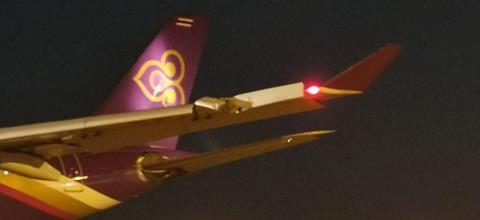
A Thai Airways A330-300 has nearly ripped the tail off a Gulfstream IV private jet during a taxiing accident in Vientiane, Laos.
The accident occurred in darkness on 9 March as the A330 (HS-TEU) prepared to operate flight TG575 on the Vientiane-Bangkok Suvarnabhumi route, according to Thai Airways.
Source: Twitter
The Thai Airways A330 suffered damage to the leading edge of its outboard left wing.
“When the pilot took the plane out to the taxiway, its wing collided with the tail of a small personal plane.”
Images on social media show that the outboard leading edge of the A330’s left wing suffered damage.
As for the private jet, M-YWAY, the entire tail plane was nearly torn off, coming to rest on the right-side horizontal stabilizer. The front landing gear also appears to have been severely twisted in its mounting.
The Thai aircraft was carrying 79 passengers and 13 crew, all of whom are safe, says the airline.
Source: Twitter
The Gulfstream IV saw its entire tail shorn off.
Cirium fleets data indicates that HS-TEU is managed by Thai and was delivered in March 2010, though it only entered service in June 2011.
The private jet, M-YWAY, is managed and operated by Blue Sky Leasing of the Cayman Islands. It entered service in 2002 for Philip Morris, and was obtained by Blue Sky in 2010.
 Thai Airways receives 1st Airbus A321neo