Showing posts with label SRILANKAN AIRLINES. Show all posts

Monday, 3 May 2021

Airbus Updates No.3363


Airbus A350s back on SriLankan Airlines' radar post-COVID
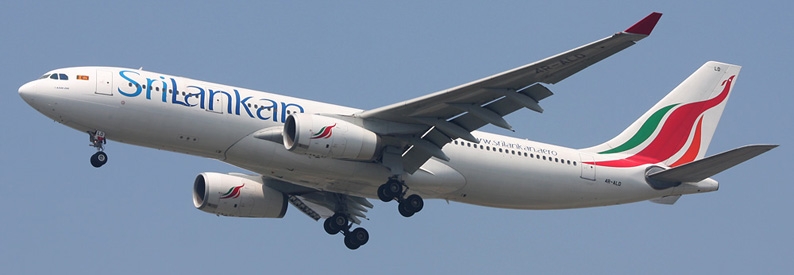
SriLankan Airlines (UL, Colombo Int'l) is planning to take advantage of depressed lease rates to renew its ageing widebody fleet and has again warmed up to the idea of adding A350 aircraft, Chief Executive Vipula Gunatilleka said during the online Routes Reconnected conference.

"Six or seven aircraft will go out of service in the next two years or so. So we are looking for a replacement. The advantage is that now I can get aircraft at much cheaper prices. We want to keep an all-Airbus fleet, so we will be looking at A330-900s or even A350s. The A350s are now affordable, and with the cargo demand, this might be a handy aircraft for the long-haul," he said.

The carrier still has a firm order for four A350-900s from Airbus as a leftover from its ill-fated 2013 order for a total of eight aircraft, including four from the manufacturer, three from ILFC, and one from AerCap (the two lessors later merged). The type was quickly deemed unsuitable for the airline. SriLankan Airlines has been trying to extricate itself from the deal since 2015. It cancelled the four lease commitments between 2015 and 2017, agreeing to pay a USD98 million penalty and leasing in an A330-200 in an unsuitable configuration instead. The settlement reportedly also included increases in other lease rates. It has also been trying to convert the four remaining orders from Airbus to A330neo aircraft.

In March 2021, SriLankan Airlines filed a lawsuit against Airbus for alleged corruption during the procurement of the A350-900s, seeking USD1 billion in damages and compensation, the cancellation of the outstanding order for four aircraft, and the return of USD19 million in pre-delivery payments for these aircraft. According to the Deferred Prosecution Agreement between the UK Serious Fraud Office (SFO) and Airbus, the manufacturer failed to prevent graft and bribery during the sale of its aircraft to SriLankan Airlines.

The airline's current widebody fleet comprises five A330-200s (18.7 years old on average) and seven A330-300s (6 years). All twelve aircraft are dry-leased, the ch-aviation fleets advanced module shows.

Gunatilleka also reaffirmed that the airline is in the process of looking for its first two dedicated freighters.

He said that during the COVID-19 pandemic, the carrier had reoriented its network to focus on cargo services, including flights to destinations not served previously on a scheduled basis. This also entailed a radical downsizing of its Indian network, previously its most important market for connecting passengers. SriLankan Airlines plans to continue its reliance on cargo as its main revenue driver and rebuild its passenger network around routes with significant freight demand.

"[In the near term,] we will focus on the long-haul mainly, and we will have to reduce our reliance on the Indian market," Gunatilleka said.

He underlined that Sri Lanka hoped to reopen more widely for tourism during the current summer season. While many markets are likely to remain closed, Gunatilleka said he was hopeful that Russian tourists would come in the next few months. While traditionally arrivals from Russia had been concentrated during the winter season, the current restrictions have changed those patterns. Going forward, the recovery will rely heavily on the integration of border protocols, including through digital tools.

"India will recover fast, we would expect the same from China, and the Middle East as well, where there is a lot of Sri Lankan expatriate workers... If India reopens, we will also have more connecting traffic from Australia," he said.

SriLankan is also optimistic about the demand from and to Europe, including the United Kingdom, Sri Lanka's primary destination market. Gunatilleka said the carrier was also considering the relaunch of services to Frankfurt Int'l and Paris CDG.

Tuesday, 23 March 2021

Airbus Updates No.3105


SriLankan Airlines sues Airbus for $1bn

SriLankan Airlines (UL, Colombo Int'l) has filed a lawsuit against Airbus for alleged corruption during the procurement of A350-900s and is seeking USD1 billion in damages and compensation, the cancellation of the outstanding order for four aircraft, and the return of USD19 million in pre-delivery payments for these aircraft, DailyFT has reported.

The lawsuit follows the Deferred Prosecution Agreement between the UK Serious Fraud Office (SFO) and the manufacturer announced in January 2020.

Chairman Ashok Pathirage confirmed the airline had filed the lawsuit, although he did not elaborate in which jurisdiction it was done. SriLankan did not respond to ch-aviation's request for further details.

The alleged corruption in Sri Lanka was one of five counts raised by the SFO during its investigation. According to the allegations summarised in the judgement approving the DPA, Airbus failed to prevent graft and bribery during the sale of its aircraft to SriLankan Airlines. In particular, it allegedly offered USD16.84 million in bribes to an intermediary Brunei-based straw company to secure contracts for the sale of six A330-300s and four A350-900s, and the lease of a further four A350-900s from ILFC (three) and AerCap (one). Of the proposed bribe, only USD2 million was paid.

The other four counts raised by the SFO concerned alleged bribery practices in Malaysia (AirAsia Group deals), Taiwan (TransAsia Airways), Indonesia (Garuda Indonesia Group), and Ghana (a governmental procurement).

Under the DPA, Airbus agreed to pay EUR984 million euro (USD1.17 billion) in the United Kingdom. Including similar agreements in France and the United States, the European manufacturer's overall bill reached EUR3.6 billion (USD4.3 billion).

While SriLankan Airlines took delivery of the A330s, it has been trying to extricate itself from the A350 deal since 2015, just two years after the Sri Lankan national carrier placed the order. It cancelled the four lease commitments between 2015 and 2017, agreeing to pay a USD98 million penalty and leasing in an A330-200 in an unsuitable configuration instead. The settlement reportedly also included increases in other lease rates. Despite the carrier's attempts to convert the other four A350s to A330neo, the order remains formally binding.

The Sri Lankan office of the global anti-corruption watchdog Transparency International welcomed the carrier's decision to sue Airbus and seek damages.

Tuesday, 4 February 2020

Airbus Updates No.2482

Airbus to pay world's biggest corporate bribery fine, $4bn


Airbus (AIB, Toulouse Blagnac) will pay EUR3.6 billion euros (USD3.98 billion) in a global bribery settlement involving AirAsia, AirAsia X, Citilink, Garuda Indonesia, SriLankan Airlines, and TransAsia Airways. It admitted it had used a network of secret agents around the world to bribe officials in order to win high-value contracts, the United Kingdom's Serious Fraud Office (SFO) said in a statement following a ruling at the High Court of Justice in London.
The European manufacturer agreed to pay the penalties on January 31 after reaching settlements with investigators in the UK, France, and the US, bringing to an end a probe that began four years ago.
“The seriousness of the criminality in this case hardly needs to be spelled out. As is acknowledged on all sides, it was grave. The conduct took place over many years. It is no exaggeration to describe the investigation it gave rise to as worldwide, extending into every continent in which Airbus operates,” said Justice Victoria Sharp as she approved the settlement.
Bribery was “endemic in two core business areas within Airbus,” namely the company's Commercial and Defence & Space divisions, she added.
The company paid bribes in Indonesia, Malaysia, Sri Lanka, Taiwan, and Ghana, the latter for the sale of military aircraft, between 2011 and 2015, Allison Clare, representing the SFO, told the court.
Airbus, which admitted five counts of failing to prevent bribery, used a network of agents to pay the bribes. The settlement comes just under four years after the SFO began investigating the manufacturer over “allegations it had used external consultants to bribe customers” to buy its aircraft, the statement said.
Under the record-breaking deal, known as a Deferred Prosecution Agreement (DPA), Airbus has agreed to pay a fine and legal costs amounting to EUR991 million (USD1.1 billion) in the UK as part of a total of EUR3.592 billion (USD3.975 billion) in global corruption fines involving authorities in France and the United States, according to Reuters.
This includes EUR2.083 billion (USD2.3 billion) to the French National Financial Prosecutor’s Office (Parquet National Financier - PNF) and USD581,840,000 to the US Department of Justice and Department of State.
Justice Sharp ruled that the sum reflected “the gravity of the conduct, the full cooperation of Airbus SE in the investigation, and the programme of corporate reform and compliance put in place by new leadership at the top of the company.” Airbus has agreed to full cooperation with the SFO and its partners in any future investigations and prosecutions.
The SFO is still considering whether to prosecute individuals involved in the bribery, Clare told the court. Sue Hawley, executive director of Spotlight on Corruption, told The Guardian newspaper: “This fine will ring extremely hollow if prosecutions of those responsible from Airbus senior management at the time of the wrongdoing do not follow.”
In the US, the charge under the Foreign Corrupt Practices Act (FCPA) arose out of “Airbus’ scheme to offer and pay bribes to foreign officials, including Chinese officials, in order to obtain and retain business,” a January 31 Department of Justice statement said.
“Airbus engaged in a multi-year and massive scheme to corruptly enhance its business interests by paying bribes in China and other countries and concealing those bribes,” said Brian Benczkowski, assistant attorney general in the department’s Criminal Division.
On February 1, Malaysia’s AirAsia denied the SFO's allegations that Airbus had bribed two of its executives USD50 million during a deal to buy 180 aircraft between 2005 and 2014. The sum was allegedly “paid to directors and/or employees of AirAsia and AirAsia X airlines as sponsorship for a sports team” jointly owned by the two executives, the UK court documents said.
AirAsia said in a statement to Reuters: “The entering into of each aircraft purchase agreement was never made by any single individual decision, but instead arrived at through careful evaluation, deliberation, and the collective decision of the board members after taking into account technical specifications, aircraft flight performance, and operating economics.”
It added: “We also wish to emphasise that all negotiations and dealings leading to the signing of any aircraft purchase agreement have been undertaken directly with Airbus on an arm’s length basis, and without the involvement of any third parties or intermediaries.”
AirAsia then issued a statement on behalf of Group Chairman Kamarudin Meranun and Group CEO Tony Fernandes who, on February 3, resigned from their respective roles for a period of two months. For the duration of the period, both have now assumed positions as non-executive board members of AirAsia Group.
The DPA was “arrived at without any reference to us; neither were any explanations sought from us. This is in clear violation of fundamental legal principles of fairness. We categorically deny any and all allegations of wrongdoing or misconduct on our part as directors of AirAsia. We would not harm the very companies that we spent our entire lives building up to their present global status,” the statement said.
“So as to facilitate a full and independent investigation by AirAsia, we are relinquishing our executive roles with immediate effect for a period of two months, or such other period that the companies may deem fit. We will nonetheless continue to assist AirAsia in an advisory capacity as and when required. Finally, we welcome any investigations by the authorities and will extend our fullest cooperation.”
Another of the alleged bribes was agreed with a senior executive of Bogota-based Avianca Holdings ahead of the sale of one hundred A320-200neo in April 2015, according to France's anti-corruption agency (Agence française anticorruption - AFA). However, the executive never received the money, as Airbus froze payments to a Colombian sales intermediary in 2014. The Office of the Attorney General of Colombia and Avianca itself have not released statements on the issue, according to the news site Colombia Reports.
On February 3, Sri Lankan President Gotabaya Rajapaksa ordered an investigation into the allegation that Airbus offered up to USD16.84 million to SriLankan Airlines to influence the purchase of ten aircraft and the lease of an additional four, according to local media. The sum was allegedly paid to a company registered in Brunei in the name of the wife of an airline executive.
On the same day, Sri Lankan Attorney General Dappula de Livera directed the Criminal Investigations Department to arrest former SriLankan CEO Kapila Chandrasena and his wife Priyanka Niyomali Wijenayaka on charges of money laundering in connection with the Airbus deal, the Colombo Gazette reported.
The airline released a statement on February 2 that it would “cooperate fully with any governmental agency in the event of any investigation/prosecution. The management has also been directed to preserve and study all available internal documentation with a view to take all possible corrective future action.”
In Indonesia, as previously reported, the Corruption Eradication Commission (Komisi Pemberantasan Korupsi - KPK) has alleged that Rolls-Royce, Airbus, and Bombardier Aerospace paid bribes totalling IDR46.3 billion rupiah (USD3.4 million) to Emirsyah Satar, a former chief executive of Garuda Indonesia, in relation to the acquisition of A330-200s, A330-300s, and CRJ1000s for the carrier, as well as A320-200s for its subsidiary Citilink. Satar is currently on trial in Jakarta.
In Taiwan, TransAsia Airways ceased operations in 2016 and, as such, was not immediately available for comment.

Friday, 17 January 2020

Airbus Updates No.2450

SriLankan Airlines to retrofit oddball A330-200


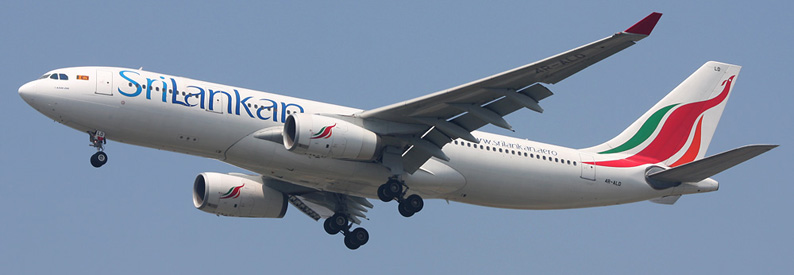
SriLankan Airlines (UL, Colombo Int'l) will finally retrofit one of its seven A330-200s, 4R-ALS (msn 1008), in order to standardize its cabin in line with the rest of the carrier's A330-200 longhaul fleet, The Sunday Morning newspaper has reported.
"The seats have been ordered for the refurbishment of the cabin and we expect the seats to arrive in about four to five months. Once the seats arrive, we will immediately refurbish and fit the necessary seats, and then it will be operational for long-haul flights," Chief Executive Officer Vipula Gunatilleka said.
He added that the retrofit is expected to take place within the next six months.
SriLankan leased the 10.8-year-old widebody from AerCap in 2017 as a settlement in lieu of the cancellation of an order for four new A350-900s. However, as it is configured with 288 economy class seats (against the 251-256 on the other five A330-200s operated by the airline) and 42 business class seats (against 18 on the other aircraft), its usage has always been cumbersome for the airline.
"The former government agreed to unacceptable conditions when they cancelled the A350-900 deal and a condition of the deal was for us to pay a lump sum as well as to take over this aircraft. But it was taken over without the approval of the Engineering Department," Minister of Tourism and Civil Aviation Prasanna Ranatunga said.
SriLankan Airlines sub-leased the aircraft to Hi Fly (5K, Beja) but took it back in October 2018. It was finally deployed into revenue service in mid-February 2019. However, due to its configuration, it has been used predominantly on regional and medium-haul services, primarily to Malé in the Maldives, India, Saudi Arabia, and the Gulf, including Umrah flights to Jeddah. Flightradar24 ADS-B data shows the aircraft had often been grounded for extended periods during the year of operations for SriLankan.
According to the ch-aviation fleets advanced module, the aircraft's utilisation averaged just 2 hours 14 minutes per day between January and September 2019.
Besides the six A330-200s, SriLankan Airlines also operates five A320-200s, two A320-200neo, two A321-200s, four A321-200neo, and seven A330-300s.

Tuesday, 22 January 2019

Airbus Updates No.2056

SriLankan Airlines seeks to lease out "unsuitable" A330-200


SriLankan Airlines (UL, Colombo Int'l) said it will seek to sub-lease or charter one of its A330-200s, 4R-ALS (msn 1008), as this particular aircraft is "not suitable" for the airline's current business model.
"The cabin configuration of this aircraft, which was manufactured in 2009, is not suitable for SriLankan Airlines’ operations, having many seats and minimum space between seats in its Business Class cabin. The aircraft remains at Colombo Int'l as part of the SriLankan fleet, although it is not in use due to the above-mentioned reasons," the airline said in a statement.
SriLankan also confirmed it is currently using the Airbus widebody for spares and it has removed one of its Rolls-Royce Trent 700 engines to use it for one of the active A330-200s.
The aircraft in question was added by SriLankan Airlines in 2017 as a part of a settlement with AerCap against the cancellation of the order of four new A350-900s. It was previously operated by Hi Fly (5K, Lisbon) as CS-TFZ. Following the 2017 transaction, the aircraft was never actually taken up by SriLankan and continued to be operated by the Portuguese ACMI/charter specialist through September 27, 2018. It was then repositioned to Colombo on October 3, 2018, and has remained grounded there since, Flightradar24 ADS-B data shows.
SriLankan Airlines currently operates six A330-200s in active service. Each of them is equipped with 18 business class seats and 251-256 economy class seats. For comparison, 4R-ALS has 42 business class seats and 288 economy class seats.

Friday, 13 April 2018

Airbus Updates No.1810

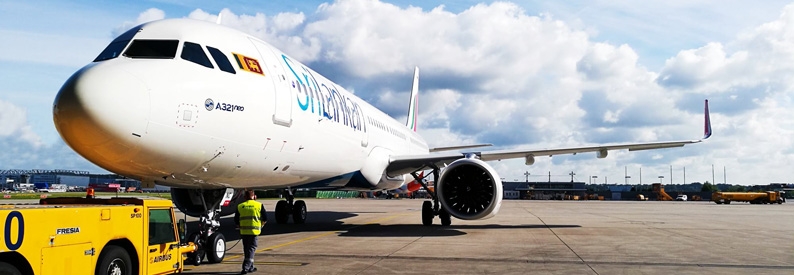
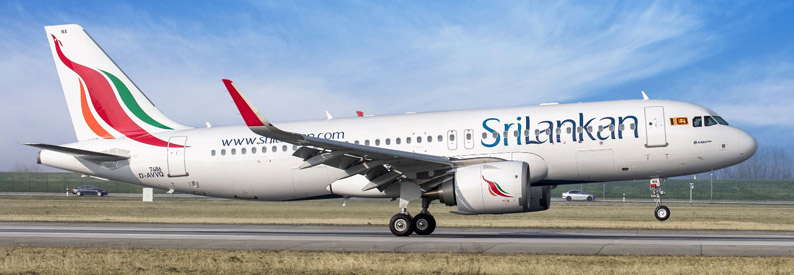
SriLankan Airlines' A320/A321neos lose ETOPS certification


The Civil Aviation Authority of Sri Lanka (CAASL) has suspended the ETOPS certification of A320neo and A321neo aircraft operated by SriLankan Airlines (UL, Colombo Int'l) following a mid-flight engine shutdown in January 2018, The Sunday Times has reported.

According to documents obtained by the newspaper, the regulator stepped in after a maintenance lapse led to a single-engine emergency landing of an A321neo 4R-ANE (msn 7891) in Bangkok Suvarnabhumi on January 22, 2018. Reportedly, the technicians had released the unit prior to the flight despite having detected debris in the oil monitoring system of the CFM International LEAP-1A32 engine.

Following the incident, the CAASL ordered SriLankan Airlines to operate their Airbus neo twinjets within a 60-minute diversion range, effectively blocking the type's operation over the Bay of Bengal (en-route to South-East Asia) or the Arabian Sea (en-route to the Middle East).

The regulator has said in a letter to SriLankan Airlines that it did not find any cogent reason for the decision to release the aircraft to operate the flight without further technical checks. It has thus established that the incident was "totally preventable".

“In this instance, the [engine] manufacturer raised an urgent work card but the relevant department did not give due recognition to it and released the aircraft for commercial flights," the CAASL has said. Reportedly, the engine manufacturer alerted the carrier already on January 5 but SriLankan only conducted a thorough inspection on January 19, arguing that the aircraft had been unavailable for maintenance earlier due to "engagement in commercial flights".

During follow-up audits, the CAASL has established that the "lackadaisical" approach of SriLankan Airlines to maintenance has not been rectified yet and, as such, the carrier's ETOPS certification for the neo Family aircraft will continue to be suspended.

The CAASL has further clearly stated that the mid-flight shutdown did not occur due to any manufacturing defects but solely because of SriLankan's negligence.

Flightradar24 ADS-B data shows that the affected aircraft has returned to Colombo Int'l on January 31 and has been in normal operation ever since.

According to the ch-aviation fleets module, SriLankan Airlines currently operates two A320neos and three A321neos, with a further unit of the latter type poised for imminent delivery.

The debt-ridden Sri Lankan flag carrier currently deploys its A320neo and A321neo aircraft out of Colombo to Abu Dhabi Int'l, Bahrain Int'l, Bangkok Suvarnabhumi, Doha Hamad Int'l, and Dubai Int'l, among others. All these flights, normally operated over the Bay of Bengal or the Arabian Sea, now have to follow routes along the coast of India, thus adding additional flight time. Services to India, Bangladesh, Pakistan, and the Maldives are not affected by the suspension of the ETOPS certification.

The limitation is one of the reasons for SriLankan's rapidly worsening punctuality. According to The Sunday Times, in February 2018 less than 70% of all carrier's flights departed Colombo on time with a total of 911 flights delayed by more than 15 minutes.

Saturday, 1 November 2014

Airbus Updates No.1225

SriLankan Airlines receives first of six new A330-300 on order

Airline continues to grow its all-Airbus fleet with its newest member
31 OCTOBER 2014 PRESS RELEASE
SriLankan Airlines, the national carrier of Sri Lanka, has taken delivery of its first A330-300 becoming a new operator for the type. The wide-body aircraft arrived at Colombo International Airport, having flown from Toulouse, France, and joins the airlines’ existing fleet of A320, A321, A330-200 and A340-300 aircraft. SriLankan will take delivery of a further five A330-300s.
“We have a reputation as a global leader in service, comfort, safety, reliability and punctuality; all of which are qualities reflected in selecting the A330,” said Kapila Chandrasena, CEO of SriLankan Airlines. “The addition of the A330-300 to our family will enable us to drive our offering to new heights.”
SriLankan Airlines and Airbus embarked upon a long-term, strategic partnership in 1993 when the airline began operating the A320 and A340. It has since grown to be an all Airbus operator, and is now an award winning carrier, expanding and diversifying its wide range of products and services to drive the country’s ongoing boom in tourism and economic development.
"Combining the highest levels of reliability, superior economics and great passenger appeal, the A330-300 will fit seamlessly into the SriLankan Airlines’ fleet,” said John Leahy, Airbus Chief Operating Officer Customers.  “We are very proud of our two decades of partnership with SriLankan Airlines and that they have built their success on our aircraft.”
About the A330
The A330 Family, which spans 200 to 440 seats, and includes Freighter, VIP, and Military Transport/Tanker variants, has now attracted more than 1,300 orders. Over 1,100 aircraft are flying with more than 100 operators worldwide. The A330 is one of the world’s most efficient aircraft with best in class operating economics. With numerous on-going product enhancements entering service in the coming years, such as the more capable 242 tonne take-off-weight variant (available for both the A330-200 and the A330-300), the A330 for regional and domestic routes and the A330neo, the A330 Family remains the most cost-efficient and capable widebody aircraft, averaging operational reliability above 99 percent. The A330 belongs to the successful Airbus Widebody aircraft Family, which comprises the A330, A350 XWB and A380, and uniquely spans the 250 to over 500 seats segment.

Wednesday, 19 June 2013

Airbus Updates No.1047

SriLankan Airlines opts for six A330’s and four A350 XWB’s

Winning combination for efficient long haul fleet
19 JUNE 2013 PRESS RELEASE
SriLankan Airlines, the national carrier of Sri Lanka, has signed an MoU (memorandum of understanding) for six A330-300s and four A350-900s. The airline, an all Airbus operator, has chosen the highly reliable A330 and the latest generation A350 XWB aircraft as part of its long-haul fleet renewal.
“The efficiency, reliability and passenger appeal of our in-service A330s form the pillar of SriLankan’s long haul operations,” said Kapila Chandrasena, CEO of SriLankan Airlines. “Adding more new A330’s to our fleet, combined with the unbeatable economics  the A350 XWB will offer, allows us to achieve a strong economical performance.”
“We are grateful  of this renewed confidence SriLankan Airlines is placing with us,” said John Leahy, Airbus Chief Operating Officer, Customers “The winning combination of A330’s and A350 XWB’s will allow SriLankan Airlines to offer the highest levels of comfort to their passengers while also benefitting from superior efficiency levels at any time.”
Airbus aircraft share a unique cockpit and operational commonality, allowing airlines to use the same pool of pilots, cabin crews and maintenance engineers, bringing operational flexibility and resulting in significant cost savings.  
The twin engine A330 is one of the most widely used widebody aircraft in service today. Airbus has recorded more than 1,200 orders for the various versions of the aircraft and nearly 1,000 aircraft are flying with nearly 100 operators worldwide. The A330-300 has benefited from numerous product improvements and stands as the most cost-efficient and capable aircraft in its class, achieving average dispatch reliability above 99 percent.
The A350 XWB is the all-new mid-size long range product line comprising three versions and seating between 270 and 350 passengers in spacious three-class layouts. The new family will bring a step change in efficiency using 25 per cent less fuel and providing an equivalent reduction in CO2 emissions. To date the A350 XWB has already won 613 firm orders from 33 customers worldwide.

Total Pageviews

Airbus Updates No.4701

  Brazil’s Azul to add four more Airbus A321 freighters Azul Linhas Aéreas Brasileiras (AD, São Paulo Viracopos ) will add four more A321-2...

Airbus Blogs

Blog Archive

Top 10 Award

Airbus Blogs

Labels