25% Of Airbus’ 2021 Deliveries To Date Came In June
Airbus has today revealed its delivery figures for June 2021. The European aircraft manufacturer made a total of 77 deliveries last month. Notably, this figure represents almost 26% of the company’s deliveries for the whole year so far.
Airbus had an active June, delivering its range of aircraft all across the continents. Photo: Airbus
In total, Airbus made 77 deliveries to 44 customers during the month. Additionally, since the beginning of the year, 297 deliveries were made to 67 customers.
The A320 family leads the pack
The A320neo was the most delivered aircraft, with 30 handovers. China Eastern, Volaris, Spirit, Gulf Air, Frontier Airlines, and Wizz Air were among the takers of the narrowbody. Several lessors also received the type to pass on to other carriers.
The A321neo was the second most delivered model, with 26 arrivals to company facilities. The likes of IndiGo, Peach, MEA, Gulf Air, Cathay Pacific China Eastern, Wizz Air, American Airlines, Lufthansa, China Southern, Juneyao Air, JetBlue took delivery of the plane. Lessors were also busy taking it on.
Airbus had 73 orders in June, but 70 of these were from United Airlines for A321neo aircraft. Photo: Airbus
Widebody action
It wasn’t only narrowbodies that were busy being handed over last month. For instance, several A350s were delivered to airlines. Nine A350-900s were delivered along with two A350-100s. Aeroflot, Air France, Singapore Airlines, Spring Airlines, Cathay Pacific, Air Caraibes, and China Southern were some of those who received the twinjet.
There was a sole A380 delivery in June. It’s no surprise who took this plane on. Emirates received the superjumbo on June 18th.
Overall, during the first half of the year, deliveries have been split into the following.
Lufthansa Enters The Narrowbody Freight Market With 2 A321s
Lufthansa is entering the narrowbody freight market by permanently converting two of its Airbus A321 aircraft into freight-only aircraft. The aircraft will receive cargo doors on the main deck, in addition to the relevant fixtures for cargo to be placed on the floor of the aircraft.
Lufthansa is set to convert at least two of its Airbus A321 aircraft into freighters. Photo: Lufthansa
Today, Lufthansa revealed that it would convert two of its Airbus A321 aircraft used for passenger operations into dedicated cargo aircraft. The planes will be altered to give them a sizeable container-sized door at the front, allowing access to the main deck.
Initially, Lufthansa has only committed to converting two aircraft. However, the airline is leaving the possibility of further conversions open. A precise timeline for the project hasn’t been given, but the airline did say that the aircraft should be available from the start of 2022. The plan is that they will be based at the airline’s main Frankfurt hub. The airline’s Cityline subsidiary will operate the planes.
Justifying the plan, Lufthansa revealed that it expects cross-border eCommerce shipments to grow by 20% a year for the next five years. This means that the airline is seeing increased demand for freight services on its intra-Europe connections. Pre-pandemic, passenger aircraft played a significant role in this, but these will be operating at a lower level for the foreseeable future.
Commenting on the announcement, Dorothea von Boxburg, CEO of Lufthansa Cargo, commented,
“The selected aircraft type can transport 28t per flight, significantly larger cargo volumes than in the short-haul bellies of passenger aircraft… Lufthansa Cargo wants to offer customers in the eCommerce segment fast intraEuropean connections. With the converted A321s, we are meeting our customers’ growing demand for same-day solutions…”
Stay informed:Sign up for our daily and weekly aviation news digests.
The Lufthansa A321 fleet
According to data from ch-aviation.com, Lufthansa has 73 Airbus A321 aircraft. This is split between 20 -100s, 43 -200s, and ten A321neos.
Lufthansa hasn’t said which variant the freighters will come from, though it will almost certainly be the airline’s older aircraft that have already made their money’s worth on passenger services. With this in mind, the airline would likely look to use the -100 fleet.
These are some of the oldest aircraft in the entire Lufthansa Group fleet, ranging in age from 22.76 years for the youngest, D-AIRY, to 28.01 for the oldest, D-AIRH. Ch-Aviation only lists five of the 20 aircraft as active, suggesting that at least two would be free to move to cargo operations.
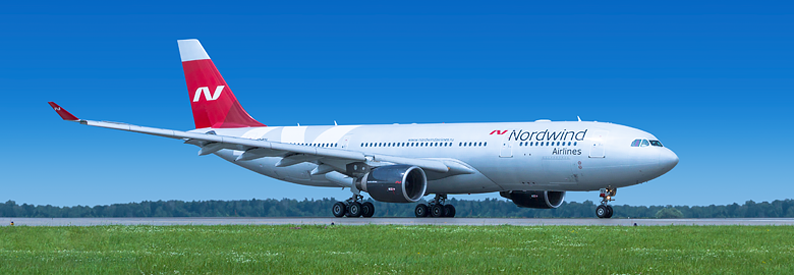
VP-BUM (msn 1361) was operated through April 2019 by Jet Airways (JAI, Mumbai Int'l) and has remained in storage since the collapse of the Indian airline. Nordwind Airlines is currently using the 8.6-year-old widebody, owned by CDB Aviation, to connect various Russian cities (Kazan Int'l, Moscow Sheremetyevo, and Samara Kurumoch) with Antalya in Turkey.
The A330-300 is the second new type in Nordwind Airlines' fleet in recent weks, after the induction of the airline's first A321-200N in early June 2021. The leisure specialist had originally hoped to induct the A330-300 in May 2020, but border closures caused by the COVID-19 pandemic delayed the plan. Nordwind Airlines is expecting a second A330-300 shortly.
Air Belgium Looks To Swap Its Airbus A340s For A330neos
Air Belgium has signed an agreement with Airbus to take delivery of two new Airbus A330neo aircraft. The airline will use the aircraft to replace two of its three remaining Airbus A340-300 aircraft currently leased from the European planemaker.
Air Belgium is to take delivery of two Airbus A330-900 aircraft. Photo: Airbus via Air Belgium
While most airlines were removing their Airbus A340s from service, even before the current situation, one airline was keen to take them. Air Belgium launched in 2018 intending to fly to Hong Kong with a fleet of four Airbus A340s. This didn’t work out, with the airline instead turning to wet lease operations before launching flights to the Caribbean.
It’s reasonably clear that this isn’t an order for new aircraft, given the short turnaround time tied with the backlog of orders. Instead, it seems that the airline is taking white tail aircraft. The aircraft were to be delivered to Air Berlin before Rwandair was set to take them. Air Berlin ceased operations, while Rwandair scrapped its A330neo ambitions in September.
The first of the aircraft should enter service with the airline in mid-October. Photo: Airbus via Air Belgium
According to data from ch-aviation.com, at least one of these aircraft was such a plane. The airline is expected to take delivery of the aircraft with the serial number 1844. This plane took its first flight in Toulouse on March 7th, 2019.
What to expect from the aircraft
As mentioned, Air Belgium wants to put its first Airbus A330neo into operation from October 15th. The plane will fly from Brussels Airport to Mauritius every Tuesday and Friday. Like the airline’s Airbus A340s, the A330 will come with three cabins. This will see passengers seated in business class, premium economy, or economy.
Air Belgium will take a hit on the number of passengers it can take, as the planes only carry 265 passengers, compared to 286 on the A340-300. However, they will make gains elsewhere. According to the airline, the A330neo is 35% more efficient than previous generation aircraft.
The new aircraft will replace two of the airline’s Airbus A340s. Photo: Vincenzo Pace – Simple Flying
Commenting on the order, Niky Terzakis, CEO of Air Belgium, said,
“Air Belgium is very happy and proud to present these new aircraft in Belgium. They are the most modern aircraft that will operate under the Belgian flag. We are very pleased by our experience operating the Airbus A340s, demonstrating reliability, comfort and performance. With the A330neos customers will directly benefit from even greater comfort and superior service on board, while reducing our environmental impact by 25%”
Brussels Airlines has today announced that it will take delivery of three Airbus A320neo aircraft in 2023. The news comes following a meeting between the Lufthansa Group Executive Board and the Board of Directors of SN Airholding. The airline says that the three new state-of-the-art aircraft will allow it to modernize its fleet further.
This will be the first time Brussels Airlines has received a brand new plane. Photo: Brussels Airlines
Furthermore, the addition of the new aircraft will significantly lower the airline’s medium-haul CO2 emissions and help lower noise levels over incoming and outgoing flight paths. Brussels Airlines was also keen to point out that it will be the first time in the airlines’ 19-year history that it will be receiving new aircraft directly from the factory.
Brussels Airlines wants to replace its A319s
When speaking about the new planes in the statement, CEO of Brussels Airlines Peter Gerber said:
“As a responsible airline with ambitious sustainability targets, it’s crucial for us to continue our path of further modernizing our fleet. Thanks to our mother company Lufthansa, we are, for the very first time in our 19 year-long history, able to replace the older A319 Airbus with three modern and fuel-efficient aircraft that will leave the Airbus factory by summer 2023.
“Compared to our A319 aircraft, the three A320neo will allow a noise contour reduction of 50% and reduce fuel use and CO2 emissions by 11% per flight. Furthermore, thanks to the higher seating capacity of this ultra-modern Airbus, the fuel use and CO2 emissions per seat will decrease by 30%.”
Brussels Airlines wants to phase out its A319s. Photo: Brussels Airlines
Brussels Airlines chief operating officer (COO) Edi Wolfensberger then weighed in with his thoughts on how the new aircraft will help the Lufthansa Group airline not only lower CO2 emissions but harmonize its medium-haul fleet, saying:
“Needless to say, that we are extremely enthusiastic to welcome the Airbus A320neo in our fleet. The modern General Electric CFM engines of the Airbus A320neo are renowned for their fuel efficiency and lower noise contour.
“Next to that, the three new aircraft will bring us closer to our target of a fully harmonized A320 medium-haul fleet to aircraft only, herewith further reducing the complexity of our Maintenance & Engineering activities and the whole operation. Due to the high similarity with the current fleet, the crews are able to operate the new aircraft after a short familiarisation; this makes the integration seamless.”
Brussels Airlines is committed to reducing CO2
By investing in new planes when the aviation industry has seen its worst-ever year thanks to the COVID-19 pandemic, Brussels Airlines shows how committed the Lufthansa Group is to lowering CO2 emissions. The Groups sustainability target is to reduce its 2019 CO2 emissions by 50% by 2030 and become CO2 neutral by 2050.
Compared to the older Airbus A319 aircraft that are to be phased out, the Airbus A320neo burns 11% less full and cuts noise levels by 50%. Also, because the A320neo has a larger capacity (27%), the fuel use per seat is reduced by 30% compared to an A320 without the new engine option. The neo option uses 16% less fuel than the old option and reduces CO2 emissions by 16% while carrying the same number of passengers.
According to the aviation data and statistics website, ch-aviation, Brussels Airlines has a fleet of 46 aircraft comprising the following planes:
As you can see from the above figures, Brussels Airlines relies heavily on the Airbus A319. The average age of its A319 fleet is over 16-years-old. This means that to harmonize its medium-haul fleet, other A319s will have to be swapped out for other Lufthansa Group A320s.