Turkish Airlines' low-cost subsidiary AJet (formerly known as Anadolu Jet) has secured additional Airbus A321neos by signing two lease-agreements. The first agreement was reached with Avolon for ten aircraft, followed by one with Carlyle Aviation Partners for another four A321neos. All aircraft are planned to be delivered in 2026 and 2027.
AJet is leasing the new aircraft to reduce its dependency on wet-leased aircraft, which proved to be not as reliable as operating aircraft themselves.
Today, AJet is operating a fleet of 87 aircraft, made-up of thirteen A320neos (currently parked and being readied for the airline), eight A321-200s, fourteen A321neos, 45 Boeing B737-800s, and seven B737-8s.
Paris, France, 18 June 2025 – STARLUX Airlines of Taiwan has signed a firm order with Airbus for the purchase of ten additional A350-1000 aircraft. The agreement was signed at the Paris Airshow by STARLUX Airlines CEO Glenn Chai and Benoît de Saint-Exupéry, Airbus EVP Sales of the Commercial Aircraft business.
STARLUX Airlines already operates an all-Airbus fleet of 28 aircraft including the A350-900, the A330neo and the A321neo. The Taiwanese airline has on order 30 aircraft including the A350F freighters and A350-1000.
“Expanding our international fleet with additional A350-1000s is a significant step toward reinforcing our global presence and enhancing connectivity across key markets,” said Glenn Chai. “This aircraft offers efficiency, range and comfort, making it the perfect fit for our strategy to optimise long-haul operations while delivering an exceptional passenger experience. As we continue to strengthen our international network, the A350-1000 will play an important role in driving growth, sustainability and operational flexibility.”
“STARLUX Airlines’ decision to add more A350-1000s to its growing fleet reaffirms the aircraft’s standing as the benchmark for long-haul operations. With its advanced design and fuel-efficient performance, the A350-1000 Long Range Leader enables airlines to optimise routes while reducing environmental impact,” said Benoît de Saint-Exupéry. “We are pleased to strengthen our long-standing partnership with STARLUX Airlines as they expand their global footprint and connect more destinations with efficiency and comfort.”
The A350 is the world’s most modern and efficient widebody aircraft and has set new standards for intercontinental travel. It offers the longest range capability of any commercial airliner in production today. Powered by the latest generation of Rolls-Royce engines, the aircraft is designed to fly up to 9,700 nautical miles / 18,000 kilometres non-stop, using 25% less fuel than previous generation types and with a similar reduction in carbon emissions.
As with all Airbus aircraft, the A350 is already able to operate with up to 50% Sustainable Aviation Fuel (SAF). Airbus is targeting to have its aircraft up to 100% SAF capable by 2030.
The A350 Family has received more than 1,390 orders from 60 customers worldwide, with more than 650 aircraft currently in the fleets of 38 operators, flying primarily on long-haul routes.
EGYPTAIR discloses order for an additional 6 Airbus A350 aircraft
Paris, France, 18 June 2025 – EGYPTAIR has disclosed a firm order for an additional six A350-900s as part of its expansion strategy to meet growing demand for air travel. The agreement takes the airline’s total order for the type to 16 A350-900.
“We are continuously working to modernise our fleet and deliver a more comfortable and optimised travel experience. This collaboration with Airbus builds on a long-standing relationship that spans decades, marked by multiple successful deals and strategic partnerships in the aviation sector. Today’s announcement reflects our commitment to integrating the next-generation aircraft into our fleet. It will enable us to meet rising demand for long-haul travel, support our network expansion plans over the next five years, and contribute to Egypt’s broader efforts to promote more sustainable air transport.” said EGYPTAIR Chairman and CEO Captain Ahmed Adel.
“This is the second time EGYPTAIR has placed an order for the A350 and the decision is testament to the value the aircraft provides. The A350 is set to be a pillar in EGYPTAIR’s journey, and we look forward to these aircraft playing a pivotal role in the airline’s continued success, growth and decarbonisation ambition," said Benoît de Saint-Exupéry, Airbus EVP Sales of the Commercial Aircraft business.
The A350 is the world’s most modern and efficient widebody aircraft and has set new standards for intercontinental travel. It offers the longest range capability of any commercial airliner in production today. Powered by the latest generation of Rolls-Royce engines, the aircraft is designed to fly up to 9,700 nautical miles / 18,000 kilometres non-stop, using 25% less fuel than previous generation types and with a similar reduction in carbon emissions.
The A350-900s are equipped with a comfortable and spacious Airspace cabin, wide seats, high ceilings and alluring ambient lighting.
As with all Airbus aircraft, the A350 aircraft is already able to operate with up to 50% Sustainable Aviation Fuel (SAF). Airbus is targeting to have its aircraft up to 100% SAF capable by 2030.
At the end of May 2025, the A350 had won over 1,390 orders from 60 customers worldwide.
Paris, France, 18 June 2025 – MNG Airlines (MNGA), a global logistics provider and e-commerce enabler based in Türkiye, has become the latest carrier to commit to the all-new A350F, following the signature of a Memorandum of Understanding (MoU) for two aircraft. The A350F will become a central element in MNG’s future fleet, bringing all the benefits of an all-new freighter to the airline’s operations.
“This agreement for two A350F deepens a partnership with Airbus across its full range of freighter programmes. This move strengthens our position across key trade lanes, including Europe, the Middle East, Asia, and a growing footprint in North America. It will support both our scheduled and charter operations and give us added flexibility to meet evolving cargo demands, from e-commerce to high-value freight and express logistics,” said CEO of Mapa Group and Chairman of MNG Airlines Murathan Doruk Günal.
"We are delighted to welcome MNG Airlines as the latest customer for the A350F, underscoring the strong market appeal for this game-changing freighter. The A350F will bring new generation efficiency and performance as well as new levels of capacity and unprecedented loading flexibility. We look forward to ensuring a seamless integration into MNG’s operations,” said Benoît de Saint-Exupéry, Airbus EVP Sales of the Commercial Aircraft business.
Engineered as the world's most advanced freighter aircraft, the A350F is designed to meet the evolving needs of the global air cargo market. Currently under development, it will carry up to 111 tonnes with a range of 8,700 km. Powered by Rolls-Royce Trent XWB-97 engines, it will offer up to 40% reduction in fuel consumption and CO₂ emissions compared to previous generation aircraft. Made of over 70% advanced materials, the A350F will be 46 tonnes lighter than competitors and will feature the industry's largest main deck cargo door. It is the only freighter fully meeting ICAO's 2027 CO₂ standards and by the time it enters service it will be 50% SAF capable, with a target for 100% by 2030.
Riyadh Air orders 25 Airbus A350-1000 plus 25 options
Riyadh Air (RX, Riyadh) placed a firm order for twenty-five A350-1000 on June 16, on the first day of the 2025 Paris Air Show. The company also secured purchase rights for an additional 25 jets of the type.
The new airline is set to become the first A350-1000 operator in Saudi Arabia. However, the delivery timeline has not been disclosed.
The agreement for up to fifty A350-1000s marks the third aircraft order for the airline that plans to launch scheduled passenger operations later in 2025. According to the ch-aviation Commercial Aviation Aircraft Data module, Riyadh Air is expected to receive sixty A321-200Ns and thirty-nine B787-9s. The company has one B787-9 in its fleet, which is currently used for testing purposes only and will not be a part of the operating fleet.
Paris, France, 17 June 2025 - Vietjet, Vietnam’s largest private airline, has signed a Memorandum of Understanding (MoU) with Airbus covering a major new order for 100single-aisle A321neo aircraft, with the potential to add another 50 in the future.
The agreement was signed during the Paris Air Show by Vietjet CEO Dinh Viet Phuong and Benoît de Saint-Exupéry, Airbus EVP Sales of the Commercial Aircraft business.
“This new agreement marks a significant milestone in our strategic partnership with Airbus,” said Vietjet Chairwoman Nguyen Thi Phuong Thao. “These modern and efficient aircraft have been instrumental in Vietjet’s growth, helping us make air travel more accessible and affordable for millions, while strengthening our role as a connector for economic development, cultural exchange and global connectivity. This landmark agreement represents a vital step in Vietjet’s growth strategy as a multi-national aviation group.”
“Our latest agreement comes just weeks after the airline placed an additional order for A330neo widebody aircraft,” said Benoît de Saint-Exupéry. “Together the A321neo and A330neo will be perfect partners for Vietjet to continue to spread its wings, efficiently matching capacity more closely to demand across its network. The airline will also benefit from the high levels of technical commonality that are unique to latest generation Airbus aircraft.”
Operating a fleet of more than 100 Airbus aircraft, Vietjet continues to expand its global network and fleet modernisation.
The A321neo is the largest member of Airbus’ best-selling A320neo Family, offering unparalleled range and performance. By incorporating new generation engines and Sharklets, the A321neo brings a 50% noise reduction and more than 20% fuel savings and CO₂ reduction compared to previous generation single-aisle aircraft, while maximising passenger comfort in the widest single-aisle cabin in the sky.
At the end of May 2025, more than 7,000 A321neo aircraft have been ordered by over 90 customers across the globe.
As with all in-production aircraft, the A321neo is able to operate with up to 50% Sustainable Aviation Fuel (SAF), with a target to increase to up to 100% SAF capability by 2030.
LOT Polish Airlines places its first ever Airbus order for 40 Airbus A220s
Paris, France, 16 June 2025 – LOT Polish Airlines has placed a firm order with Airbus for 20 A220-100s and 20 A220-300s, marking the first time Poland’s national carrier has selected Airbus aircraft as part of its fleet modernisation. The agreement which could foresee a future increase to 84 A220 aircraft was announced at the 2025 Paris Air Show.
“Today’s decision is about the future. The Airbus A220 family aircraft, which will start joining our fleet in 2027, open up new opportunities for development and growth – key pillars of our strategy. These modern, efficient, and passenger-focused aircraft will allow us to compete effectively in the European skies, strengthen our position as the preferred carrier in Central and Eastern Europe, and prepare LOT for its role as a leading airline at the Central Communication Port,” said Michał Fijoł, LOT Executive Officer.
“This order for 40 Airbus A220s marks a historic milestone as we officially welcome LOT Polish Airlines into the Airbus family. The A220 Family will be instrumental in LOT's fleet modernisation and network expansion strategy with the A220-100 and A220-300 being the ideal combination for their needs. We look forward to working hand-in-hand with LOT, leveraging Airbus global expertise to support its renewal program and ensure the A220's seamless integration," said Benoît de Saint-Exupéry, Airbus EVP Sales of the Commercial Aircraft business.
The A220 aircraft will gradually replace the LOT’s existing regional fleet, offering new possibilities for route development and new destinations thanks to the A220 benefits.
Combining the longest range, lowest fuel consumption, the A220 is the most modern airliner in its size category, carrying between 100 to 160 passengers on flights of up to 3,600 nautical miles (6,700 km). Depending on cabin configuration, the A220-100 serves the 100-135 seat market, while the larger A220-300 is perfectly tailored for the 120-160 seat market. The A220 is powered by Pratt & Whitney’s latest-generation PW1500 GTF engines and offers a 50% smaller noise footprint compared to the previous generation of aircraft.
As with all Airbus aircraft, the A220 is already capable of operating with up to 50% Sustainable Aviation Fuel (SAF). Airbus is targeting for its aircraft to be 100% SAF capable by 2030.
At the end of May 2025, the A220 had secured over 900 firm orders from more than 30 customers worldwide, with over 415 aircraft already delivered. The A220 is currently in successful service with 24 airlines globally, operating on more than 1,600 routes and serving over 470 destinations.
AviLease orders Airbus A350F freighters and A320neo Family aircraft
Paris, France, 16 June 2025 – AviLease, the global aircraft lessor headquartered in the Kingdom of Saudi Arabia, has announced an initial order for 10 A350F freighters and 30 A320neo Family aircraft. The agreement which also foresees a future increase to 22 A350F freighters and 55 A320neo Family aircraft was signed at the 2025 Paris Airshow.
“We are proud to establish an Airbus order book, strengthening our position as a full-service, investment grade global lessor. The addition of these latest generation aircraft enhances our ability to offer modern, fuel-efficient fleet solutions to our airline partners in Saudi Arabia and around the world. We thank our local partners and Airbus for the strong long-term partnership we have established and look forward to placing these aircraft across our valued customer base,” commented Edward O’Byrne, CEO of AviLease.
“We are delighted to welcome AviLease as Airbus’ latest customer with this significant order for the all new A350F and leading A320neo Family”, said Benoît de Saint-Exupéry, Airbus EVP Sales of the Commercial Aircraft business. “The A350F will set the benchmark in air cargo, offering at least 20% reduced fuel burn, better loading capacity and increased range, while the A320neo Family continues to be the world's most popular single-aisle aircraft. This dual order reinforces AviLease’s credentials as a leading lessor, and it demonstrates the broad appeal of our products among lessors and their airline customers.”
The A350F features the largest main deck cargo door in the industry, with fuselage length and capacity optimised around the industry’s standard pallets and containers. Over 70% of the airframe is made of advanced materials, resulting in a 46 tonne lighter take-off weight than the competing derivative. The A350F is also the only freighter aircraft that will fully meet ICAO’s enhanced CO₂ emissions standards, coming into effect in 2027.
The A320neo incorporates the latest technologies including new generation engines, Sharklets and cabin efficiency enablers, which together deliver 20% fuel savings.
Speaking at a May 30, 2025, shareholders meeting in Manila, Tan said the aircraft would first be used to increase services to North America. He added that the first of thirteen A321-200Ns are due in 2026.
"Philippine Airlines is preparing for a significant fleet update with the planned delivery of nine A350-1000 long-range aircraft and thirteen A321neo regional jets over the next few years," he said. "PAL is likewise moving forward with a comprehensive retrofit programme for its existing A321-200 fleet."
Shareholders were told that Philippine Airlines had spent PHP20.26 billion pesos (USD363 million) on A350-1000 pre-delivery payments and PHP16.54 billion (USD297 million) on pre-delivery payments for the Airbus narrowbodies. The carrier will use these aircraft to expand its nonstop route network, and the carrier also wants to develop more partnerships with other airlines.
Tan noted that Philippine Airlines had just recorded its 14th consecutive quarterly profit, posting a PHP4.33 billion (USD77.6 million) profit in the first quarter of 2025, up around 20% on the comparable 2024 quarter.
"Philippine Airlines delivered solid financial results, expanded its network, and maintained high standards of operational reliability amid global challenges that have continued to impact the airline industry," the chairman said. "As we look ahead, all of us need to remain mindful of the challenges that we continue to face. Staying competitive will require us to manage our costs carefully and adapt to ever-changing circumstances."
Separately, last week's meeting also formalised the appointment of former SriLankan Airlines CEO Richard Nuttall as Philippine Airlines' new president and Carlos Luis Fernandez as executive vice president and COO.
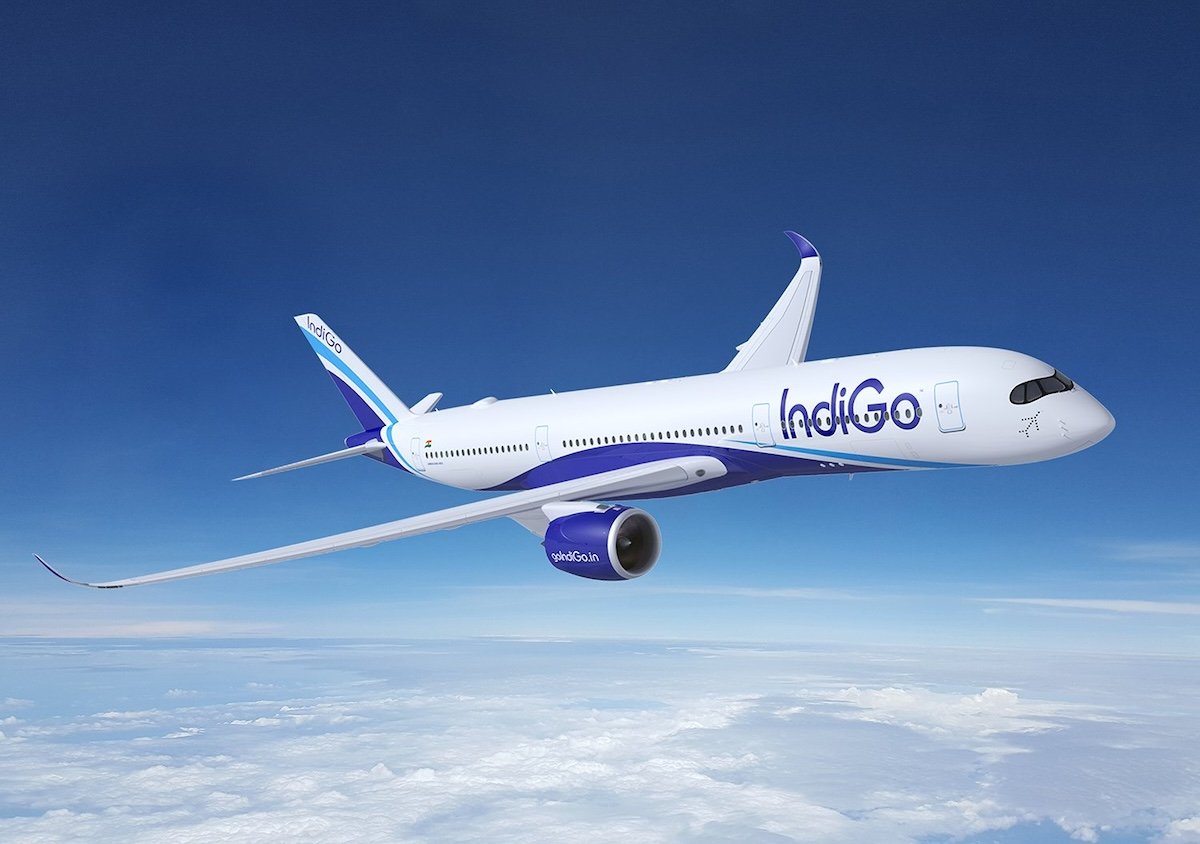
IndiGo Orders 60 Airbus A350s To Fuel Long Haul Ambitions
IndiGo will fly the Airbus A350 as of 2027
IndiGo now has a firm order for 60 Airbus A350-900s, in addition to options for an additional 40 of these jets, meaning the airline would eventually fly 100 of Airbus’ flagship wide body aircraft. IndiGo placed the firm order for 30 A350s in April 2024, so the development is that the firm order has just been doubled, from 30 to 60 jets.
The airline expects to take delivery of its first A350s as of 2027, so we’re still a couple of years off from these planes joining IndiGo’s fleet. I find it noteworthy that the airline has exclusively ordered the smaller A350-900 variant, rather than the larger A350-1000 variant, given that the latter has even better unit costs, and Indian airlines don’t exactly struggle to fill seats.
For context, IndiGo is an Indian low cost carrier that was founded in 2006 and is now run by Pieter Elbers, the former CEO of KLM. IndiGo is India’s largest airline in terms of the number of passengers carried.
The airline currently has a fleet of over 400 aircraft, comprised primarily of Airbus A320-family jets. The pace at which IndiGo is growing is almost unheard of. For example, in 2023, IndiGo placed an order for 500 Airbus A320neo family aircraft, the largest single aircraft order in history. The airline has nearly 1,000 aircraft on order.
While IndiGo primarily operates domestic flights, the airline also has an international route network, with select destinations in Africa and Asia. While these A350s are the first wide body aircraft that IndiGo has ordered, the airline has previously ordered the A321XLR, which is Airbus’ new narrow body, long range aircraft.
IndiGo has sort of been dabbling with wide body aircraft for some time. In 2023, the airline started operating a couple of Boeing 777s in partnership with Turkish Airlines, flying primarily between Delhi and Istanbul. Now the airline is wet leasing Boeing 787s from Norse Atlantic, so that it can start to operate some long haul flights.
How will IndiGo’s business model evolve with the A350?
It’s fascinating to see how IndiGo’s business model has evolved over time. Historically, IndiGo has been a low cost carrier, and it goes without saying that the economics of being a low cost carrier are very different on short haul domestic flights than they are on long haul international flights, especially given the competitive landscape.
However, IndiGo has been making changes, slowly but surely. The airline has introduced its IndiGo Stretch product on select Airbus A321neos, which is essentially a regional business class product. IndiGo has also now announced plans to partner with Delta, Air France-KLM, and Virgin Atlantic.
As IndiGo continues to grow and expand, it sure sounds like the airline will become increasingly full service, given that this is where money is to be made on long haul flights. Presumably IndiGo will be going head-to-head against Air India in many international markets, with the wide body aircraft being used for flights to Europe, the United States, etc.
It’s an incredibly exciting time for aviation in India. We’re seeing Air India undergo a full transformation, and now IndiGo is evolving significantly as well. What’s certain is that there’s no shortage of demand for travel to and from India, so there’s room for multiple Indian airlines to succeed.
If anything, these updates are about Indian airlines reclaiming market share from Gulf carriers, rather than anything else. For so many years, Gulf carriers have essentially been the de facto national carriers of India, and that’s slowly changing. I can’t help but wonder if a decade or two down the road, this could also lead to changes in the business model at Gulf airlines.
There’s a lot of change at Indian airlines
Bottom line
IndiGo now has a firm order for 60 Airbus A350-900, in addition to 40 options. These planes will start to join the carrier’s fleet as of 2027.
It’s fascinating to see IndiGo’s evolution. The airline has historically been an all-economy low cost carrier, and it’s increasingly becoming premium, and partnering with global, full service airlines. IndiGo is already starting to dabble with long haul flying, thanks to Norse Atlantic 787 leases, but things will really start to get exciting in 2027
Sanctioned Belavia Acquires A330s Smuggled By Fake Gambian Airline
Belarusian national carrier Belavia is expanding its fleet with Airbus A330s, despite sanctions. How did the airline do this? Well, it bought planes from a Jordanian-Syrian businessman, from an airline registered in Gambia, which purchased the planes in a Turkish bankruptcy sale several years ago… as one does.
Belavia expanding fleet with three Airbus A330s
To start, let me explain that Belavia is the national airline of Belarus, and Belarus is Russia’s closest alley. So just as Russia has been subject to sanctions, Belarus has been as well. Currently, Belavia has a fleet of roughly 15 aircraft, consisting primarily of Boeing 737s and Embraer E-jets.
Much like Russian carriers, Belavia has been struggling with its fleet in recent years, given that the airline hasn’t been able to access Airbus and Boeing aircraft or parts. For example, the carrier’s fleet has shrunk by roughly half, as some leasing companies have repossessed their aircraft, in line with sanctions. Belavia has been looking for creative ways to grow its fleet, and it looks like the airline has accomplished exactly that.
Belavia is currently in the process of taking delivery of three Airbus A330-200s. The three frames are an average of 23 years old, and they’ll have the registration codes EW-587PD, EW-588PD, and EW-589PD. The planes all originally flew for Emirates, back in the day.
Two of the planes are expected to start flying later in 2025, while the third is expected to start flying in 2026. The aircraft apparently aren’t in good condition, both in terms of maintenance and passenger experience, so we’ll see how that works out, given the lack of access to parts.
It remains to be seen what exactly Belavia will do with these aircraft. Presumably we’ll only see service to “friendly” countries, like China, Russia, etc. I’m not sure if the airline really needs the range of these A330s, or if it’s just about offering higher capacity aircraft.
Belavia is expanding with three Airbus A330s
Fake Gambian airline Magic Air helped Belavia
The concept of aircraft being smuggled to sanctioned countries is nothing new. Russia, Iran, Syria, etc., have a lot of experience with this. As you’d expect, no reputable leasing company would send planes to a sanctioned country, since it would impact their ability to do business elsewhere.
Unsurprisingly, the story here is quite interesting. Roughly five years ago, a Jordanian businessman of Syrian origin purchased three Airbus A330s from the bankruptcy estate of Onur Air, a Turkish airline that went out of business. He then started Magic Air, an “airline” based in Gambia.
In reality, it wasn’t much of an “airline” at all, and never operated any flights with passengers. There’s very little information about the company online. In August 2024, the Gambian Civil Aviation Authority disclosed that the aircraft were sold to a buyer from the United Arab Emirates, and were taken off the Gambian register.
Despite the claim that the planes were being sold to a buyer from the UAE, in reality the planes were flown to Minsk, Belarus (MSQ), where they’ve been since that time, and have been prepared for entry into service. This wasn’t the guy’s first time assisting airlines with acquiring planes despite sanctions. The same person helped Syria’s Cham Wings acquire aircraft in the past.
Bottom line
Belavia is expanding its fleet with wide body aircraft, as the airline is expected to soon start flying three Airbus A330-200s. These planes were acquired from Gambia’s Magic Air, a suspicious airline based in Gambia, run by a Jordanian businessman. The world of smuggling aircraft to avoid sanctions is hardly new, though the process sure is fascinating.
 AJet secures more Airbus A321neos