Qatar Airways Leases Oman Air A330s As A350 Grounding Continues
Qatar Airways is wet leasing three Oman Air A330-300s, joining two B777-300ERs added from Cathay Pacific. It comes as 21 A350s remain grounded due to surface degradation issues. The A330s are used to Colombo, Dhaka, and Tunis, while the B777s are (for now?) primarily deployed on freight runs.
Radarbox.com shows that the aircraft began flying for Qatar Airways on January 10th. The three aircraft are A40-DH (delivered to Oman Air in November 2014), A40-DI (December 2014), and A40-DJ (February 2015). Funnily enough, they’re the youngest of Oman Air’s six-strong type.
The A330s are used on three routes
According to ch-aviation.com, all three aircraft are owned by Oman Air. They have 289 seats, with 24 fully flat beds in business and 265 seats in economy. They’re Oman Air’s highest-density A330s. They’re well suited to the routes on which Qatar Airways has deployed them, as follows, with the schedule from/to Doha provided (all times are local).
Colombo: QR662/QR663 (19:25-02:30+1; 04:00-06:30)
Dhaka: QR638/QR639 (09:30-17:20/18:50-21:45) and QR640/641 (01:25-09:15/10:45-13:40)
Tunis: QR1399/QR1400 (09:15-13:35/16:05-23:25)
Through to the end of February, Colombo will be almost entirely by the A330-300, A330-200, and A321. Dhaka will see the A330-300 and -200, while Tunis will be exclusively by the larger A330 variant. Things are due to change in the summer. The A350-1000, A320, B787-8, and B777-300ER are down for Colombo, while Dhaka goes all B777-300ER and Tunis all A350-900.
It follows the addition of two Cathay B777s
The A330s arrived shortly after Cathay Pacific’s B777-300ERs, which entered Qatar Airways’ employ in December. As it’s unclear if they’ve been acquired or simply dry-leased (i.e., just the aircraft), it’s not known how long they’ll be used.
The aircraft are A7-BOA (previously B-KPL) and A7-BOB (B-KPM). According to ch-aviation.com, both are owned by BOC Aviation. ‘KPL was delivered to Cathay in October 2009, while ‘KPM arrived two months later.
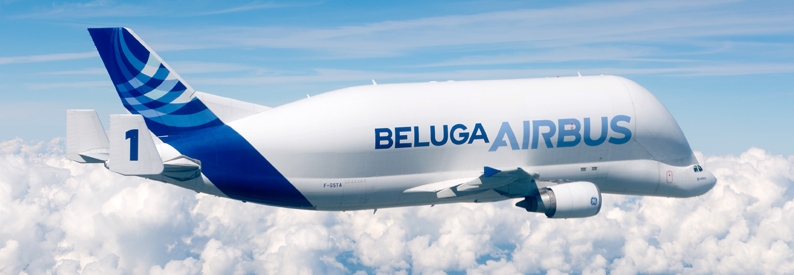
Airbus (AIB, Toulouse Blagnac) has announced that it has begun operating commercial cargo services with its fleet of A300-600ST Belugas. By the end of 2023, the manufacturer will obtain a separate Air Operator's Certificate (AOC) for these operations.
Until now, the Belugas have operated almost exclusively for Airbus, transporting large aircraft parts such as fuselages and wings between the manufacturer's sites, only very occasionally transporting third-party cargo.
The manufacturer said that its first commercial Beluga flight took place in late December 2021, when F-GSTC (msn 765) delivered a Airbus Helicopters airframe from Toulouse Blagnac to Kobe (via Warsaw Chopin, Novosibirsk, and Seoul Incheon). In 2022, two Belugas will be earmarked exclusively for commercial cargo services, with the remaining three due to transition to commercial service in 2023. Until the new cargo unit obtains its own AOC, flights will continue to be operated by Airbus Transport International (4Y, Toulouse Blagnac), Airbus's in-house outsized cargo transportation subsidiary.
"Whereas the ATI structure is inherently focused around the European network of Airbus plants, the new airline, which we will create, will be flexible and agile to address the needs of external markets. Moreover, it will have a worldwide scope and we will be organised for that around the globe," said Phillippe Sabo, the head of ATI Air Oversize Transport.
The Belugas' entry into commercial service follows a decision to replace them with new-generation A330-700ST BelugaXLs. ATI has thus far inducted three of the new aircraft but is due to increase the fleet to six by 2023, when the previous generation freighters will become redundant.
Airbus stressed that despite their planned retirement from in-house operations, the Belugas "still have plenty of available flight-hours remaining before reaching their original design service limits". The aircraft are being replaced mostly due to higher capacity needs associated with the ramp-up in A350 Family production.
While much more limited in terms of payload compared to other outsized freighters, such as the An-124, the An-225, the B747-400(LCF), or the Il-76, the Beluga offers the world's largest cabin cross-section, allowing for the transportation of outsized freight without the need for dismantling. Airbus said this could be particularly attractive to the space, aerospace, and construction industries.
ITA Airways (AZ, Rome Fiumicino) will induct its first new-generation widebody aircraft in mid-2022, having signed a lease contract with ALAFCO for four A350-900s due for delivery in the second and third quarters, the Kuwaiti lessor disclosed in a stock market filing.
The ch-aviation fleets advanced module reveals that the quartet comprises units msn 285, 308, 323, and 338. All four flew for the first time in 2019 but have since been storage and are currently parked at Teruel airport. ALAFCO owns a further two A350-900s, which are placed with Hong Kong Airlines (HX, Hong Kong Int'l).
The airline's chief executive, Fabio Lazzerini, said earlier that the first A350 would arrive in June 2022.
In late September, two weeks before the launch of operations, ITA selected Airbus for its comprehensive fleet renewal as it seeks to rid itself of legacy aircraft inherited from Alitalia (AZ, Rome Fiumicino). However, the order placed with the manufacturer did not include the A350s: it only covered ten A330neo, eleven A320neo, and seven A220s. The airline stressed that it would also lease a further 56 aircraft, including the A350s. It did not elaborate on the exact number of A350s it would take within the plan but revealed that 13 out of the 56 leased aircraft would be widebodies.
ITA Airways' current widebody fleet comprises sevenA330-200s, which are all ex-Alitalia stock and are 10.4 years old on average. The airline disclosed that the addition of the A350s would allow it to resume some of long-haul routes previously operated withB777-300(ER)s but not viable with the A330s, such asBuenos Aires EzeizaandTokyo Haneda.
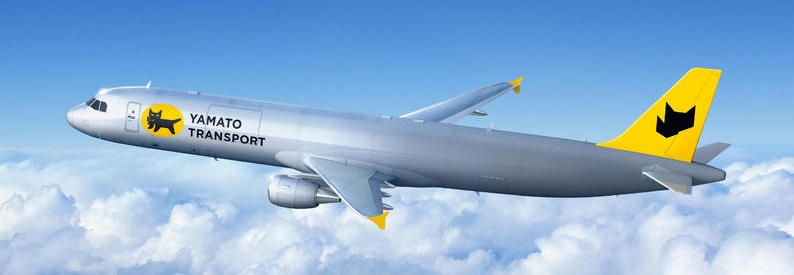
Jetstar Japan (GK, Tokyo Narita) will start dedicated freighter operations in early 2024 following the signing of a partnership agreement between JAL Group and Japanese logistics specialist Yamato Group last week.
According to a joint statement, Yamato's push into the air cargo niche comes amid growing difficulties in ensuring a reliable overland distribution network given the heavy rains, snow, and earthquakes that have occurred throughout Japan as well as bellyhold capacity constraints in light of reduced passenger flights. As such, the introduction of air cargo services will help circumvent these issues, while at the same time allowing JAL Group to offset the impact of Covid-19 on its domestic network revenue inflows.
"We see this freighter operation as an opportunity to realise further growth in the cargo business by utilising the assets and knowhow of both companies and contributing to the solution of social issues such as the problems of truck transportation," the statement said.
Yamato Transport, which also uses road, rail, and shipping services, will be responsible for sourcing the aircraft while Jetstar, the only A320 Family operator in the JAL - Japan Airlines (JL, Tokyo Haneda) stable of carriers, will oversee their operation. According to the ch-aviation fleets advanced module, the budget airline currently employs nineteen A320-200s with two A321-200NXs awaiting service entry.
Airbus and partners to establish aircraft lifecycle centre in China
Chengdu, 18 January 2022 – Airbus has signed a Memorandum Of Understanding (MOU) with the city of Chengdu and Tarmac Aerosave for the development of the first sustainable aircraft “lifecycle” service centre in China. This agreement will cover a range of activities from aircraft parking and storage, to maintenance, upgrades, conversions, dismantling and recycling services for various aircraft types.
“This is another concrete contribution to the aviation industry's quest for sustainability, supporting the principle of a circular economy in line with Airbus’ purpose to pioneer sustainable aerospace. This unique centre will support the expansion of Airbus’ aviation services while enabling the implementation of China's “Green Industry” strategy”, said Klaus Roewe, SVP Airbus Customer Services. “Aircraft phase-out in China is forecast to grow exponentially over the next 20 years. Airbus is committed to investing in the region and this one-stop-shop - a first in China and outside of Europe - will see Airbus well positioned on the Chinese aircraft ‘second life’ services market.” he added.
A formal agreement to establish and frame this industrial cooperation is planned to be signed between the partners in mid-2022, with an entry into service of the new centre slated for the end of 2023, subject to relevant regulatory approvals.
Tarmac Aerosave will bring its 15 years of proven expertise in eco-efficient aircraft dismantling to the project. Located in the same centre, Airbus subsidiary Satair will acquire ageing aircraft, trade and distribute the resulting used parts to complete the full scope of lifecycle services. The facility will cover a surface area of 690,000 square metres and a storage capacity of 125 aircraft.
Airbus continues to deploy its sustainability roadmap for the aviation industry, enabling the increased re-use of aircraft and the recycling of materials and equipment.
In an unprecedented step, Airbus has taken the decision to cancel an order Qatar Airways had with the manufacturer for 50 A321neos. In a short statement the company said "We confirm we did terminate the contract for 50 A321s with Qatar Airways in accordance with our rights."
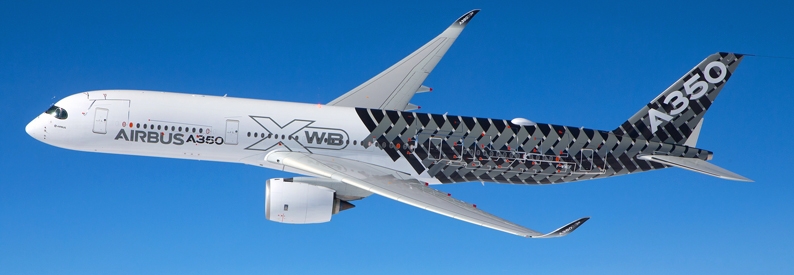
The move comes as Qatar Airways and Airbus are in an escalating dispute regarding the grounding by the Qatar Civil Aviation Authority of thirteen Qatar Airways A350s that are suffering from accelerated surface degradation of its composite fuselage at the tail-section. As a result of that grounding, Qatar has paused taking deliveries of new A350s and is demanding that Airbus fixes the root-cause of the issue as the aircraft are, according to them, unsafe.
Airbus, in their turn, says the issue with the paint is purely cosmetic and doesn't impact the safe operations of the A350 and that the airline is deliberately stating "mischaracterizations of non-structural surface degradation”.
News agency Reuters has done an extensive research in the matter and reported that next to Qatar Airways, four other airlines (Cathay Pacific, Finnair, Lufthansa and Singapore Airlines) also reported surface degration but that these airlines and their civil aviation authorities are also saying that these issues don't impact the safe operation of the aircraft and are purely cosmetic.
Despite this, Qatar Airways has said the relationship with Airbus has been completely destroyed and that they don't expect to be ever able to do business with them again. The airline has also filed a law-suit against the manufacturer in the UK High Court in which it seeks a 600 million USD compensation for damages. The first hearing in this matter is scheduled in April.
And now it seems Airbus taking the next step in the conflict with Qatar Airways by canceling their order for 50 A321neos, which were planned for delivery from 2023 onwards and were meant to replace the airline's current fleet of 29 A320s and three A321s. Reuters is reporting that it expects the airline will protest the decision by Airbus.
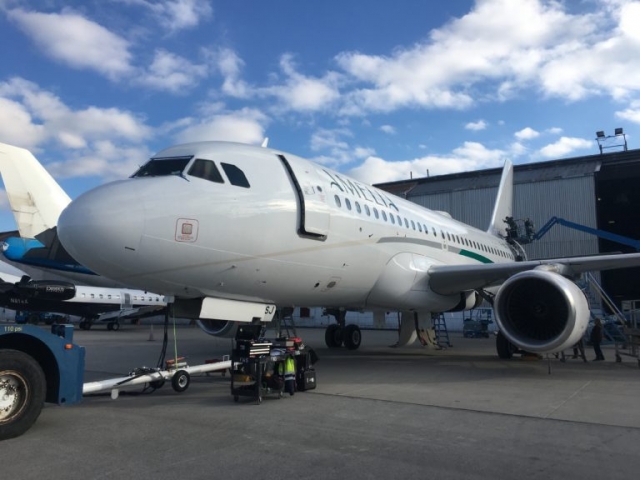
On 19 January, Amelia has taken delivery of its first Airbus A319. The aircraft, F-HDSJ (3727), was handed over at Paris-Le Bourget and was previously in use as PR-MYB with LATAM Brazil.
The Airbus is a big step-up for the airline, which flies two domestic routes from Paris-Orly and offers ACMI- and charter flights, with a fleet of one ATR42-500, two ATR72-600s, two ERJ135s and eight ERJ145s.
EFW hands-over 1st A330P2F to Altavair for MasAir Cargo
On 20 January, EFW handed over the first converted Airbus A330 to lessor Altavair, which in its turn plans to lease the aircraft to Mexican cargo carrier MasAir Cargo. Representatives of the airline were also present during the hand-over event of A330-200P2F EI-MYY (868), which was previously in use with Etihad as A6-EYQ.
In total, MasAir Cargo has signed leases for four A330P2Fs. Two A330-200P2Fs via lessor Altavair and two A330-300P2Fs via CDB Aviation Leasing. The remaining three aircraft should also be delivered this year. The airline will use the additional aircraft to expand its fleet which currently exists of one B767-200BDSF, one B767-300F and one B767-300ERBDSF.
Qatar Airways’ A321neo Order Cancelled By Airbus Amid A350 Dispute
In the ongoing dispute over A350 surface degradation issues, Airbus has announced that it has canceled Qatar Airways’ order for 50 A321neos. What started as reports of abnormal paint issues in January of 2021 has escalated significantly over the past 12 months, with a legal showdown looming.
Qatar Airways originally placed its A321neo order in 2011. Photo: Airbus
A longstanding order canceled
First reported by Bloomberg News, the European planemaker appears to have canceled the longstanding order on January 20th after pre-trial proceedings took place in British High Court. It’s noted that Airbus’ termination of the contract followed skeletal arguments presented during a scheduling session over the A350 dispute.
Although Qatar Airways had notably halted deliveries of its outstanding A350 orders amid the escalating dispute, this latest move by Airbus to terminate a separate contract for different aircraft is indeed quite surprising. A spokesperson for the planemaker confirmed the news to Simple Flying, stating:
“We confirm we did terminate the contract for 50 A321s with Qatar Airways in accordance with our rights.” -Airbus
Simple Flying has reached out to Qatar Airways seeking a statement from the airline. At the time of this article’s publication, no response has been received.
In 2011 Qatar Airways placed an order for A320neos and this was later adjusted to be 50 A321neos in 2017. The order, Airbus noted, had a list price value of $6.35 billion. Two years later, Qatar Airways announced that it was converting 10 aircraft in this 50-aircraft agreement to the Airbus A321LR variant.
Courtroom showdown looming
Over the course of 2021, much has unfolded in this dispute. Qatar Airways grounded its affected A350s under the guidance of Qatar’s Civil Aviation Authority, with the airline later halting deliveries of outstanding A350 orders.
Later in the year, Airbus stated that it was seeking a legal assessment as it felt that an undisclosed airline (likely Qatar Airways) was damaging its reputation because of the ongoing paint and surface degradation claims.
The entire situation further escalated with Qatar Airways filing a lawsuit in UK High Court. The carrier is also seeking $600 million in damages and compensation over the grounding of its A350 aircraft. According to Reuters, a procedural hearing on the case is scheduled in London during the week of April 26th.
Despite its A350 grievances, Qatar Airways was the type’s top operator in 2021. Photo: Vincenzo Pace | Simple Flying
An incredibly rare move
While airlines cancel orders for aircraft from time to time, usually due to financial issues or changing market conditions, it’s incredibly rare for a planemaker to be the party terminating the contract. Aside from issues relating to government sanctions, Thursday’s move by Airbus may indeed be the first case of an aircraft manufacturer canceling an agreement for an order placed by an airline.
Reuters notes that Qatar Airways is expected to fight Airbus’ termination of the A321neo order contract, despite the airline’s refusal to take delivery of A350s until the surface degradation dispute can be resolved.
While a major investigation undertaken by Reuters unearthed reports that at least five other airlines had noted paint or surface flaws since 2016, Qatar’s civil aviation authority is so far the only entity to order affected aircraft to be grounded.