Unstored Singapore Airlines A380 Heads Home After Sydney Maintenance
Earlier this week, we saw a Singapore Airlines A380 depart storage in Alice Springs. Having undergone standard return to service work in Sydney, the aircraft has now returned to its Singapore home.
Singapore Airlines has removed one of its A380s from storage for maintenance. Photo: Getty Images
The global A380 fleet is at a crossroads. At one point, all but five A380s belonging to China Southern were grounded, with some wondering if they would ever come back. While carriers such as Air France and Lufthansa don’t appear to want the type back, others like British Airways and Singapore Airlines have shown their commitment to the type by continuing to spend money on upkeep.
A Singapore A380 flies home
9V-SKQ is one of the 12 remaining Singapore Airlines Airbus A380s. The aircraft had been sent to Alice Springs in Australia for long-term storage, given it is not expected to return to the skies soon. However, it has now left its sunny storage for the time being.
After just two days on the ground in Qantas’ home, the maintenance was done. Yesterday at 17:17, the A380 took to the skies from Sydney, according to RadarBox.com. It flew for seven hours and 41 minutes before landing at its Singapore home at 21:59 as SQ8899.
Commenting on the A380’s flight, a Singapore Airlines spokesperson told Simple Flying,
“Singapore Airlines can confirm that one of our Airbus A380 aircraft that was stored in Alice Springs has begun its planned returned to Singapore ahead of a schedule retro-fitting and maintenance programme.
“The aircraft, registration 9V-SKQ, has been moved to Sydney to undergo routine checks following its storage, before returning to Singapore where it will be retro-fitted as part of our plan to have all 12 remaining A380 in our fleet fitted with the latest A380 cabin product.”
Good news for the A380 fleet
The refurbishments are great news for the A380 fleet. While we don’t know when Singapore Airlines will return the type to service, we know it intends to. After all, it would be crazy to spend money on an aircraft that you had no intention to return to the skies.
Similar flight patterns suggest the same for British Airways’ A380s fleet. Also comprising 12 aircraft, the airline has continued to fly the giants to and from storage regularly for maintenance. This shows the airline has some intention to return the aircraft to service sooner rather than later. Otherwise, it would make sense to place the aircraft into deep storage until needed again in the future.
French Bee Plans To Put 488 Seats On An Airbus A350-1000
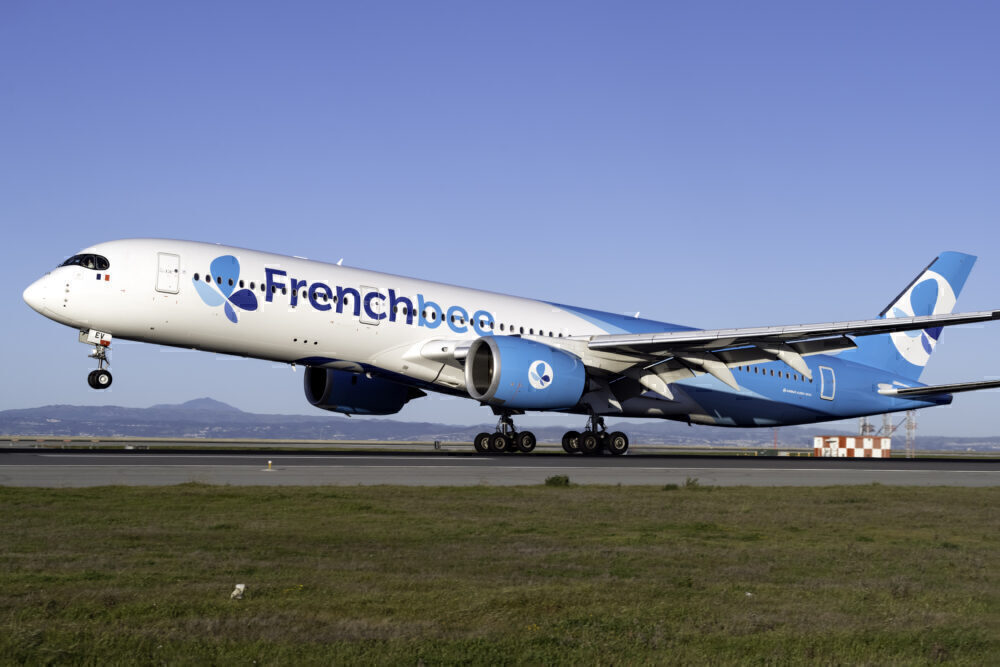
Orly-based leisure airline French bee already operates an all-Airbus fleet with four densely seated A350-900s. This year, the carrier will take two A350-1000s, upping the capacity on each to an unprecedented 488 seats. Could this efficiency move be the key to making the low-cost long-haul model work?
French bee will take two more A350s this year – its new -1000s will be fitted with 488 seats. Photo: Vincenzo Pace | Simple Flying
The most efficient long-haul carrier?
French low-cost carrier French bee will soon be operating an incredibly efficient fleet of six Airbus A350s. The airline already has four A350-900s with 411 seats each. However, it is also expecting to take two leased A350-1000s during 2021. The forthcoming arrivals will feature a massive 488 seats each.
When compared to how other operators of the type have theirs configured, the difference is striking. Qatar Airways flies the A350-1000 with 327 seats, while British Airways has 331. This kind of next-level density will greatly increase French bee’s fuel efficiency, and as Simple Flying’s editor Joanna Bailey has said, potentially propel it to become the most efficient long-haul carrier out there.
New York – Paris for as little as $254
French bee’s new aircraft, which it will lease, will be able to accommodate 40 passengers in premium economy, and 448 in economy class. While it is not certain which variant of the A350 will operate the route, the airline has some very enticing transatlantic offers lined up for October.
Return flights between Newark and Paris-Orly are being marketed for as little as $254. This can be compared to Norwegian’s lowest prices from London Gatwick to New York, with seats selling for as little as $235 on the now no-longer-long-haul airline’s Boeing 787 Dreamliners. When they were still in the carrier’s fleet, Norwegian’s 787-8s could take 292 passengers, whereas the 787-9 had space for 344.
With this new kind of seat capacity, fuel efficiency, and single-type-fleet, could French bee become the carrier to make the long-haul low-cost model work? In September, one month after the inauguration of its fourth A350-900, the Orly-based airline’s managing director, Muriel Assouline, told FlightGlobal that,
“We are a friends and family airline – if the leisure traveller cannot fly, there is no market.”
For instance, the route between Paris-Orly and Newark was originally intended to launch in June last year but was put on hold due to the ongoing crisis.
French bee and SAS fello’fly
On September 9th, Airbus announced that it had signed contracts with three air navigation providers and two airlines – one of them French bee, the other SAS Scandinavian Airlines – to trial its new fello’fly project. This intends for aircraft to make use of each other’s wake-energy, just as birds flying in a flock do, to expend less energy. In turn, this would translate into less fuel consumption and less CO2 emissions.
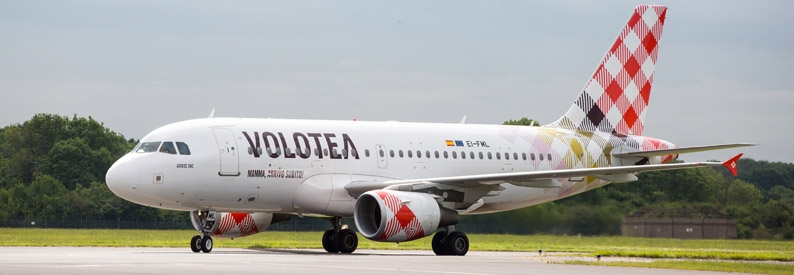
Volotea (V7, Asturias) has announced it will add at least fifteen A320-200s in 2021, and perhaps four more depending on the summer season demand.
The Spanish carrier recently retired all 14 of its remaining B717-200s (five aircraft of the type were retired between 2016 and 2019) and will now replace them with the larger but more cost-effective Airbus narrowbodies.
"We are very proud to move towards a 100% Airbus fleet. As a European company, we are very keen to count on Airbus as our fleet partner long-term. We will continue growing on our strategy of connecting mid and small European cities, with a more modern and competitive aircraft type, the Airbus A320, that has 20-25% lower operational costs than the B717s it replaces," Founder and Chief Executive Carlos Muñoz said.
The airline said it had already sourced the first fifteen A320s, but did not reveal their identity. According to the ch-aviation fleets advanced module, its first five aircraft will be EC-MBK (msn 2658), EC-NOL (msn 2740), EC-NNZ (msn 2616), EC-NNY (msn 3786), and msn 3545, which does not have a Spanish registration assigned yet. So far, none of them has been delivered.
The A320s will join Volotea's existing fleet of twenty-one A319-100s, of which one has yet to be delivered.
Muñoz said that thanks to their larger capacity and lower cost-base, the A320s will work well for the airline during the post-COVID recovery phase. He added that Volotea has identified a number of new market opportunities in particular niches left in Spain following the take over of Air Europa by Iberia, and in France due to the corporate reorganisation of Air France-KLM's Air France, HOP!, and Transavia France subsidiaries.
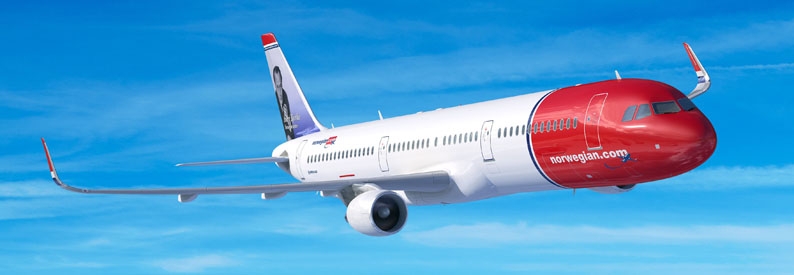
Norwegian (DY, Oslo Gardermoen) has agreed with Airbus (AIB, Toulouse Blagnac) on the terms of a consent order to cancel a deal to buy 88 aircraft, it was revealed during the carrier’s ongoing bankruptcy protection and restructuring process at the Irish High Court.
Under these terms, the manufacturer will keep the pre-payments Norwegian has made, and the embattled airline will pay it a further EUR700,000 euros (USD850,000), the Irish Times reported.
The aircraft that Norwegian has on order at Airbus include fifty-eight A320-200Ns and thirty long-range A321-200NX(LR)s, according to the ch-aviation fleets advanced module. As previously reported, the airline has axed its long-haul business to focus on Nordic and European routes.
The jets were signed up for in a deal signed in 2012, for Airbus to deliver a total of 100 of them, but the agreement has been revised several times since then so that the company currently has 88 narrowbodies on the manufacturer’s books. Most recently, Norwegian’s asset-owning subsidiary Arctic Aviation Assets, which is also part of the examinership process, dropped five A320neo, a move reflected in Airbus’ September 2019 order book.
“We have agreed, judge, in the last short while, the terms of a consent order,” Norwegian’s lawyer Brian Kennedy told the court on February 24, as quoted by Reuters news agency.
Kennedy named the payments involved but did not specify the number of aircraft. A lawyer representing Airbus confirmed the agreement to the court.
According to the airline’s financial filings, Norwegian had pre-Covid contractual commitments to buy Airbus and Boeing (BOE, Chicago O'Hare) aircraft spanning from 2020 to 2027, totalling USD9.55 billion. But in June 2020, it unilaterally cancelled the Boeing orders, which were for ninety-two B737-8s and five B787-9s. Boeing has disputed the move.
Boeing is not currently involved in Norwegian’s examinership proceedings at all, Kennedy told the court. The US manufacturer “to date hasn’t engaged in the examinership process, or the Norwegian reconstruction [...]. It is not anticipated that Boeing will engage in either.”
According to the lawyer, Boeing wrote to an official overseeing the process in Norway on December 28 saying that neither it nor its affiliates would submit to the jurisdiction of Norwegian courts.
Volotea Is Now Flying An All Airbus Fleet Following 717 Retirement
Volotea is officially an-Airbus airline following the retirement of its Boeing 717 fleet last month. The carrier now only operates the Airbus A320 family of aircraft and plans to expand this fleet. The airline is considering ordering more A320s depending on demand during the summer season.
Volotea opted to speed up its fleet modernization plan and retire all its 717s by January 2021 rather than 2023. Photo: Getty Images
Replacement
On January 10th, Volotea operated its last Boeing 717 flight and retired the type from its fleet, ending the jet’s history in Europe. The carrier operated 14 of the type at the end of 2019 but quickly began retiring the planes between October 2020 and January 2021, according to Planespotters.net. Volotea brought its fleet modernization program forward from 2023 due to the current market conditions.
To replace the retired 14 aircraft, Volotea plans to add 15 new Airbus A320 family planes. This will be a mix of the 180-seat A320 and 150-seat A319. This will boost the airline’s fleet from 20 to 35 aircraft by the summer. Additionally, Volotea can also add four more planes if it sees demand in the short-term.
In a statement explaining the fleet changes and the timing of this move, Volotea President Carlos Munoz said,
”We will continue to grow thanks to our strategy of connecting small and medium-sized European cities with each other with a more modern and competitive aircraft model, the Airbus A320, which offers 20-25% lower operating costs than [our] previous Boeing 717s. This increased competitiveness will be highly needed in the post-Covid context of the coming years, where less demand is likely to occur.”
Relatively good year
While most airlines have been avoiding high capital costs on new planes, Volotea is sensing an opportunity. The carrier notched an exceptional 90.7% load factor in 2020, at a time when most airlines were at a fraction of that figure. While traffic did fall by 49% overall, efficient route planning and a large domestic market meant it kept flights full.
Considering the impressive year behind it, Volotea is hoping for an even better summer 2021 season. The fleet modernization will reduce operational costs, such as maintenance and training, and help carry more passengers per flight.
Volotea had a relatively strong 2020 despite the falling passenger numbers across the world. Photo: Volotea
The airline will also expand its route map this year, with new routes to Algeria from its base in France. As vaccinations roll out across Europe, Volotea is hoping to be in pole position for an eventual aviation and tourism recovery.
DHL Express and SmartLynx Malta partner to break new ground in cargo transportation
24.02.2021
Companies announce signing of a new partnership agreement
SmartLynx Malta will support Express Division of Deutsche Post DHL Group with two Airbus A321-200 freighter aircraft
The fuel-efficient aircraft is the most technologically advanced and environmentally efficient aircraft in its class
DHL Express, the world’s leading express service provider, and SmartLynx Malta announce the signing of a new partnership agreement for the introduction of two newly converted Airbus A321-200 freighters joining DHL’s European air fleet. The new technically advanced narrow-body fleet type is adding capacity to meet the increasing demand for express cargo transportation worldwide combined with further improving DHL’s unit Co2 emissions by introducing the most fuel efficient narrow-body aircraft in its class. .
SmartLynx is a family member of Avia Solutions Group, the largest aerospace business group from Central & Eastern Europe, and has extensive experience operating the A321 family of aircraft. This agreement sets a new hallmark as SmartLynx’s Malta subsidiary enters into the freighter market.
“We at DHL pride ourselves as the global industry pioneer when it comes to introducing new generation conversion freighter types to the market” says Geoff Kehr, Senior Vice President Global Air Fleet Management at DHL Express. “Continually modernizing our fleet with the most efficient and reliable cargo aircraft produced is vital to our success. Having led the world with the A330-300P2F development and successful implementation, it is only natural we would follow on by adding the smaller A321 family aircraft to our global freighter fleet”.
The partnership comes as both a confirmation and a recognition of SmartLynx Malta’s standing in the aviation industry, and its place in supporting the growing demand for air cargo capacity. Increasing demand for e-commerce shipments and also highly important protective and medical goods, require additional air cargo capacity. The fuel-efficient Airbus A321-200 achieves superior unit reductions in CO2 emissions compared to similar class freighter models. By investing in these aircraft, SmartLynx Malta illustrates its commitment towards embracing a future focused on cleaner, more sustainable air freight carriage.
“We are pleased to share the news about the latest addition to our client portfolio. By supporting DHL with two freighter units, our partner is advancing their readiness to respond to a growing air cargo demand”, says Zygimantas Surintas, CEO of SmartLynx Malta. “We would like to express our deepest gratitude to all of the DHL team for their belief that we are both willing and capable of providing the highest-class product in keeping with their expectations. This development is a substantial step forward in our strategic plans for the future. DHL is a leading air transport capacity, and having strong partnerships is a decisive factor to growing our business even further and in a cleaner, more sustainable manner."
Smartlynx Malta is planning to add two additional A321Fs during 2021 and up to four units during 2022, with a business target of becoming one of the largest narrow-body cargo freight carriers within the next three years.